
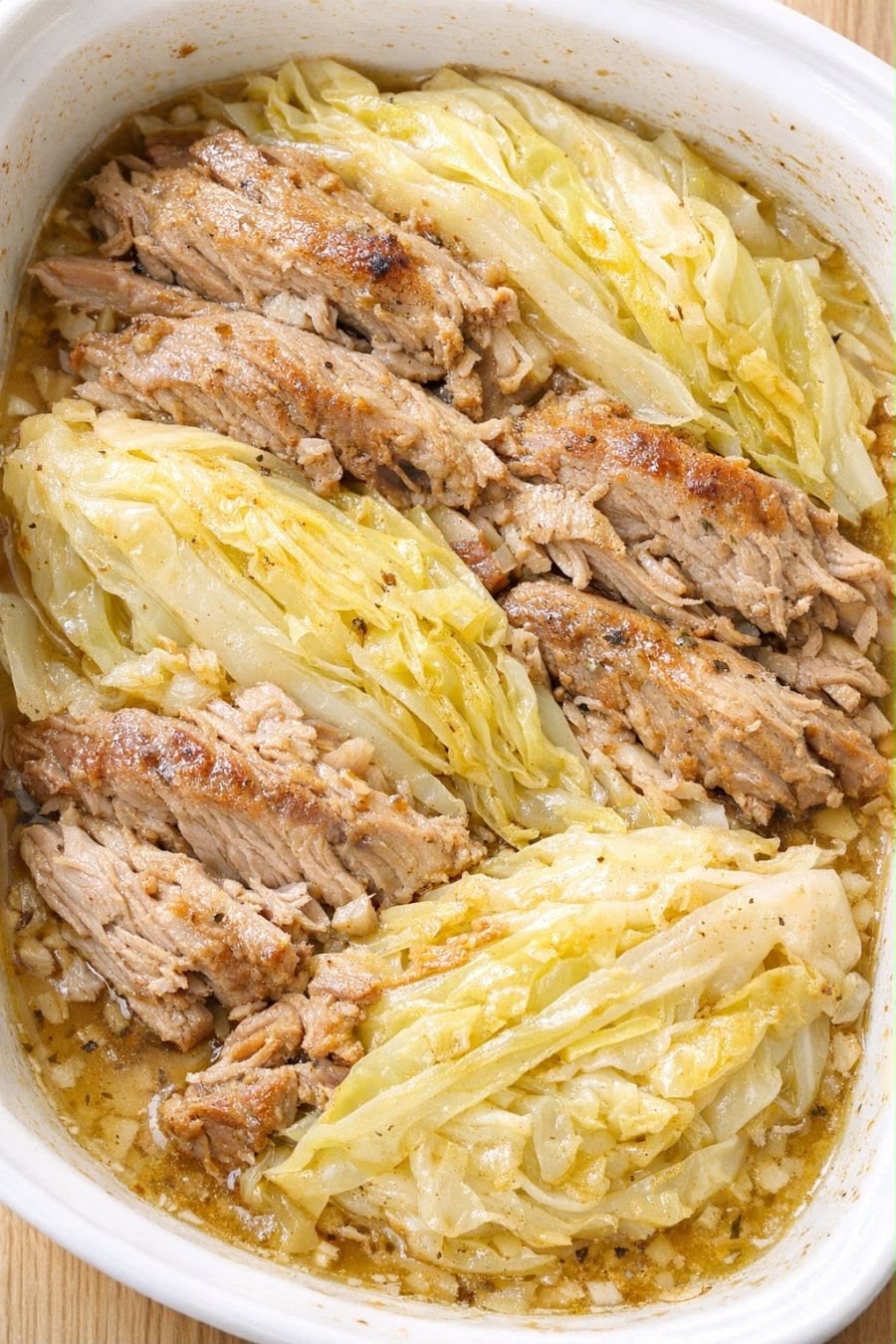
This Tender Oven-Roasted Beef and Cabbage is a comforting, hearty meal made with succulent beef, tender green cabbage, fragrant garlic, sweet onions, and flavorful herbs. Slowly roasted in the oven with a rich broth, the beef becomes juicy and delicious while the cabbage absorbs all the savory cooking juices.
This easy one-pan dinner is perfect for cozy family meals, weekend cooking, or anyone looking for a satisfying homemade dish without complicated preparation. With simple ingredients and a hands-off cooking method, you can enjoy a flavorful, tender roast with minimal effort.
Recipe Overview
| Detail | Information |
| Prep Time | 20 minutes |
| Cook Time | 1 hour 15 minutes–1 hour 25 minutes |
| Total Time | 1 hour 35 minutes–1 hour 45 minutes |
| Servings | 4–6 |
| Cuisine | Home-style comfort food |
| Course | Main Course |
| Cooking Method | Oven roasting |
| Oven Temperature | 350°F (180°C) |
| Difficulty | Easy |
Why You’ll Love This Recipe
Tender, flavorful beef: Searing the beef before roasting helps develop a rich, savory crust that enhances the overall flavor.
Soft, buttery cabbage: The cabbage cooks in the broth alongside the beef, becoming tender and soaking up the delicious seasonings.
Simple ingredients: You only need a handful of everyday ingredients to create a satisfying homemade dinner.
Easy one-pan preparation: After the initial searing, the oven does most of the work, making this recipe convenient for busy days.
Perfect for family dinners: The combination of beef and vegetables creates a hearty meal that can be served straight from the baking dish.
Wonderful leftovers: The flavors continue to develop as the dish rests, making leftovers especially delicious the following day.
Ingredients
For the Beef and Cabbage
| Ingredient | Quantity |
| Beef roast, such as chuck or another suitable roasting cut | 800 g–1 kg (1.75–2.2 lb) |
| Green cabbage, cut into large wedges | 1 small head |
| Large yellow onion, finely chopped | 1 |
| Garlic cloves, minced | 4 |
| Olive oil or butter | 2 tablespoons |
For the Broth and Seasonings
| Ingredient | Quantity |
| Beef broth | 1 cup (240 ml) |
| Dried thyme or herbes de Provence | 1 teaspoon |
| Garlic powder | 1 teaspoon |
| Paprika | 1/2 teaspoon |
| Salt | To taste |
| Freshly ground black pepper | To taste |
Step-by-Step Instructions
Step 1: Preheat the Oven
Preheat your oven to 350°F (180°C).
Prepare a large, deep oven-safe baking dish or roasting pan that can comfortably hold the beef and cabbage. If you have a heavy oven-safe Dutch oven with a lid, that works particularly well for this recipe.
Step 2: Season the Beef
Pat the beef roast dry with paper towels.
Season all sides generously with salt, black pepper, paprika, garlic powder, and dried thyme or herbes de Provence. Rub the seasonings into the meat to distribute the flavor evenly.
For the best results, choose a beef cut suitable for slow roasting, such as chuck roast. Cuts with some connective tissue become especially tender when cooked slowly with moisture.
Step 3: Sear the Beef
Heat 1 tablespoon of olive oil in a large skillet over medium-high heat.
Place the seasoned beef in the hot skillet and sear for approximately 3–5 minutes per side, turning as needed until all sides are nicely browned.
The goal is to develop a golden-brown crust rather than cook the beef all the way through.
Transfer the browned roast to a plate and set aside.
Step 4: Prepare the Vegetables
Chop the onion and mince the garlic.
Cut the green cabbage into large wedges, keeping a small portion of the core attached to each wedge to help the leaves hold together during cooking.
Spread the chopped onion and garlic over the bottom of the baking dish. Add the remaining tablespoon of olive oil if needed.
Step 5: Assemble the Dish
Place the seared beef in the baking dish on top of the onion and garlic.
Arrange the cabbage wedges around the roast, fitting them snugly into the dish without crushing them.
Pour the beef broth around the meat and vegetables. Avoid pouring all the liquid directly over the browned surface of the roast, as you want to preserve as much of the crust as possible.
The broth will help keep the dish moist while creating a flavorful cooking liquid.
Step 6: Cover and Roast
Cover the baking dish tightly with aluminum foil, or use an oven-safe lid if available.
Place it in the preheated oven and roast for approximately 1 hour to 1 hour 15 minutes, then check the tenderness of the beef and cabbage.
The exact cooking time depends on the size, thickness, and type of beef cut. A thick chuck roast may need considerably longer than this to become fork-tender, so allow additional time if necessary.
For the most reliable results, cook until the beef is tender and the cabbage can be easily pierced with a fork. Tougher roasting cuts may require 2–3 hours or longer at this temperature.
Step 7: Brown the Top
Once the beef and cabbage are tender, remove the foil.
Return the dish to the oven for another 10 minutes, or until the cabbage edges develop a little color and the beef looks nicely browned on top.
If the cabbage is already sufficiently browned, you can skip this step to prevent it from drying out.
Step 8: Rest and Serve
Remove the dish from the oven and allow the beef to rest for approximately 10 minutes before slicing.
Slice the beef against the grain for the most tender texture.
Spoon the warm cooking juices over the beef and cabbage before serving. Garnish with fresh parsley or a little extra thyme if desired.
Serve immediately while hot.
Best Tips for Perfect Tender Beef and Cabbage
Choose the right cut of beef. Chuck roast is a good choice for a moist, tender result because it benefits from slow cooking. Leaner cuts may become dry if cooked for too long.
Don’t skip searing. Browning the meat creates a deeper, richer flavor that improves the entire dish.
Keep the dish covered. A tightly covered baking dish traps steam and helps soften the cabbage while keeping the beef moist.
Cut the cabbage into large wedges. Larger pieces hold their shape better during extended cooking and are less likely to become mushy.
Check the liquid level. If the dish begins to look dry before the beef is tender, add a little more warm broth.
Rest the beef before slicing. Allowing the roast to rest helps the juices redistribute, making each slice more succulent.
Slice against the grain. Cutting across the muscle fibers makes beef easier to chew and improves tenderness.
Best Ingredient Options
Beef roast: Chuck roast is ideal for slow, moist cooking. Brisket or another suitable braising cut can also work, although cooking times will vary.
Green cabbage: Green cabbage holds up well during roasting. Savoy cabbage is another option, but its leaves may soften more quickly.
Beef broth: Use a good-quality broth for a richer flavor. Low-sodium broth gives you more control over the salt level.
Olive oil or butter: Olive oil works well for searing, while a small amount of butter can add richness to the vegetables.
Herbs: Thyme, rosemary, and herbes de Provence all complement beef and cabbage.
Paprika: Sweet paprika adds mild warmth, while smoked paprika contributes a deeper flavor.
Recipe Variations
Garlic Herb Beef and Cabbage: Add fresh rosemary and an extra clove of garlic for a more aromatic roast.
Beef and Potato Roast: Add halved baby potatoes or large potato chunks around the beef. Make sure there is enough broth to help them cook until tender.
Carrot and Cabbage Roast: Add peeled carrot chunks for extra sweetness and color.
Rich Onion Gravy: Once the beef is cooked, transfer the meat and vegetables to a serving platter. Strain the cooking liquid if desired, then simmer it in a saucepan and thicken with a small cornstarch slurry.
Spicy Beef and Cabbage: Add a pinch of chili flakes or cayenne pepper for a gentle kick.
Lemon Herb Finish: Add a small squeeze of lemon juice and freshly chopped parsley just before serving to brighten the rich flavors.
What to Serve With Beef and Cabbage
Mashed potatoes: Creamy mashed potatoes are perfect for soaking up the flavorful broth.
Steamed rice: Serve the beef and cabbage over rice for a simple, filling dinner.
Roasted potatoes: Crispy potatoes provide a delicious contrast to the tender cabbage and beef.
Crusty bread: Warm bread is ideal for enjoying every drop of the savory cooking juices.
Green beans: Steamed or roasted green beans add color and freshness to the plate.
Fresh garden salad: A crisp salad with cucumber, tomatoes, and a light dressing balances the richness of the roast.
Make-Ahead Instructions
You can prepare the ingredients in advance to simplify dinner preparation.
Season the beef, chop the onion and garlic, and cut the cabbage into wedges. Store the prepared ingredients separately in the refrigerator.
For a deeper flavor, you can sear the beef in advance, allow it to cool promptly, and refrigerate it in a covered container. Assemble the dish when you’re ready to cook.
For the best texture, roast the cabbage and beef shortly before serving rather than fully cooking the cabbage hours in advance.
Storage Instructions
Refrigerator: Store leftover beef and cabbage in airtight containers within two hours of cooking. Refrigerate for 3–4 days.
Freezer: Freeze the cooled beef and cabbage with some of the cooking liquid in freezer-safe containers for up to 2–3 months for best quality.
Separate portions: Divide the beef and vegetables into individual servings to make reheating easier.
Keep the juices: Store some of the cooking liquid with the meat to help prevent the beef from drying out during storage and reheating.
Reheating Instructions
Oven: Place the beef and cabbage in an oven-safe dish with a little cooking broth. Cover and heat at 325°F (165°C) until hot throughout.
Stovetop: Place sliced beef and cabbage in a covered skillet or saucepan with a splash of broth. Heat gently over low to medium-low heat, turning the beef occasionally.
Microwave: Place an individual portion in a microwave-safe container, add a spoonful of broth, cover loosely, and heat in short intervals until hot throughout.
Reheat leftovers to an internal temperature of 165°F (74°C).
Freezing Instructions
Allow the cooked beef and cabbage to cool before freezing.
Slice the beef or leave it in larger portions, then place it in freezer-safe containers along with some cooking liquid. Add the cabbage to the same container or store it separately if you prefer.
Label the containers with the date and freeze for up to 2–3 months for best quality.
Thaw overnight in the refrigerator before reheating. The cabbage may become softer after freezing, but the broth helps preserve its flavor and moisture.
Common Mistakes to Avoid
Using a cut that needs longer cooking. Some beef roasts require several hours to become tender. Check the meat rather than relying only on the recipe’s initial timing.
Skipping the searing step. The roast may still cook without searing, but it will lack some of the deep, browned flavor that makes this dish especially delicious.
Leaving the dish uncovered for too long. Excessive evaporation can dry out the meat and leave the cabbage tough. Keep the dish covered until the ingredients are tender.
Adding too little liquid. The broth provides moisture and creates flavorful juices. Check the dish during cooking and add more broth if needed.
Cutting the cabbage too small. Small pieces can break down during extended roasting. Large wedges generally maintain a better texture.
Slicing the beef immediately. Cutting into the roast as soon as it leaves the oven can cause more juices to escape. Let it rest before slicing.
Nutrition Estimate
The following values are approximate and depend on the beef cut, portion size, and amount of oil used.
| Nutrient | Estimated Amount Per Serving |
| Calories | 350–500 kcal |
| Protein | 30–40 g |
| Carbohydrates | 10–16 g |
| Fat | 18–32 g |
| Saturated Fat | 6–12 g |
| Fiber | 3–5 g |
| Sugar | 4–7 g |
| Sodium | 400–750 mg |
Estimates are based on approximately six servings and may vary depending on the cut of beef and the ingredients used.
Frequently Asked Questions
What is the best cut of beef for this recipe?
Chuck roast is an excellent choice because its connective tissue softens during slow cooking, producing tender, flavorful meat. Brisket and other braising cuts can also work well.
Why is my beef still tough after an hour?
Some beef cuts need more time to become tender. Continue cooking the roast, covered, and check it every 20–30 minutes. Add warm broth if necessary. The beef is ready when a fork slides into it easily.
Can I cook this recipe without searing the beef?
Yes, but searing adds a richer, deeper flavor. If you’re short on time, you can skip this step and place the seasoned beef directly in the baking dish.
Can I add potatoes and carrots?
Absolutely. Add potatoes and carrots around the beef and cabbage. Cut them into reasonably large pieces so they hold their shape during cooking.
Can I use chicken broth instead of beef broth?
Yes. Chicken broth works well, although the flavor will be a little lighter. Vegetable broth is another alternative.
How do I keep the cabbage from becoming mushy?
Cut the cabbage into large wedges and check its tenderness during cooking. If the cabbage becomes tender before the beef, remove it carefully and return it to the dish near the end of cooking.
Can I prepare this dish in a slow cooker?
Yes. Sear the beef first for extra flavor, then transfer it to a slow cooker with the onion, garlic, cabbage, seasonings, and broth. Cook on low for approximately 6–8 hours, or until the beef is fork-tender. The exact time depends on the size and type of roast.
Is this recipe good for meal prep?
Yes. Store individual portions with some cooking liquid in airtight containers. The beef reheats well, and the cabbage makes an easy vegetable side for several meals.
Final Thoughts
This Tender Oven-Roasted Beef and Cabbage recipe is a wonderful way to turn simple ingredients into a hearty, comforting homemade dinner. The browned beef, tender cabbage, fragrant garlic, and savory broth create a delicious combination that feels special without requiring complicated techniques.
Serve it with mashed potatoes, rice, or warm bread, and don’t forget to spoon the flavorful cooking juices over every portion. With a little patience and the right cut of beef, this easy oven-roasted meal can become a favorite for family dinners and cozy weekends.