
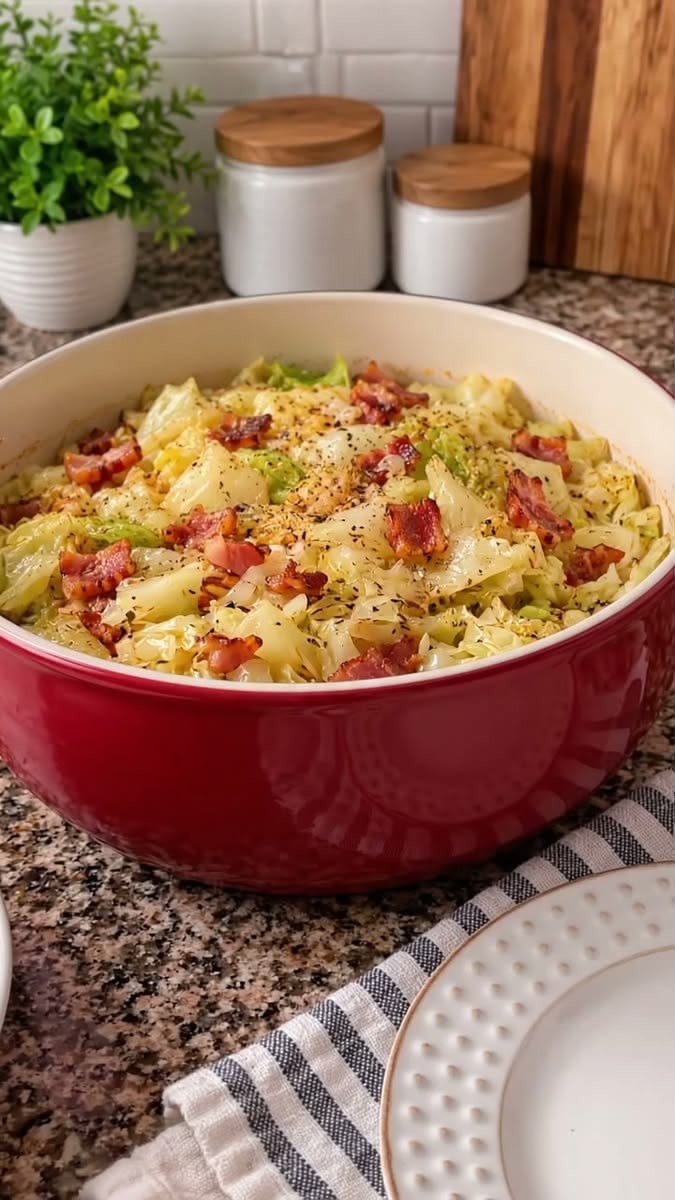
This Oven-Roasted Cabbage with Crispy Beef is a delicious, budget-friendly comfort food recipe made with tender green cabbage, savory beef, sweet onions, garlic, and flavorful seasonings. Finished in the oven until beautifully golden and caramelized, this simple dish delivers plenty of flavor with minimal effort.
It’s perfect as a hearty side dish for family dinners or as a simple main course when served with potatoes, rice, or crusty bread. The combination of buttery cabbage, aromatic garlic, smoky paprika, and crispy beef creates a satisfying meal that’s easy to prepare any day of the week.
Recipe Overview
| Detail | Information |
| Prep Time | 15 minutes |
| Cook Time | 30–35 minutes |
| Total Time | 45–50 minutes |
| Servings | 4–6 |
| Course | Side Dish or Main Course |
| Cuisine | American-inspired comfort food |
| Cooking Method | Stovetop and oven |
| Oven Temperature | 375°F (190°C) |
| Difficulty | Easy |
Why You’ll Love This Recipe
Simple ingredients: This recipe uses affordable, everyday ingredients to create a flavorful and comforting dish.
Rich, savory flavor: Garlic, onions, butter, and paprika bring out the natural sweetness of the cabbage.
Golden and caramelized: Roasting the cabbage in the oven gives it tender centers and deliciously browned edges.
Easy to customize: Adjust the seasonings, add extra vegetables, or choose your favorite herbs to suit your taste.
Perfect for busy evenings: The preparation is straightforward, and most of the cooking happens in one pan and the oven.
Versatile serving options: Enjoy it alongside roasted chicken, grilled beef, potatoes, or rice, or serve a larger portion as a light main meal.
Ingredients
Main Ingredients
| Ingredient | Quantity |
| Green cabbage, chopped into bite-sized pieces | 1 medium head |
| Beef bacon or thinly sliced beef, chopped | 6 slices |
| Yellow onion, thinly sliced | 1 medium |
| Garlic, minced | 2 cloves |
| Butter or olive oil | 2 tablespoons |
Seasonings
| Ingredient | Quantity |
| Paprika, sweet or smoked | 1 teaspoon |
| Garlic powder | 1/2 teaspoon |
| Italian seasoning or herbes de Provence | 1/2 teaspoon |
| Salt | To taste |
| Black pepper | To taste |
| Apple cider vinegar, optional | 1–2 teaspoons |
| Extra dried herbs, optional | For garnish |
Step-by-Step Instructions
Step 1: Preheat the Oven
Preheat your oven to 375°F (190°C).
Lightly grease a large oven-safe skillet or baking dish with a little olive oil or butter. If you have an oven-safe skillet, you can use the same pan for both stovetop cooking and roasting.
Wash the cabbage, remove any damaged outer leaves, cut it into quarters, remove the tough core, and chop the remaining cabbage into bite-sized pieces.
Step 2: Cook the Beef Until Crispy
Heat a large skillet over medium heat. Add the chopped beef bacon or thinly sliced beef and cook until browned and crispy around the edges.
Depending on the thickness of the meat, this may take approximately 5–8 minutes.
Transfer the cooked beef to a plate lined with paper towels. Leave a small amount of the cooking fat in the skillet if desired, or drain it and use olive oil or butter instead.
Step 3: Sauté the Onion and Garlic
Add the sliced onion to the skillet. If the pan looks dry, add 1 tablespoon of butter or olive oil.
Cook for 3–4 minutes, stirring occasionally, until the onion begins to soften and turn translucent.
Add the minced garlic and cook for another 30–60 seconds, just until fragrant. Avoid browning the garlic too much, as it can become bitter.
Step 4: Add the Cabbage
Add the chopped cabbage to the skillet in batches if necessary.
Stir well to coat the cabbage with the butter, oil, onions, and garlic. Cook for approximately 8–10 minutes, stirring occasionally, until the cabbage begins to soften and develop lightly golden edges.
If the cabbage fills the skillet at first, don’t worry. It will shrink considerably as it cooks.
Step 5: Season the Mixture
Sprinkle the paprika, garlic powder, Italian seasoning, salt, and black pepper over the cabbage.
Toss everything together until the seasonings are evenly distributed.
For a brighter flavor, add 1–2 teaspoons of apple cider vinegar. This optional ingredient balances the richness of the beef and butter while enhancing the natural sweetness of the cabbage.
Taste and adjust the seasoning as needed.
Step 6: Roast in the Oven
Transfer the cabbage mixture to the prepared baking dish if you aren’t using an oven-safe skillet.
Spread the mixture evenly and scatter the cooked beef over the top.
Place the dish in the preheated oven and roast for 15–20 minutes, stirring once halfway through if you want more even browning.
The cabbage is ready when it is tender, the edges are caramelized, and the beef is heated through. If you prefer deeper browning, roast for a few additional minutes while watching carefully.
Step 7: Garnish and Serve
Remove the dish from the oven and let it rest for 2–3 minutes.
Sprinkle with extra dried herbs or freshly chopped parsley if desired.
Serve hot as a savory side dish or enjoy it as a simple main course with your favorite sides.
Best Tips for Perfect Roasted Cabbage
Cut the cabbage evenly. Similar-sized pieces cook at a more consistent rate and help prevent some pieces from becoming mushy while others remain firm.
Avoid overcrowding the pan. If you’re preparing a large cabbage, use two baking dishes or roast in batches. Giving the vegetables enough space encourages browning instead of steaming.
Use the right amount of fat. A little butter or olive oil helps the cabbage caramelize and carry the seasonings. Too much fat can make the dish greasy.
Season gradually. Beef products can vary in saltiness, so taste the cabbage before adding extra salt.
Don’t skip the oven finish. The final roasting step helps the cabbage develop golden edges and concentrates its flavor.
Add vinegar at the end of stovetop cooking. A small splash of apple cider vinegar brightens the dish without overpowering the vegetables.
Best Ingredient Options
Cabbage: Green cabbage is ideal because it holds its shape during cooking. Savoy cabbage is another excellent choice, although it may cook a little faster.
Beef: Thinly sliced beef, beef bacon, or small pieces of cooked beef can add a rich, savory flavor. If using lean beef, add a little extra olive oil to prevent dryness.
Butter or olive oil: Butter provides a rich flavor, while olive oil offers a lighter, savory alternative.
Paprika: Sweet paprika gives a mild warmth, while smoked paprika adds a deeper, smoky taste.
Herbs: Italian seasoning, oregano, thyme, or herbes de Provence all work well.
Apple cider vinegar: This is optional but recommended if you enjoy a slight tang that balances the richness of the dish.
Recipe Variations
Garlic Butter Cabbage: Increase the garlic to 3–4 cloves and finish with an extra teaspoon of butter for a richer flavor.
Spicy Roasted Cabbage: Add a pinch of chili flakes or cayenne pepper for a gentle kick.
Cheesy Cabbage Bake: Sprinkle 1/2 cup of shredded cheddar or mozzarella over the cabbage during the final 5 minutes of roasting.
Cabbage with Potatoes: Add small cubes of parboiled potatoes to create a more filling one-pan meal. Make sure the potatoes are almost tender before roasting them with the cabbage.
Vegetable-Packed Version: Add sliced mushrooms, diced bell peppers, or thinly sliced carrots for extra color and texture.
Herb and Lemon Cabbage: Finish the roasted cabbage with fresh parsley and a small squeeze of lemon juice for a brighter flavor.
What to Serve With Roasted Cabbage
Roasted chicken: The savory cabbage pairs beautifully with oven-roasted or grilled chicken.
Mashed potatoes: Creamy potatoes complement the caramelized cabbage and savory beef.
Steamed rice: Serve over white or brown rice to turn the dish into a more substantial meal.
Grilled beef: Pair with grilled beef steaks or seasoned beef kebabs for a hearty dinner.
Fresh salad: A crisp cucumber and tomato salad provides a refreshing contrast.
Crusty bread: Warm bread is perfect for enjoying the buttery juices and caramelized bits.
Make-Ahead Instructions
You can prepare the vegetables in advance to save time on busy evenings.
Wash and chop the cabbage, slice the onion, and mince the garlic up to a day ahead. Store the prepared vegetables in separate airtight containers in the refrigerator.
You can also cook the beef in advance and refrigerate it separately. When you’re ready to cook, sauté the vegetables, combine everything with the seasonings, and roast as directed.
For the best texture, roast the cabbage shortly before serving rather than leaving it fully cooked for several hours.
Storage Instructions
Refrigerator: Allow leftovers to cool and transfer them to an airtight container within two hours of cooking. Refrigerate for up to 3–4 days.
Freezer: Freeze cooled portions in freezer-safe containers for up to 2 months for best quality. Keep in mind that the cabbage may become softer after thawing.
Portioning: Divide leftovers into individual servings for convenient lunches and quick dinners.
Reheating Instructions
Oven: Place the cabbage in an oven-safe dish and heat at 350°F (175°C) for approximately 10–15 minutes, or until hot throughout.
Skillet: Reheat in a skillet over medium-low heat with a small splash of water or a little olive oil. Stir occasionally until heated through.
Microwave: Place a portion in a microwave-safe dish, cover loosely, and heat in 30–60-second intervals, stirring between intervals as needed.
For food safety, reheat leftovers to an internal temperature of 165°F (74°C).
Freezing Instructions
For freezing, let the cooked cabbage cool completely before transferring it into airtight freezer-safe containers.
Freeze in individual portions so you can thaw only what you need. Label each container with the date.
Thaw overnight in the refrigerator and reheat in the oven or a skillet. The texture will be softer than freshly roasted cabbage, but the dish will still be flavorful.
For the best results, avoid freezing the cabbage more than once after thawing and reheating.
Common Mistakes to Avoid
Cutting the cabbage too thickly. Large, dense pieces take longer to soften and may not caramelize evenly. Aim for bite-sized pieces.
Using excessive cooking fat. Too much fat can make the cabbage heavy and greasy. Start with a moderate amount and add more only if needed.
Adding garlic too early. Garlic can burn during extended cooking. Add it after the onions have softened.
Overcrowding the baking dish. A packed dish traps moisture and prevents the cabbage from browning properly. Use a larger dish if necessary.
Adding too much salt. Season carefully, particularly if the beef is already salty.
Roasting without checking the texture. Oven temperatures and cabbage sizes vary. Check for tenderness and golden edges before removing the dish.
Nutrition Estimate
The following nutrition information is approximate and depends on the type of beef used and the amount of butter or oil added.
| Nutrient | Estimated Amount Per Serving |
| Calories | 180–280 kcal |
| Protein | 7–13 g |
| Carbohydrates | 12–18 g |
| Fat | 10–19 g |
| Saturated Fat | 3–7 g |
| Fiber | 4–6 g |
| Sugar | 6–9 g |
| Sodium | 250–600 mg |
Estimates are based on approximately six servings. Actual values may vary depending on ingredient brands, portion size, and cooking method.
Frequently Asked Questions
Can I make roasted cabbage without beef?
Yes. Simply omit the beef and use olive oil or butter to sauté the vegetables. You can add mushrooms, chickpeas, or white beans for extra substance.
Why is my roasted cabbage not crispy?
Cabbage contains a lot of water. If the pieces are crowded together, they release moisture and steam instead of browning. Spread them in a single layer and roast at 375°F (190°C), using a larger pan if necessary.
Can I cook the entire recipe in one skillet?
Yes, provided your skillet is oven-safe. Brown the beef, sauté the onions and cabbage, season everything, and transfer the skillet directly to the oven. Always check that the handle and lid are oven-safe.
Do I need to boil the cabbage before roasting?
No. The cabbage can be sautéed briefly and then roasted directly in the oven. This method helps preserve its texture and encourages caramelization.
Can I use red cabbage instead of green cabbage?
Yes. Red cabbage works well, although it has a slightly stronger flavor and may take a little longer to become tender.
Is roasted cabbage suitable for meal prep?
Yes. Store it in individual portions in the refrigerator and reheat when needed. The cabbage will be softer after refrigeration, but the flavor remains satisfying.
Can I make this recipe dairy-free?
Absolutely. Replace the butter with olive oil and check that any additional seasonings are suitable for your dietary needs.
How do I make the cabbage more flavorful?
Allow the cabbage to develop golden edges, use freshly minced garlic, season with paprika and herbs, and finish with a small splash of apple cider vinegar or lemon juice.
Final Thoughts
This Oven-Roasted Cabbage with Crispy Beef and Garlic Butter is a simple, comforting recipe that transforms everyday cabbage into a flavorful dish with tender centers and caramelized edges.
With savory beef, sweet onions, aromatic garlic, and a balanced blend of seasonings, it’s an easy addition to your weekly meal rotation. Serve it as a side dish or pair it with potatoes, rice, or chicken for a satisfying homemade dinner.
Once you try this easy roasted cabbage recipe, you may find yourself making it whenever you need an affordable, delicious, and fuss-free meal.