
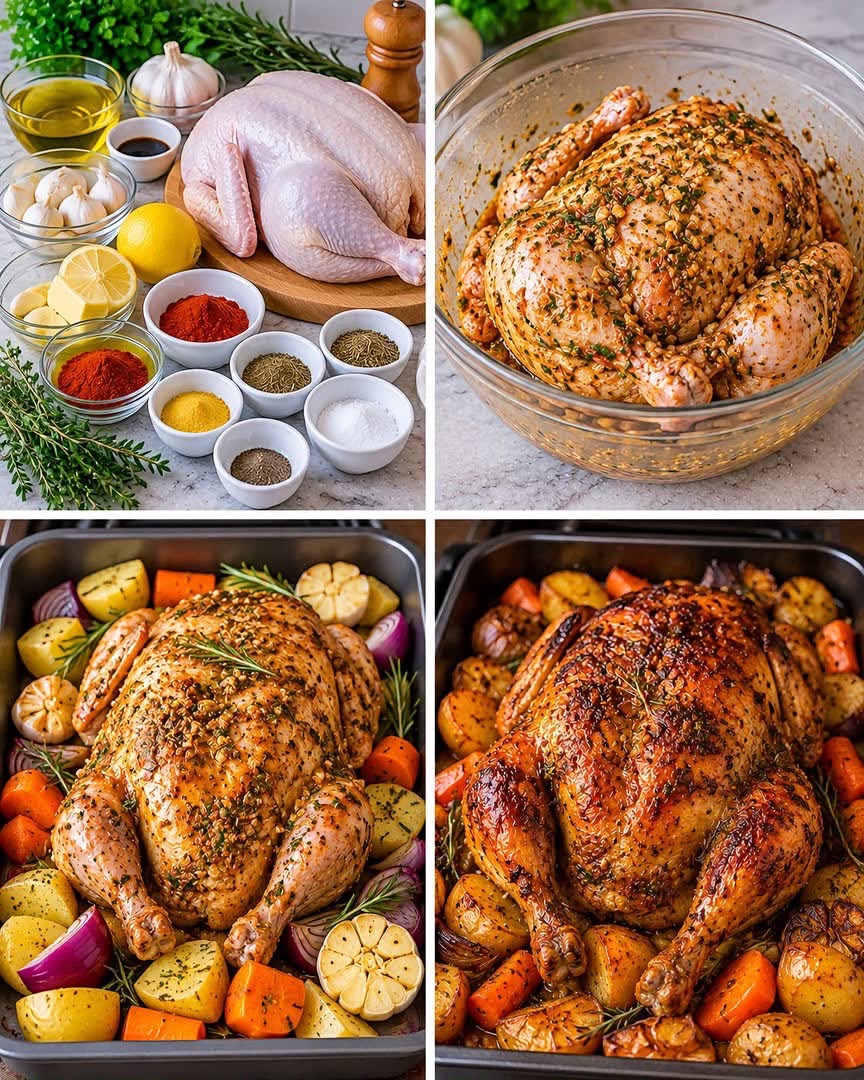
A beautifully roasted whole chicken with crispy golden skin, juicy meat, and tender vegetables is the perfect centerpiece for a comforting family dinner. This Garlic Herb Roasted Whole Chicken is coated in a flavorful marinade made with garlic, lemon, butter, olive oil, paprika, and aromatic herbs.
As the chicken roasts, its delicious juices season the potatoes, carrots, and onions underneath, creating a complete oven-roasted chicken dinner in one pan. Whether you’re preparing a Sunday roast, a holiday meal, or an easy weeknight dinner, this recipe delivers wonderful flavor with simple ingredients.
Recipe Overview
| Detail | Information |
| Prep Time | 20 minutes |
| Marinating Time | 30 minutes or overnight |
| Cook Time | 1 hour 20 minutes, approximately |
| Total Active Time | 1 hour 40 minutes, approximately |
| Servings | 4–6 people |
| Cooking Method | Oven roasting |
| Temperature | 400°F (200°C) |
| Difficulty | Easy to moderate |
Why You’ll Love This Recipe
Incredible garlic and herb flavor: Fresh garlic, lemon, rosemary, thyme, and paprika create a rich marinade that flavors the chicken inside and out.
Crispy skin and juicy meat: Drying the chicken thoroughly before roasting helps the skin turn golden and crisp, while resting the meat after cooking helps retain its juices.
A complete one-pan dinner: Potatoes, carrots, red onions, and garlic roast beneath the chicken, absorbing the flavorful pan juices as they cook.
Perfect for family gatherings: This roasted chicken looks impressive on the table but requires only a few straightforward preparation steps.
Ingredients
For the Whole Roasted Chicken
| Ingredient | Quantity |
| Whole chicken | 1 chicken, about 4–5 lb (1.8–2.2 kg) |
| Olive oil | 1/4 cup |
| Unsalted butter, melted | 4 tablespoons |
| Lemon | 1 large, juiced and zested |
| Soy sauce or Worcestershire sauce | 1 tablespoon |
| Garlic, minced | 6–8 cloves |
| Smoked paprika | 1 tablespoon |
| Sweet paprika | 1 tablespoon |
| Turmeric or curry powder | 1 teaspoon |
| Dried oregano or thyme | 1 tablespoon |
| Dried rosemary | 1 tablespoon |
| Salt | 1 tablespoon, or to taste |
| Freshly ground black pepper | 1 teaspoon |
| Fresh rosemary and thyme | A few sprigs |
| Lemon slices | Optional, for roasting and serving |
For the Roasted Vegetable Base
| Ingredient | Quantity |
| Potatoes, cut into large chunks | 1 lb (450 g) |
| Carrots, cut into thick pieces | 3 large |
| Red onion, cut into wedges | 1 large |
| Garlic heads, halved horizontally | 2 |
| Olive oil | 1–2 tablespoons |
| Salt and black pepper | To taste |
| Fresh rosemary | A few sprigs |
Step-by-Step Instructions
Step 1: Prepare the Garlic Herb Marinade
In a medium bowl, combine the olive oil, melted butter, lemon juice, lemon zest, soy sauce or Worcestershire sauce, minced garlic, smoked paprika, sweet paprika, turmeric, dried oregano, dried rosemary, salt, and black pepper.
Whisk everything together until the ingredients are evenly combined. The marinade should be aromatic, rich, and easy to spread over the chicken.
Step 2: Prepare and Season the Chicken
Remove any giblets from the chicken cavity, if present. Pat the chicken completely dry with paper towels, including the skin and cavity.
Rub the garlic herb marinade over the entire chicken, covering the breast, legs, wings, and back. If possible, gently loosen the skin over the breast and rub some marinade underneath without tearing the skin.
Place a few lemon slices and fresh herb sprigs inside the cavity for additional aroma, if desired.
Let the chicken marinate for at least 30 minutes. For deeper flavor, cover and refrigerate it overnight. If refrigerated overnight, keep the chicken chilled until you’re ready to roast it.
Step 3: Prepare the Vegetables
Preheat the oven to 400°F (200°C).
Place the potato chunks, carrots, red onion wedges, and halved garlic heads in a large roasting pan. Drizzle with olive oil and season with salt and black pepper.
Add a few fresh rosemary and thyme sprigs, then toss the vegetables to distribute the oil and seasonings evenly.
Arrange the vegetables in a fairly even layer so the chicken can sit securely on top.
Step 4: Place the Chicken in the Roasting Pan
Set the marinated chicken on top of the vegetables, breast-side up. Tuck the wing tips underneath the body if desired to prevent them from browning too quickly.
Pour any remaining marinade over the chicken, provided it has not been contaminated by raw poultry handling. Never use marinade that has contacted raw chicken as a finishing sauce unless it is thoroughly cooked first.
Step 5: Roast Until Golden and Tender
Transfer the roasting pan to the preheated oven and roast for approximately 1 hour to 1 hour and 20 minutes. The exact cooking time will depend on the size of the chicken and your oven.
About halfway through cooking, spoon some of the hot pan juices over the chicken to help keep the surface flavorful. If the skin becomes dark before the chicken is cooked through, loosely cover the browned areas with aluminum foil.
Check the internal temperature with a food thermometer inserted into the thickest part of the breast and the innermost part of the thigh, avoiding the bone. The chicken is safe to eat when it reaches at least 165°F (74°C) in all relevant areas.
If the vegetables are not tender when the chicken is ready, transfer the chicken to a cutting board to rest and return the vegetables to the oven until cooked through.
Step 6: Rest the Chicken
Remove the chicken from the oven and let it rest for 10–15 minutes before carving. Resting helps the juices redistribute throughout the meat, making each serving more tender and flavorful.
Use a sharp carving knife to separate the legs, thighs, wings, and breast meat.
Step 7: Serve and Enjoy
Arrange the roasted chicken on a large serving platter and surround it with the potatoes, carrots, onions, and roasted garlic.
Spoon a little of the flavorful pan juice over the chicken and vegetables. Garnish with fresh rosemary, thyme, or lemon slices for a beautiful finishing touch.
Serve immediately while the skin is crisp and the vegetables are warm.
Best Tips for Perfect Roasted Chicken
Dry the chicken thoroughly. Moisture on the skin can prevent it from browning properly. Patting it dry before adding the marinade helps achieve a more appealing golden finish.
Marinate ahead of time. Refrigerating the seasoned chicken overnight allows the garlic, lemon, and herbs to develop a deeper flavor. Keep raw chicken refrigerated during marinating.
Use a thermometer. Cooking time is only an estimate. A food thermometer is the most reliable way to check that the chicken has reached a safe internal temperature.
Cut the vegetables evenly. Similar-sized potato and carrot pieces cook more consistently. Cut especially large potatoes into smaller chunks.
Avoid overcrowding the pan. Leave enough space for hot air to circulate around the vegetables. If the pan is too crowded, the vegetables may steam instead of roast.
Let the chicken rest before carving. A short resting period helps retain moisture and makes carving easier.
Ingredient Substitutions and Variations
Lemon Garlic Version
For a brighter citrus flavor, increase the lemon zest slightly and add a few lemon slices around the chicken. Avoid adding too much lemon juice, as excessive acidity can overpower the other seasonings.
Spicy Paprika Version
Add 1/2 teaspoon of cayenne pepper or chili flakes to the marinade for a gentle kick of heat. Adjust the amount to suit your taste.
Mediterranean Herb Version
Replace the dried oregano and rosemary with a mixture of dried thyme, basil, and oregano. Add a handful of fresh parsley after roasting for a fresh finish.
Extra Vegetable Version
You can add parsnips, sweet potatoes, bell peppers, or whole mushrooms to the roasting pan. Add delicate vegetables later if they cook faster than the potatoes and carrots.
Butter-Free Version
Replace the melted butter with additional olive oil. The chicken will still develop a flavorful herb coating, although the taste and texture may differ slightly.
What to Serve With Garlic Herb Roasted Chicken
This roasted chicken is a complete meal when served with its pan-roasted vegetables, but a few simple side dishes can make the dinner even more special.
A crisp green salad with a lemon vinaigrette provides a refreshing contrast to the rich roasted chicken. Steamed green beans, roasted broccoli, or sautéed spinach are also excellent choices.
For a larger family meal, serve the chicken with warm dinner rolls, crusty bread, or a light rice pilaf. The flavorful pan juices can be spooned over the vegetables or served alongside the meat.
Make-Ahead Instructions
The garlic herb marinade can be prepared up to one day in advance and stored in a covered container in the refrigerator.
You can also season the chicken up to 24 hours before roasting. Keep it covered in the refrigerator, then transfer it to the oven when ready to cook.
For easier preparation, chop the vegetables a few hours ahead and refrigerate them in a covered container. Add the oil and seasonings just before arranging them in the roasting pan.
Storage Instructions
Allow leftover chicken and vegetables to cool slightly, then refrigerate them in airtight containers within two hours of cooking.
Store leftovers in the refrigerator for up to 3–4 days. For best results, keep the meat and vegetables in separate containers if you want to reheat them differently.
Remove the meat from the bones before storing if that makes portioning easier.
Reheating Instructions
Oven: Place the chicken and vegetables in an oven-safe dish with a small splash of broth or water. Cover loosely with foil and heat at 325°F (165°C) until thoroughly hot. Remove the foil near the end if you want to crisp the skin.
Microwave: Place a portion on a microwave-safe plate, cover loosely, and heat in short intervals until steaming hot throughout. The skin will be softer than when reheated in the oven.
Reheat leftovers to an internal temperature of 165°F (74°C).
Can You Freeze Roasted Chicken?
Yes. Remove the cooked meat from the bones and place it in freezer-safe airtight containers or bags. Store the roasted vegetables separately if possible.
Freeze for up to 3 months for best quality. Thaw in the refrigerator overnight before reheating thoroughly.
The texture of potatoes may change slightly after freezing, but the chicken remains useful for soups, sandwiches, wraps, salads, and quick family meals.
Common Mistakes to Avoid
Skipping the drying step: Wet skin makes it harder to achieve a crisp, golden finish. Always pat the chicken dry before applying the marinade.
Guessing when the chicken is done: Color alone cannot confirm food safety. Use a food thermometer and verify that the meat reaches at least 165°F (74°C).
Cutting the chicken immediately: Carving straight from the oven can cause more juices to escape. Rest the chicken for 10–15 minutes first.
Using vegetables that are too large: Oversized chunks may remain firm while the chicken finishes cooking. Cut the vegetables into reasonably even pieces and continue roasting them if needed.
Leaving raw chicken unrefrigerated for too long: Marinate the chicken in the refrigerator, not on the counter for extended periods. Discard any marinade that has contacted raw poultry unless it is thoroughly cooked before serving.
Frequently Asked Questions
How long does it take to roast a whole chicken at 400°F?
A 4–5 lb (1.8–2.2 kg) chicken may take around 1 hour to 1 hour and 20 minutes at 400°F (200°C), but the exact time varies. Always check the internal temperature rather than relying only on the clock.
Should I cover the chicken while roasting?
Usually, you can roast it uncovered to encourage golden, crisp skin. If the skin browns too quickly before the inside is cooked, loosely cover the darker areas with foil.
Can I use fresh herbs instead of dried herbs?
Yes. Fresh rosemary and thyme work beautifully in this recipe. Because dried herbs are more concentrated, use a larger quantity of fresh herbs when substituting, according to taste.
Can I prepare this recipe without potatoes?
Absolutely. Replace the potatoes with extra carrots, sweet potatoes, parsnips, or other vegetables that roast well. Adjust their cooking time as necessary.
How do I keep roasted chicken from drying out?
Avoid overcooking, use a thermometer, and allow the chicken to rest before carving. The olive oil and butter marinade adds flavor, but correct cooking temperature is the key to juicy meat.
Can I use chicken broth in the roasting pan?
Yes. Add a small amount of chicken broth to the bottom of the pan if needed to prevent the drippings from burning. Avoid adding too much liquid, as it can reduce browning.
Is this recipe suitable for meal prep?
Yes. Divide the cooked chicken and vegetables into individual containers and refrigerate them for convenient lunches or dinners throughout the next few days.
Nutrition Estimate
The following values are approximate per serving, assuming 6 servings and including some of the roasted vegetables. Actual nutrition depends on the chicken’s size, the amount of skin and drippings eaten, and how much marinade remains in the pan.
| Nutrient | Approximate Amount |
| Calories | 450–600 kcal |
| Protein | 35–45 g |
| Carbohydrates | 20–30 g |
| Fat | 22–35 g |
| Fiber | 4–6 g |
| Sodium | Varies with added salt and sauce |
Final Thoughts
Garlic Herb Roasted Whole Chicken with Vegetables is a comforting, flavorful recipe that combines tender chicken, aromatic herbs, bright lemon, and perfectly roasted vegetables in one pan. It’s ideal for family dinners, weekend meals, and special occasions when you want a satisfying dish without complicated preparation.
With a flavorful marinade, evenly cut vegetables, and a reliable meat thermometer, you can prepare a beautiful roast chicken that looks impressive and tastes delicious.
Try this recipe for your next family dinner, and save it for the next time you’re craving a classic homemade roasted chicken meal!