
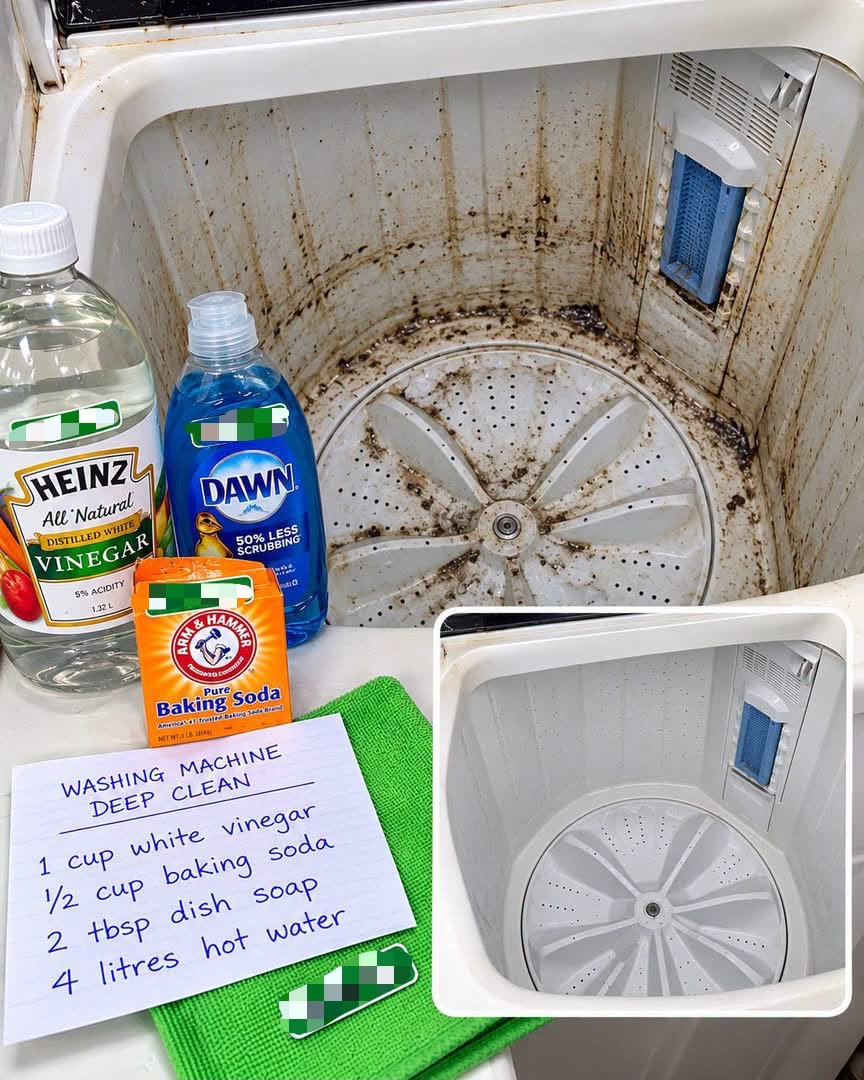
Is your washing machine starting to smell musty, or have you noticed detergent residue, grime, or unpleasant odors around the drum? Regular cleaning can help keep your washing machine fresh and prevent residue from building up over time.
This washing machine deep-cleaning guide explains how to clean the drum, wipe down accessible surfaces, and maintain your appliance using simple household cleaning supplies.
White vinegar and baking soda are often used in homemade cleaning routines, but they should not be mixed together in a single cleaning solution. Their reaction neutralizes much of their individual chemical effect, and adding dish soap can create excess suds. For the safest and most effective results, follow your washing machine manufacturer’s cleaning instructions and use a washer cleaner approved for your appliance.
Cleaning Overview
| Detail | Information |
| Preparation Time | 5 minutes |
| Cleaning Time | 30–60 minutes, depending on the method |
| Difficulty | Easy |
| Suitable Appliances | Most washing machines, subject to manufacturer instructions |
| Main Goal | Remove residue and reduce unpleasant odors |
| Recommended Frequency | As specified in the owner’s manual |
Cleaning Supplies
| Supply | Quantity or Purpose |
| Washing machine cleaner | Use the amount specified on the product label |
| Microfiber cloth | 1–2 clean cloths |
| Soft cleaning brush | 1, if needed |
| Warm water | As needed for wiping |
| Clean towel | 1 for drying |
Important: Do not automatically pour vinegar, baking soda, dish soap, or other household cleaners into the drum. Some manufacturers prohibit certain products because they can damage rubber seals, metal components, hoses, or internal parts.
Step-by-Step Washing Machine Cleaning Instructions
Step 1: Empty the Washing Machine
Remove all clothing, towels, and other items from the drum.
Check for forgotten socks, lint, paper, or other debris. Make sure the machine is switched off before cleaning accessible surfaces.
Step 2: Clean the Detergent Drawer
If the detergent drawer is removable, take it out according to the manufacturer’s instructions.
Wash it with warm water and wipe away detergent residue using a soft cloth or brush. Avoid abrasive pads that could scratch the surfaces.
Allow the drawer to dry before reinstalling it.
Step 3: Wipe the Drum and Door
Use a clean microfiber cloth dampened with warm water to wipe the inside of the drum and the accessible surfaces around the door.
For a front-loading washing machine, gently clean the folds of the rubber door gasket, where moisture, lint, and detergent residue can accumulate.
Do not pull, stretch, or remove the seal unless the manufacturer specifically instructs you to do so.
Step 4: Clean the Accessible Filter Area
Consult your owner’s manual to locate the drain pump filter or other user-serviceable filter, if your model has one.
Follow the manual’s instructions for cleaning it. The machine may need to be unplugged, and some models require precautions to manage residual water.
Never remove a filter cover while the machine is operating. If the manual does not describe filter removal as a user task, leave it to a qualified technician.
Step 5: Run the Machine’s Cleaning Cycle
If your washing machine has a Tub Clean, Drum Clean, or Self-Clean program, use it according to the manufacturer’s instructions.
Add a washing machine cleaning product only if the manual permits it, following the product label for the correct amount.
If your appliance does not have a dedicated cleaning cycle, consult its manual for the recommended maintenance procedure. Do not assume that the hottest available cycle is suitable for every model.
Step 6: Wipe the Exterior
Use a damp microfiber cloth to wipe the control panel and exterior surfaces.
Avoid spraying liquid directly onto electrical controls, buttons, or display panels. Never use abrasive cleaners or products that the manufacturer advises against.
Step 7: Allow the Machine to Dry
After cleaning, wipe away any remaining moisture with a clean towel.
If your model permits it, leave the door or lid and detergent drawer slightly open to allow air to circulate. Keep the appliance ventilated and follow the manufacturer’s safety guidance.
Best Tips for Keeping Your Washing Machine Fresh
Clean regularly. Follow the maintenance schedule in your owner’s manual, particularly if you wash laundry frequently.
Use the correct detergent quantity. Excess detergent can leave residue inside the machine and contribute to unpleasant smells.
Avoid overloading. Overloading can interfere with proper washing and rinsing.
Remove wet laundry promptly. Leaving damp clothing inside the machine for long periods can encourage musty odors.
Keep the door gasket clean. Wipe away moisture and visible residue, particularly after washing heavily soiled items.
Use the correct washing temperature. Select the temperature recommended for your laundry and machine. A hot cycle is not necessary for every load.
Common Washing Machine Cleaning Mistakes
Mixing Vinegar and Baking Soda
When combined, vinegar and baking soda react with each other and release carbon dioxide. The resulting mixture is not necessarily a more effective cleaner. Use products separately only when the appliance manufacturer specifically recommends them.
Adding Dish Soap to the Drum
Dish soap can produce excessive suds in a washing machine. Too much foam may interfere with operation and can cause leaks or error codes.
Using Too Much Cleaner
Excess cleaning product can leave residue rather than remove it. Always follow the recommended dosage.
Scrubbing Rubber Seals with Abrasive Brushes
Rough brushes and harsh chemicals can damage the door gasket. Choose a soft cloth or brush and use gentle pressure.
Ignoring Persistent Odors
If a bad smell continues despite proper cleaning, the cause may be a clogged drain, standing water, a dirty filter, or another maintenance problem. Consult the manual or contact a qualified appliance technician.
Frequently Asked Questions
Can I clean my washing machine with white vinegar?
Some manufacturers permit limited use of vinegar for specific purposes, while others advise against it because acidity can damage certain rubber parts or other components. Check your appliance manual before using vinegar.
Can I use baking soda to clean the washing machine?
Baking soda is a mild alkaline substance, but it should not automatically be added to every washing machine cleaning cycle. Follow the manufacturer’s recommendations for your model.
Should I mix vinegar, baking soda, and dish soap?
No. Mixing these products does not create a universally effective washing machine cleaner. Vinegar and baking soda react with each other, while dish soap can create excessive suds.
How often should I deep-clean my washing machine?
The recommended frequency depends on the appliance and how often it is used. Many manufacturers recommend running a cleaning cycle periodically, often monthly, but your owner’s manual should take priority.
Why does my washing machine smell bad after cleaning?
Odors can persist if residue remains in the detergent drawer, door gasket, drain filter, or drainage system. Follow the manufacturer’s cleaning instructions and seek professional assistance if the smell continues.
Should I leave the washing machine door open after cleaning?
If the manufacturer permits it, leaving the door or lid slightly open helps moisture evaporate and allows the interior to dry. Keep the appliance safely out of reach of children and pets.
Final Thoughts
Cleaning your washing machine regularly can help reduce detergent buildup, maintain fresh-smelling laundry, and support the appliance’s long-term performance.
The best approach is to clean the accessible parts gently, use the machine’s designated cleaning cycle when available, and follow the manufacturer’s instructions rather than relying on mixtures of household chemicals.
A clean washing machine starts with the right maintenance routine—not necessarily with more cleaning ingredients.
⚠️ Cleaning Safety Disclaimer
Never mix cleaning products indiscriminately. In particular, never mix vinegar with bleach or products containing chlorine, because this can release dangerous chlorine gas. Follow product labels, ventilate the area, and keep cleaning products away from children and pets. Always consult your washing machine’s owner’s manual before using homemade cleaning solutions.