
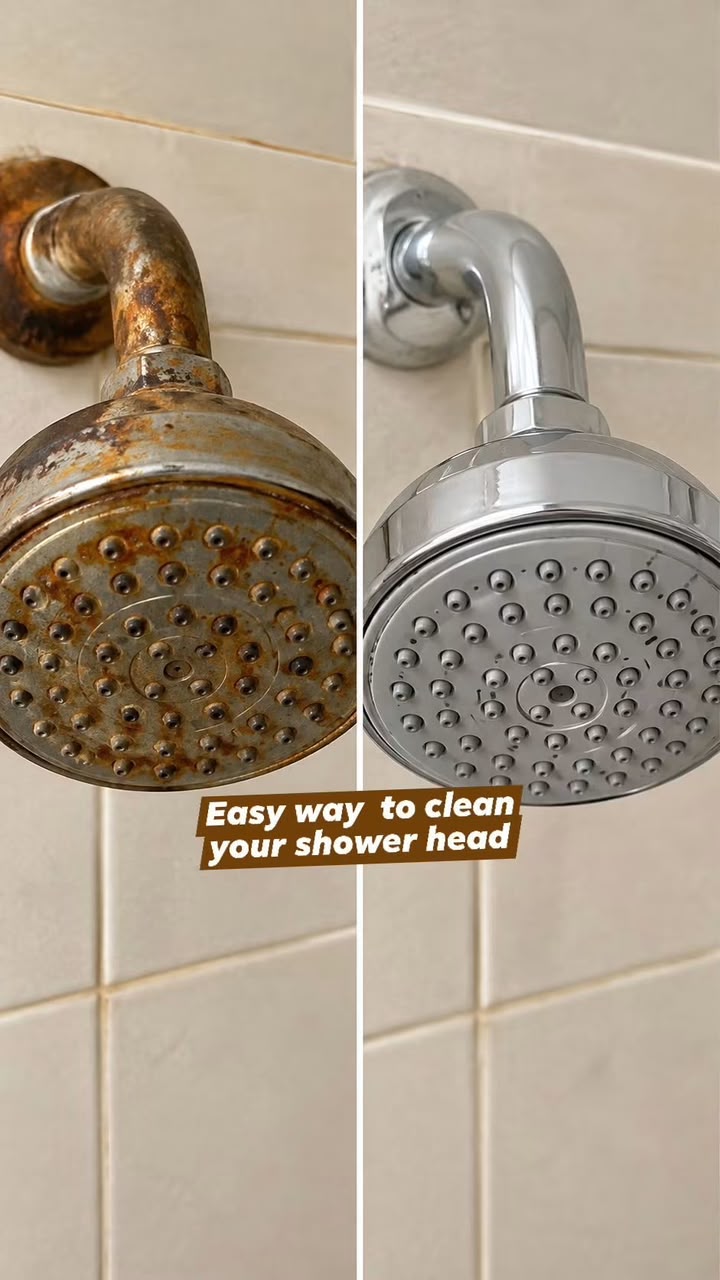
Is your showerhead covered with white mineral deposits, limescale, or stubborn dirt? This simple DIY showerhead cleaning solution uses white vinegar and a few basic household supplies to help dissolve mineral buildup and restore better water flow.
Over time, hard water minerals can accumulate around shower nozzles, causing blocked spray holes, reduced water pressure, and an unpleasant appearance.
Fortunately, you don’t need expensive bathroom cleaning products to tackle ordinary limescale. White vinegar is a simple, affordable cleaning ingredient that can help loosen mineral deposits and make your showerhead look cleaner.
Cleaning Method Overview
| Detail | Information |
| Preparation Time | 5 minutes |
| Cleaning Time | 30–60 minutes |
| Total Time | 35–65 minutes |
| Difficulty | Very easy |
| Cleaning Area | Showerhead |
| Main Ingredient | White Vinegar |
| Cleaning Method | Soaking |
| Best For | Limescale and mineral deposits |
Why You’ll Love This Cleaning Method
This homemade showerhead cleaner is inexpensive, easy to prepare, and requires only a few household supplies.
White vinegar contains acetic acid, which helps dissolve mineral deposits caused by hard water.
The soaking method also makes cleaning easier because it allows the vinegar to work on stubborn buildup before you start scrubbing.
It’s especially useful for cleaning showerhead spray holes that have become partially blocked by limescale.
Ingredients and Materials
| Ingredient or Material | Quantity | Purpose |
| White vinegar | 1–2 cups | Helps dissolve mineral deposits |
| Baking soda (optional) | 2 tablespoons | Produces an effervescent reaction |
| Plastic freezer bag | 1 | Holds the cleaning solution |
| Rubber band or strong tape | 1 | Secures the bag |
| Old toothbrush | 1 | Removes loosened deposits |
| Clean microfiber cloth | 1 | Wipes and dries the showerhead |
Step-by-Step Cleaning Instructions
Step 1: Prepare the Cleaning Solution
Pour 1–2 cups of white vinegar into a plastic freezer bag.
White vinegar is the main cleaning ingredient because its acidity helps break down limescale and mineral deposits.
Baking soda is optional, but it is generally unnecessary because mixing it with vinegar neutralizes much of their acidity.
Step 2: Position the Plastic Bag
Carefully place the plastic bag around the showerhead.
Make sure the showerhead is sufficiently immersed in the vinegar so the solution can reach the areas covered with mineral deposits.
Step 3: Secure the Bag
Use a strong rubber band or suitable tape to secure the bag around the shower pipe.
Check that the bag is stable and will not slip or spill during the soaking process.
Step 4: Allow the Vinegar to Work
Leave the showerhead soaking for approximately 30–60 minutes.
For heavier mineral buildup, a longer soaking period may help, but check the manufacturer’s cleaning instructions first. Avoid overnight soaking unless the showerhead manufacturer confirms that the materials can tolerate it.
Step 5: Remove the Bag
Carefully remove the plastic bag and dispose of the used cleaning solution.
Rinse the showerhead thoroughly with clean water.
Step 6: Scrub the Spray Holes
Use an old, soft toothbrush to gently scrub around the showerhead and its spray holes.
This helps remove loosened mineral deposits and remaining dirt.
Avoid using sharp metal objects that could damage the spray nozzles.
Step 7: Flush and Dry
Turn on the shower and allow warm water to run for 1–2 minutes to flush out loosened deposits.
Finally, wipe the outside of the showerhead with a clean microfiber cloth.
Your showerhead should now look cleaner, with improved water flow if limescale was blocking the spray holes.
Best Tips for Effective Showerhead Cleaning
Use plain white vinegar rather than flavored or colored vinegar.
For regular maintenance, clean your showerhead every 1–3 months, depending on how hard your water is.
Use a soft toothbrush to avoid scratching delicate finishes.
If your showerhead has a special coating, check the manufacturer’s instructions before using acidic cleaners.
For removable showerheads, soaking them in a suitable container can be easier than attaching a plastic bag.
Best Cleaning Ingredient Options
White Vinegar: The primary cleaning ingredient. Its acetic acid helps dissolve calcium-based mineral deposits.
Baking Soda: Useful for some general cleaning tasks, but it is not necessary for this acidic descaling method.
Warm Water: Helps rinse away loosened mineral deposits after soaking.
Microfiber Cloth: Ideal for wiping the showerhead without scratching its surface.
Cleaning Variations
Quick Showerhead Cleaning: For light mineral buildup, soak the showerhead for approximately 30 minutes before brushing and rinsing.
Removable Showerhead Method: Remove the showerhead according to the manufacturer’s instructions and soak it in a container filled with diluted white vinegar.
Gentle Cleaning Method: Mix equal parts white vinegar and water for a milder solution, particularly when cleaning delicate or manufacturer-approved surfaces.
Exterior Showerhead Cleaning: Apply a little diluted vinegar to a microfiber cloth and gently wipe compatible surfaces before rinsing thoroughly.
What to Clean Along With Your Showerhead
While cleaning your showerhead, it’s a good opportunity to refresh other bathroom surfaces.
Clean the shower faucet, shower hose, glass doors, and compatible bathroom fixtures using products suitable for their materials.
For shower glass, a dedicated bathroom descaler may help remove stubborn hard-water marks.
Always use separate cleaning products according to their labels and never mix vinegar with bleach or chlorine-based cleaners.
Make-Ahead Instructions
You can prepare the vinegar solution shortly before cleaning.
However, there is no need to prepare large quantities in advance. Freshly prepared cleaning solution is simple and effective for this task.
Storage Instructions
Store unused white vinegar in its original container with the lid tightly closed.
Keep it in a cool, dry place away from children and pets.
Do not store a vinegar and baking soda mixture in a sealed container because the reaction releases carbon dioxide gas.
Reapplication Instructions
If mineral deposits remain after the first treatment, repeat the cleaning process using a fresh vinegar solution, provided the showerhead material is compatible.
Avoid excessive soaking or aggressive scrubbing.
Freezing Instructions
Freezing is not necessary or recommended for this cleaning solution. White vinegar can be used directly at room temperature.
Common Cleaning Mistakes to Avoid
Leaving Vinegar on Delicate Finishes: Acidic cleaners can damage certain coatings, natural stone, brass finishes, and other sensitive materials.
Mixing Vinegar With Bleach: Never combine vinegar with bleach or chlorine-based cleaners because dangerous chlorine gas can be released.
Adding Too Much Baking Soda: Baking soda reacts with vinegar and reduces its acidity, making the solution less effective for dissolving limescale.
Using Metal Tools: Needles, knives, and metal brushes can damage the small spray openings.
Skipping the Final Rinse: Always flush the showerhead thoroughly with clean water after cleaning.
Soaking for Too Long: Extended exposure to vinegar may damage certain seals, finishes, and internal components.
Cleaning Benefits and Important Precautions
| Cleaning Component | Benefit |
| White Vinegar | Helps dissolve calcium-based limescale |
| Warm Water | Helps rinse away loosened deposits |
| Soft Toothbrush | Removes remaining surface buildup |
| Microfiber Cloth | Cleans and dries compatible surfaces |
Important safety advice:
Check your showerhead manufacturer’s cleaning recommendations.
Avoid vinegar on natural stone, marble, and acid-sensitive finishes.
Do not mix vinegar with bleach, ammonia, or other cleaning products.
Keep the plastic bag securely attached to prevent spills.
Wear household cleaning gloves if you have sensitive skin.
Keep cleaning solutions away from children and pets.
Note: Vinegar can help remove limescale, but it does not reliably remove actual rust or repair corrosion. For rust stains, use a suitable product recommended for your showerhead’s material.
Frequently Asked Questions
1. How long should I leave vinegar on my showerhead?
For ordinary limescale, approximately 30–60 minutes is often sufficient. Always check material compatibility before soaking.
2. Does white vinegar remove hard-water deposits?
Yes. Its acetic acid helps dissolve calcium-based mineral deposits that accumulate around shower nozzles.
3. Can I use apple cider vinegar instead?
White vinegar is preferable because it is generally clearer and less likely to leave colored residue.
4. Can I add baking soda to white vinegar?
You can, but it is not recommended for descaling. The two ingredients react and partially neutralize each other.
5. Will vinegar remove rust from a showerhead?
Vinegar may help loosen some light surface deposits, but actual rust and corrosion may require a specialized cleaner suitable for the material.
6. How often should I clean my showerhead?
Every 1–3 months is a reasonable starting point. Homes with hard water may need more frequent cleaning.
7. Can I use this method on a black showerhead?
Be careful. Some black finishes are sensitive to acidic cleaners. Check the manufacturer’s instructions and use only approved cleaning products.
8. What if my showerhead is still clogged after cleaning?
Mineral deposits may be trapped inside the showerhead or its filter. Check the manufacturer’s instructions for removing and cleaning the filter or consider replacing the showerhead if necessary.
Final Thoughts
This DIY white vinegar showerhead cleaning method is a simple and affordable way to tackle everyday limescale and hard-water buildup.
With just a plastic bag, white vinegar, and an old toothbrush, you can loosen mineral deposits, clean spray holes, and help restore better water flow.
For the best results, use the correct soaking time for your showerhead material, rinse thoroughly, and make regular bathroom maintenance part of your cleaning routine.