
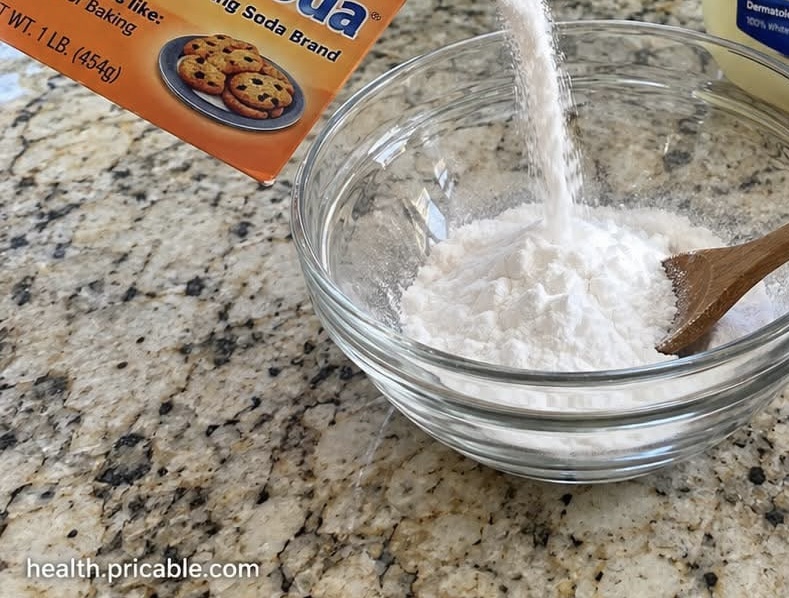
This homemade skincare mixture has become popular online as a supposed quick treatment for age spots and dark spots. The viral recipe combines baking soda, Vaseline, and baby oil to create a simple paste.
However, claims that this mixture can completely remove age spots in just three days are unrealistic. Baking soda can also be irritating to the skin, especially when applied directly or left on for several minutes.
Ingredients
| Ingredient | Amount |
| Baking soda | 1 tablespoon |
| Vaseline (petroleum jelly) | 1 teaspoon |
| Baby oil | A few drops |
How the Viral Recipe Is Usually Prepared
1. Combine the Ingredients
Place the baking soda and Vaseline in a clean, small bowl.
2. Add Baby Oil
Add a few drops of baby oil and mix until the ingredients form a thick, smooth paste.
3. Apply to the Skin
Apply a small amount of the mixture to the targeted area.
The viral instructions commonly recommend leaving it on for 10–15 minutes.
4. Rinse Thoroughly
Rinse the area thoroughly with lukewarm water and gently pat the skin dry.
Important Dermatological Warnings
It Will Not Remove Age Spots in 3 Days
There is no reliable evidence that this homemade mixture can eliminate age spots or other forms of hyperpigmentation in only three days.
Pigmentation often develops gradually and can take weeks or months to improve, depending on its cause.
Baking Soda Can Irritate the Skin
Baking soda is alkaline and is not formulated to maintain the skin’s natural protective barrier.
Applying it directly to the skin may cause dryness, redness, stinging, irritation, or worsening sensitivity.
Repeated irritation can also contribute to post-inflammatory hyperpigmentation, potentially making dark spots appear more noticeable rather than less visible.
Vaseline Does Not Remove Pigmentation
Vaseline is primarily an occlusive moisturizer that helps reduce water loss from the skin. It can help protect dry skin, but it is not a proven treatment for removing age spots.
Baby oil can also provide an emollient effect, but it does not directly treat the underlying causes of pigmentation.
Safer Options for Dark Spots
If your goal is to gradually improve the appearance of dark spots, a consistent skincare routine is more appropriate than harsh DIY mixtures.
Daily Broad-Spectrum Sunscreen
Use a broad-spectrum sunscreen with SPF 30 or higher, preferably SPF 50+, every day. Sun exposure can worsen pigmentation and make existing spots more persistent.
Vitamin C
A well-formulated vitamin C serum may help brighten uneven skin tone and support a more even complexion when used consistently.
Azelaic Acid
Azelaic acid is another commonly used skincare ingredient that can help with uneven pigmentation and is generally better suited to facial skin than abrasive DIY treatments.
Retinoids
Retinoids can help improve skin cell turnover and may gradually improve the appearance of certain types of pigmentation. They can cause irritation, especially when first introduced, so they should be used carefully.
See a Dermatologist
Not every dark spot is simply an age spot. A dermatologist can determine what is causing the pigmentation and recommend an appropriate treatment.
A changing, bleeding, crusting, painful, or otherwise unusual dark spot should be evaluated by a medical professional rather than treated with a homemade remedy.
How to Avoid Making Dark Spots Worse
Avoid aggressive scrubbing, harsh exfoliation, and irritating DIY ingredients.
Do not repeatedly apply baking soda to pigmented areas in an attempt to make the spots disappear faster.
Use gentle skincare products and protect your skin from ultraviolet exposure every day.
If a product causes significant burning, swelling, blistering, or persistent redness, stop using it and seek medical advice if the reaction is severe or does not improve.
Final Thoughts
The baking soda, Vaseline, and baby oil mixture is a viral homemade skincare recipe, but it should not be considered a proven three-day treatment for age spots.
Baking soda may irritate the skin and potentially worsen pigmentation, particularly when used repeatedly.
For a safer approach, focus on daily sun protection and evidence-based ingredients such as vitamin C, azelaic acid, or appropriately selected retinoids. For persistent or concerning pigmentation, professional dermatological advice is the best option.
⚠️This recipe may not be suitable for everyone, so it is advisable to consult a doctor.