
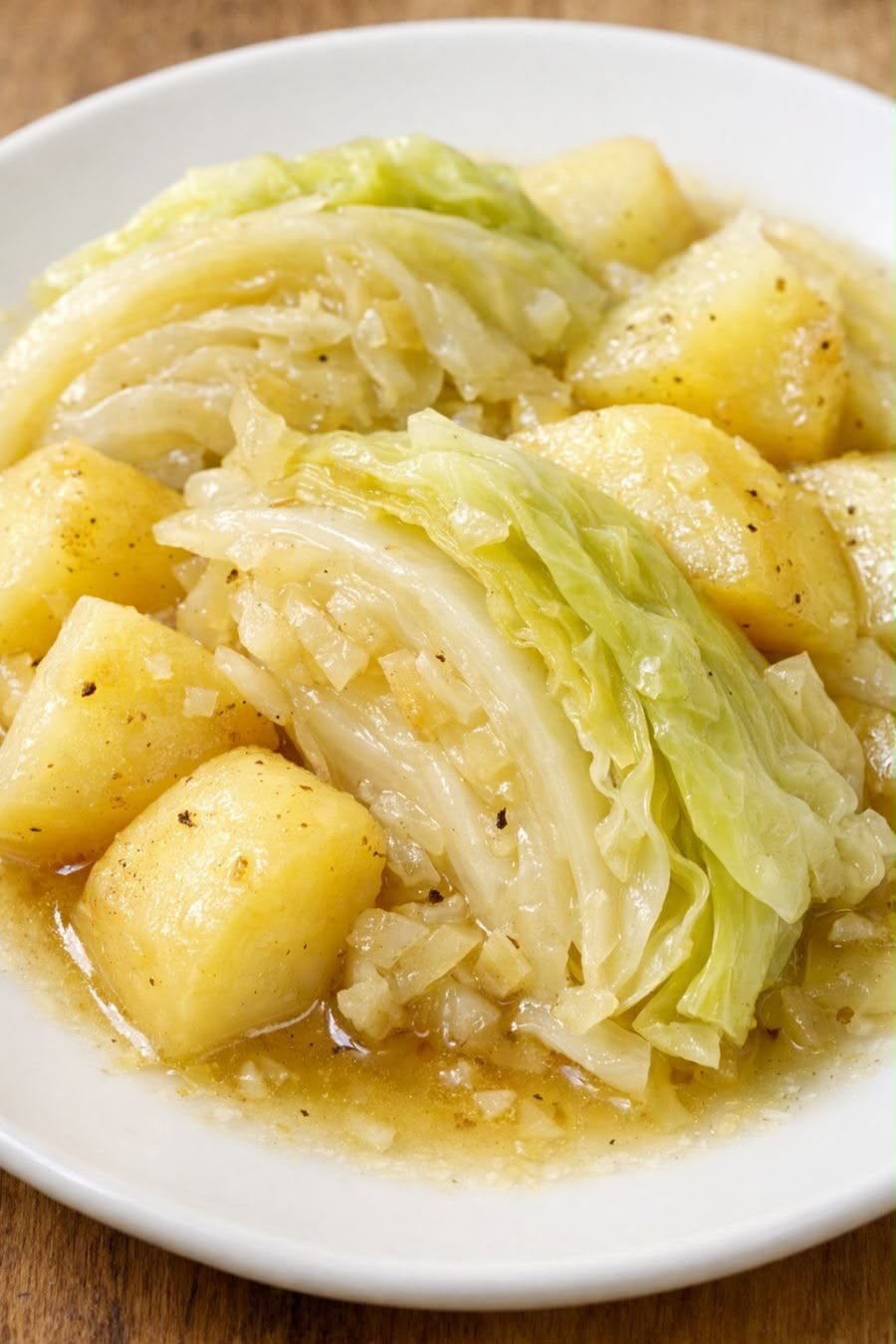
This Braised Cabbage and Potatoes recipe is a simple, comforting dish made with tender green cabbage, soft potatoes, aromatic onions, fresh garlic, and a flavorful broth. Slowly simmered in one pot, the vegetables absorb the delicious seasonings while becoming perfectly tender.
Whether you’re looking for an easy weeknight dinner, a budget-friendly family meal, or a cozy vegetable side dish, this recipe is an excellent choice. With everyday ingredients and minimal preparation, you can create a warm, satisfying meal that tastes homemade in every bite.
Recipe Overview
| Detail | Information |
| Prep Time | 15 minutes |
| Cook Time | 35–45 minutes |
| Total Time | 50–60 minutes |
| Servings | 4 |
| Course | Main Course or Side Dish |
| Cuisine | Homestyle Comfort Food |
| Cooking Method | Stovetop Braising |
| Difficulty | Easy |
Why You’ll Love This Recipe
Simple and affordable: Cabbage, potatoes, onions, and broth are inexpensive ingredients that come together to create a delicious, satisfying dish.
One-pot convenience: Everything cooks in a single pot, making preparation easier and reducing the amount of washing up afterward.
Tender and flavorful: Slow simmering allows the cabbage and potatoes to absorb the savory broth, garlic, and seasonings.
Perfect for family meals: This versatile dish can be served as a vegetarian main course or as a comforting side dish alongside your favorite protein.
Easy to customize: You can adjust the broth, seasonings, and herbs to create a flavor profile that suits your preferences.
Ingredients
For the Braised Cabbage and Potatoes
| Ingredient | Amount |
| Green cabbage | 1 small head |
| Medium potatoes | 3–4 |
| Yellow onion, finely chopped | 1 medium |
| Garlic cloves, minced | 2 |
| Olive oil or butter | 2 tablespoons |
| Vegetable or chicken broth | 2 cups (480 ml) |
| Salt | To taste |
| Black pepper | To taste |
| Ground cumin or paprika | A pinch, optional |
Optional Flavor Enhancers
| Ingredient | Amount |
| Dried thyme | 1/2 teaspoon |
| Fresh parsley, chopped | 1–2 tablespoons |
| Bay leaf | 1 |
| Lemon juice | 1 teaspoon, optional |
Step-by-Step Instructions
Step 1: Prepare the Vegetables
Rinse the cabbage under cool running water and remove any damaged outer leaves.
Cut the cabbage into four large wedges, keeping a small portion of the core attached to help the leaves hold together during cooking. If the cabbage is particularly large, cut it into six wedges.
Peel the potatoes and cut them into evenly sized chunks, approximately 1 1/2 inches (4 cm) wide. Uniform pieces help the potatoes cook evenly.
Finely chop the onion and mince the garlic.
Step 2: Sauté the Onion and Garlic
Heat the olive oil or butter in a large, deep skillet, Dutch oven, or heavy-bottomed pot over medium heat.
Add the chopped onion and cook for 4–5 minutes, stirring occasionally, until soft and translucent.
Add the minced garlic and cook for another 30–60 seconds until fragrant. Avoid browning the garlic too much, as it can develop a bitter flavor.
Step 3: Add the Cabbage and Potatoes
Arrange the cabbage wedges and potato chunks over the sautéed onion mixture.
Season with salt, black pepper, and a pinch of cumin or paprika if desired. Add the thyme and bay leaf for extra flavor.
Pour in the broth, making sure the liquid covers the bottom of the pot and reaches partway up the vegetables. The vegetables do not need to be completely submerged because the covered pot will trap steam and help them cook evenly.
Step 4: Braise Until Tender
Bring the broth to a gentle simmer over medium heat.
Once the liquid begins to bubble, reduce the heat to low and cover the pot with a tight-fitting lid.
Cook for 35–45 minutes, checking occasionally to make sure the liquid has not evaporated too much. If the pot becomes dry before the vegetables are tender, add a little more hot broth or water.
Turn the cabbage wedges carefully halfway through cooking if needed, and gently stir the potatoes without breaking them apart.
The dish is ready when the potatoes are fork-tender and the cabbage is soft, sweet, and infused with the savory broth.
Step 5: Adjust the Seasoning
Remove the bay leaf, if used.
Taste the broth and adjust the salt and black pepper as needed. For a brighter finish, add a small squeeze of lemon juice.
If you prefer a more concentrated broth, remove the lid and simmer for another 3–5 minutes. For a brothier dish, add a little extra stock.
Step 6: Serve Warm
Transfer the cabbage wedges and potatoes to shallow bowls.
Spoon the flavorful cooking broth over the vegetables and finish with freshly chopped parsley if desired.
Serve immediately while hot, with plenty of broth in each bowl for a comforting, satisfying meal.
Best Tips for Perfect Braised Cabbage and Potatoes
Choose the right cabbage: A fresh, firm green cabbage with tightly packed leaves will hold its shape better during braising.
Cut the potatoes evenly: Similar-sized pieces cook at approximately the same rate and help prevent some potatoes from becoming mushy while others remain firm.
Keep the heat low: Gentle simmering allows the vegetables to become tender without breaking apart or scorching at the bottom of the pot.
Avoid too much liquid: Braising requires less liquid than boiling. Start with approximately 2 cups of broth and add more only if necessary.
Use a heavy-bottomed pot: A Dutch oven or thick-bottomed casserole distributes heat evenly and reduces the risk of sticking.
Season in stages: Add some seasoning at the beginning, then taste the broth near the end and make any final adjustments.
Best Ingredient Options
Green cabbage: The classic choice for a naturally sweet flavor and tender texture after slow cooking.
Potatoes: Yukon Gold potatoes hold their shape well while becoming creamy inside. Russet potatoes also work but may break apart more easily.
Olive oil: Adds a light, fruity flavor and keeps the recipe dairy-free when used instead of butter.
Butter: Gives the broth a richer, more traditional homemade flavor.
Vegetable broth: Ideal for a vegetarian version. Choose a good-quality broth with a balanced flavor.
Chicken broth: Creates a deeper, savory taste. Use a suitable halal-certified broth if needed.
Garlic and onion: These aromatics form the foundation of the dish and give the broth its comforting flavor.
Recipe Variations
Garlic Butter Cabbage and Potatoes: Use butter instead of olive oil and add an extra clove of garlic for a richer, more aromatic dish.
Smoky Paprika Version: Add 1/2 teaspoon of smoked paprika for a deeper, slightly smoky flavor.
Herb-Infused Vegetables: Add fresh thyme, rosemary, or a bay leaf to the broth while the vegetables simmer.
Spicy Braised Cabbage: Add a pinch of red pepper flakes or a little cayenne pepper for gentle heat.
Creamy Cabbage and Potatoes: Stir in 2–3 tablespoons of cream near the end of cooking for a richer broth. Avoid boiling vigorously after adding the cream.
Hearty Beef Variation: Add small pieces of browned beef before braising and increase the cooking time as needed until the beef is tender. Use enough broth to keep the ingredients moist.
Extra Vegetable Version: Add sliced carrots, celery, or leeks for more color, texture, and flavor.
What to Serve With Braised Cabbage and Potatoes
Roasted chicken: The savory broth and tender vegetables pair beautifully with oven-roasted chicken.
Grilled or pan-seared beef: Serve the cabbage and potatoes alongside seasoned beef for a heartier dinner.
Baked fish: Mild white fish provides a lighter protein option that complements the soft vegetables.
Fresh crusty bread: A slice of warm bread is perfect for soaking up the flavorful broth.
Fresh green salad: A crisp salad with cucumber, tomatoes, and lemon dressing adds freshness to the meal.
Roasted vegetables: Carrots, green beans, or broccoli make excellent additions to a vegetable-focused dinner.
Make-Ahead Instructions
You can prepare the cabbage, potatoes, onion, and garlic several hours ahead of time.
Store the chopped vegetables in separate covered containers in the refrigerator. For best results, cut the potatoes shortly before cooking or keep the cut pieces submerged in cold water in the refrigerator, then drain them thoroughly before use.
The entire dish can also be cooked a day in advance. In fact, the broth may become even more flavorful as the ingredients rest.
Cool the cooked vegetables promptly, refrigerate them in a covered container, and reheat gently before serving.
Storage Instructions
Allow the leftovers to cool slightly before transferring them to an airtight container.
Refrigerate within 2 hours of cooking and store at 40°F (4°C) or below. Enjoy within 3–4 days.
Keep the vegetables with their cooking broth to help prevent them from drying out.
Reheating Instructions
Stovetop: Transfer the cabbage, potatoes, and broth to a saucepan. Heat over low to medium-low heat for 5–10 minutes, stirring gently until hot throughout. Add a splash of broth or water if needed.
Microwave: Place an individual portion in a microwave-safe bowl, cover loosely, and heat in 1-minute intervals, stirring gently between intervals.
Oven: Place the vegetables and broth in an oven-safe dish, cover with foil, and heat at 325°F (165°C) until thoroughly hot.
Avoid vigorous stirring, as the cooked potatoes may break apart.
Freezing Instructions
This dish can be frozen, although the texture of the potatoes may change after thawing. They can become softer or slightly grainy.
For best results, allow the cooked vegetables and broth to cool, then transfer them to freezer-safe containers in individual portions.
Freeze for up to 2 months for the best quality.
Thaw overnight in the refrigerator and reheat gently on the stovetop, adding a little extra broth if necessary.
Common Mistakes to Avoid
Cutting the vegetables unevenly: Large potato chunks take longer to cook than small pieces, which can lead to inconsistent textures.
Boiling too vigorously: High heat can cause the cabbage to fall apart and the potatoes to become mushy. Maintain a gentle simmer instead.
Adding too much broth: Excessive liquid can dilute the flavor. The broth should reach partway up the vegetables rather than completely cover them.
Forgetting to check the liquid: A covered pot retains moisture, but some liquid may still evaporate. Check occasionally and add more broth if necessary.
Overcooking the potatoes: Test them with a fork toward the end of cooking and stop once they are tender.
Underseasoning the broth: Cabbage and potatoes have mild flavors, so the broth benefits from properly balanced salt, pepper, garlic, herbs, and spices.
Nutrition Estimate
The following values are approximate and assume the recipe makes 4 servings using olive oil and vegetable broth.
| Nutrient | Estimated Amount per Serving |
| Calories | 220–280 kcal |
| Protein | 5–7 g |
| Total Carbohydrates | 32–40 g |
| Dietary Fiber | 6–8 g |
| Total Fat | 9–13 g |
| Saturated Fat | 1–3 g |
| Sodium | 300–650 mg |
Actual nutrition values depend on the size of the vegetables, the amount of oil or butter used, and the sodium content of the broth.
Frequently Asked Questions
Can I make braised cabbage and potatoes without broth?
Yes. You can use water with suitable seasonings, garlic, onion, and herbs. However, broth generally creates a richer, more flavorful result.
Should the cabbage be completely covered with liquid?
No. The broth should cover the bottom of the pot and reach partway up the vegetables. The covered pot traps steam, helping the cabbage and potatoes cook without needing to be fully submerged.
Why are my potatoes still hard after 40 minutes?
The potato chunks may be too large, the heat may be too low, or the liquid may not be simmering properly. Add a little hot broth, cover the pot, and continue cooking until fork-tender.
Can I make this recipe in a slow cooker?
Yes. Add the vegetables, aromatics, seasonings, and broth to the slow cooker. Cook on LOW for approximately 5–6 hours or HIGH for 3–4 hours, checking that the potatoes are tender before serving. Cooking times vary by appliance and vegetable size.
Can I make this recipe vegetarian?
Absolutely. Use vegetable broth and olive oil instead of butter. The recipe is naturally vegetarian when prepared with vegetable-based ingredients.
Can I add meat to this dish?
Yes. Browned beef works particularly well. For tender results, use small pieces of beef suitable for braising and cook them until tender before or alongside the vegetables, adjusting the cooking time as necessary.
How do I make the broth more flavorful?
Sauté the onion until soft, cook the garlic briefly, use a good-quality broth, and add herbs such as thyme or a bay leaf. A small squeeze of lemon juice at the end can also brighten the flavor.
Can I freeze the leftovers?
Yes. Freeze the cooled vegetables and broth in airtight containers for up to 2 months for the best quality. Keep in mind that the potatoes may soften further after thawing.
Final Thoughts
Braised Cabbage and Potatoes in Savory Broth is a wonderfully simple recipe that transforms everyday vegetables into a warm, comforting meal. With tender cabbage, soft potatoes, aromatic garlic, and a flavorful broth, this one-pot dish is easy to prepare and versatile enough for lunch or dinner.
Serve it on its own for a satisfying vegetable-based meal or pair it with chicken, beef, or fish for a heartier dinner. With a few simple ingredients and gentle stovetop cooking, you can enjoy a delicious homemade dish that’s perfect for sharing with family.