
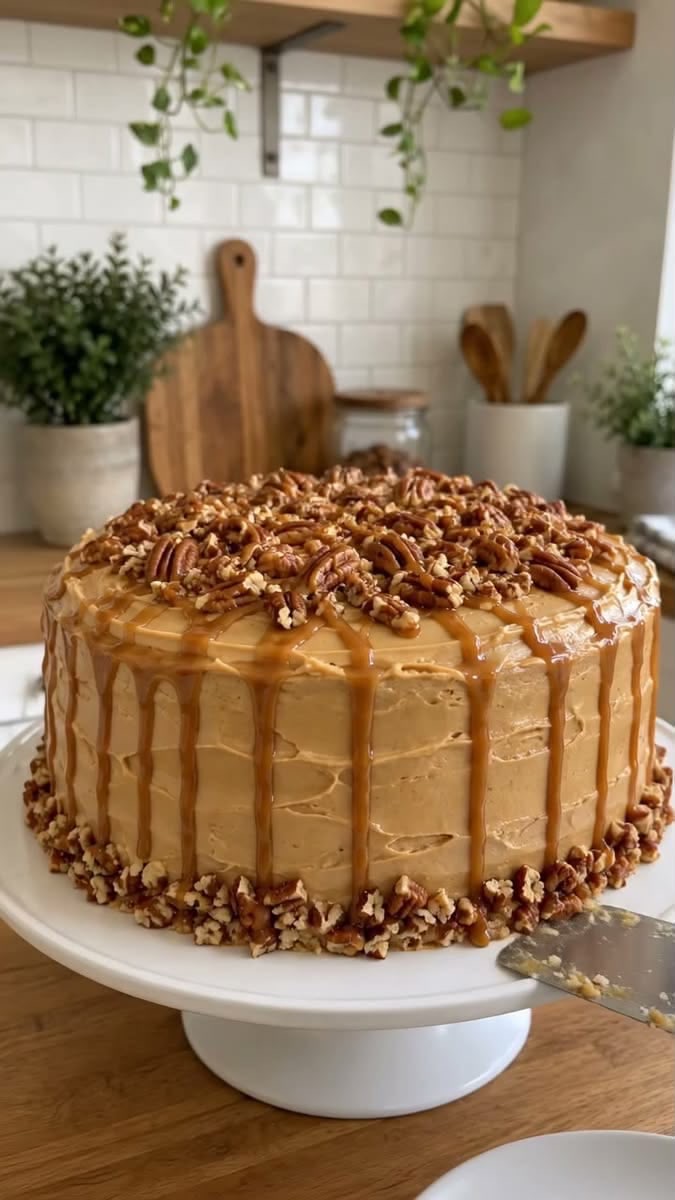
This Caramel Pecan Layer Cake is a beautiful dessert made with tender, buttery cake layers, creamy caramel buttercream, crunchy toasted pecans, and a generous caramel drip.
Every slice combines soft cake, rich salted caramel, smooth frosting, and nutty pecans. It is an impressive dessert for birthdays, holidays, family gatherings, or any special occasion.
Recipe Overview
| Category | Details |
| Prep Time | 45 minutes |
| Baking Time | 25–30 minutes |
| Cooling Time | 1 hour |
| Chilling Time | 30 minutes |
| Total Time | About 2 hours 45 minutes |
| Servings | 10–12 |
| Cake Pans | Two or three 20-cm / 8-inch pans |
| Oven Temperature | 175°C / 350°F |
| Difficulty | Intermediate |
Why You’ll Love This Cake
This cake combines several irresistible textures in one dessert: fluffy cake, silky caramel frosting, crunchy pecans, and smooth caramel dripping down the sides.
The salted caramel adds a deep buttery sweetness that pairs beautifully with the brown sugar cake.
Toasted pecans provide a delicious nutty flavor and a satisfying crunch between the soft cake layers.
The caramel drip also gives the finished cake a beautiful bakery-style appearance without requiring complicated decorating techniques.
Ingredients
For the Salted Caramel Sauce
| Ingredient | Amount |
| Granulated sugar | 200 g |
| Unsalted butter, cubed | 90 g |
| Heavy cream, warmed | 120 ml |
| Flaky sea salt | ½ teaspoon |
For the Cake Layers
| Ingredient | Amount |
| All-purpose flour | 300 g |
| Baking powder | 2 teaspoons |
| Baking soda | ½ teaspoon |
| Salt | ½ teaspoon |
| Unsalted butter, softened | 175 g |
| Brown sugar | 200 g |
| Granulated sugar | 100 g |
| Eggs, room temperature | 3 |
| Vanilla extract | 1 teaspoon |
| Buttermilk | 240 ml |
For the Caramel Buttercream
| Ingredient | Amount |
| Unsalted butter, softened | 250 g |
| Powdered sugar, sifted | 350 g |
| Prepared caramel sauce | 100 g |
| Heavy cream | 2–3 tablespoons |
For Decoration
| Ingredient | Amount |
| Pecans, lightly toasted and chopped | 150 g |
| Remaining caramel sauce | As needed |
Step-by-Step Instructions
1. Make the Salted Caramel Sauce
Place the granulated sugar in a medium saucepan over medium heat.
Allow the sugar to melt gradually. At first, avoid stirring. Once the edges begin to melt, you can gently swirl the pan to encourage even browning.
Continue cooking until the sugar becomes a beautiful amber color.
Add the cubed butter carefully and whisk vigorously until the butter is completely incorporated.
Slowly pour in the warm heavy cream while continuously whisking.
The mixture will bubble vigorously, so pour the cream carefully.
Let the caramel boil gently for about 1 minute.
Remove the saucepan from the heat and stir in the flaky sea salt.
Transfer the caramel to a heat-safe container and allow it to cool completely.
The caramel should be cool before being added to the buttercream.
2. Prepare the Cake Batter
Preheat your oven to 175°C / 350°F.
Grease two or three 20-cm / 8-inch cake pans and line the bottoms with parchment paper.
In a medium bowl, whisk together the flour, baking powder, baking soda, and salt.
In a separate large bowl, beat the softened butter, brown sugar, and granulated sugar for several minutes until the mixture becomes light and fluffy.
Add the eggs one at a time, beating well after each addition.
Mix in the vanilla extract.
Gradually add the dry ingredients, alternating with the buttermilk.
Begin and finish with the dry ingredients.
Mix only until the batter is smooth and combined. Avoid overmixing.
3. Bake the Cake Layers
Divide the batter evenly between the prepared cake pans.
Smooth the tops with a spatula.
Bake for approximately 25–30 minutes, or until a toothpick inserted into the center comes out clean or with a few moist crumbs.
Remove the cakes from the oven and let them cool in their pans for about 10–15 minutes.
Carefully remove the cakes from the pans and transfer them to a wire rack.
Allow them to cool completely before assembling the cake.
4. Make the Caramel Buttercream
Place the softened butter in a large mixing bowl.
Beat with an electric mixer for 3–5 minutes, until very creamy and pale.
Gradually add the sifted powdered sugar while mixing on low speed.
Add 100 g of the cooled caramel sauce.
Pour in 2 tablespoons of heavy cream and continue beating.
If the frosting is too thick, add another tablespoon of cream.
Continue beating until the buttercream is smooth, creamy, firm, and easy to spread.
5. Assemble the Cake
Place the first completely cooled cake layer on a cake stand or serving plate.
Spread an even layer of caramel buttercream over the top.
Sprinkle with some chopped toasted pecans.
Drizzle a small amount of caramel sauce over the pecans and frosting.
Place the next cake layer on top.
Repeat the process if using three layers.
6. Frost the Cake
Use the remaining caramel buttercream to cover the top and sides of the cake.
Spread the frosting evenly with an offset spatula or cake scraper.
Smooth the sides as much as possible.
The cake does not need to be perfectly smooth because the pecans and caramel drip will add plenty of decoration.
7. Create the Caramel Drip
Warm a small amount of the remaining caramel sauce until it becomes pourable but is not hot.
Carefully spoon or pipe small amounts of caramel around the edge of the cake, allowing it to naturally drip down the sides.
Once you have created the drips, spread a little caramel over the center of the top.
Do not use caramel that is too hot, as it can melt the buttercream.
8. Decorate With Pecans
Generously arrange the chopped toasted pecans over the top of the cake.
Press additional pecan pieces gently around the lower edge of the cake.
For a more elegant finish, you can leave some areas of the caramel drip visible between the pecans.
9. Chill Before Serving
Place the finished cake in the refrigerator for at least 30 minutes before serving.
This helps the buttercream firm up and allows the layers to settle.
Remove the cake from the refrigerator about 15–20 minutes before serving for the best texture.
Best Tips
Make sure the caramel has cooled completely before adding it to the buttercream. Warm caramel can soften or melt the frosting.
Use room-temperature eggs, butter, and buttermilk for a smoother cake batter.
Do not overmix the batter after adding the flour. Overmixing can produce a denser cake.
Toast the pecans lightly before using them. This enhances their natural flavor and makes them more aromatic and crunchy.
For clean cake layers, allow the cakes to cool completely before frosting.
When making the caramel drip, use caramel that is slightly warm and pourable rather than hot.
Best Ingredient Options
Buttermilk gives the cake a tender, moist crumb. If you don’t have buttermilk, you can make a simple substitute by adding 1 tablespoon of lemon juice or white vinegar to 240 ml of milk and letting it sit for about 5 minutes.
For the caramel, unsalted butter allows you to control the amount of salt in the final sauce.
Pecans are ideal for this cake, but walnuts can also be used if preferred.
For the cheese-like richness of the frosting, high-quality unsalted butter gives the best flavor and texture.
Recipe Variations
For a chocolate caramel pecan cake, add unsweetened cocoa powder to the cake batter and pair it with the caramel buttercream.
For a banana caramel pecan cake, add mashed ripe banana to the cake batter and reduce the buttermilk slightly if needed.
For extra caramel flavor, brush each cake layer lightly with caramel sauce before adding the buttercream.
For a salted caramel version, add a small pinch of flaky sea salt between the layers and over the finished caramel drip.
For a simpler decoration, cover the sides with chopped pecans instead of creating a completely smooth buttercream finish.
What to Serve With
Serve this cake with freshly brewed coffee or espresso for a classic dessert pairing.
A cup of black tea or chai also complements the caramel and toasted pecan flavors beautifully.
For an extra-indulgent dessert, serve each slice with a small scoop of vanilla ice cream.
A little extra warm caramel sauce can also be drizzled over individual slices just before serving.
Make-Ahead Instructions
The cake layers can be baked 1–2 days ahead.
Once completely cooled, wrap each layer tightly in plastic wrap and store in the refrigerator.
The caramel sauce can also be prepared in advance and refrigerated in an airtight container.
Before using refrigerated caramel, gently warm it until it reaches a smooth, pourable consistency.
The assembled cake can be prepared a day ahead and stored covered in the refrigerator.
Storage
Store the finished cake covered in the refrigerator for up to 4–5 days.
Because the cake contains buttercream and caramel, refrigeration is recommended.
Allow individual slices to sit at room temperature for approximately 15–20 minutes before serving.
Reheating
This cake is best served at room temperature rather than reheated.
If you want a warmer slice, allow it to sit at room temperature for a little longer instead of heating it directly.
Freezing
The unfrosted cake layers can be frozen for up to 2–3 months.
Wrap each cooled layer tightly in plastic wrap, followed by aluminum foil or a freezer-safe bag.
Thaw the cake layers overnight in the refrigerator before assembling.
The finished cake can also be frozen, although the texture of the caramel drip and pecans may change slightly after thawing.
Common Mistakes to Avoid
Do not add cold heavy cream directly to extremely hot caramel because the temperature difference can cause excessive bubbling.
Never leave melting sugar unattended because caramel can go from golden to burnt very quickly.
Do not add warm caramel to the buttercream.
Avoid assembling the cake while the cake layers are still warm because the frosting can melt and slide.
Do not pour very hot caramel over the cake when making the drip.
Avoid adding too much caramel between the layers, as excessive liquid can make the cake layers slide.
Nutrition Estimate
Nutrition will vary depending on the exact amount of frosting, caramel, and pecans used.
| Nutrient | Approximate Amount Per Slice |
| Calories | 650–750 kcal |
| Protein | 7–9 g |
| Carbohydrates | 80–90 g |
| Fat | 35–42 g |
| Saturated Fat | 18–22 g |
| Fiber | 2–3 g |
| Sugar | 55–65 g |
| Sodium | 350–450 mg |
Frequently Asked Questions
Can I make this cake with two layers?
Yes. You can divide the batter between two 20-cm / 8-inch pans for a two-layer cake. The layers will be thicker and may require a few extra minutes of baking time.
Can I make three thinner layers?
Yes. Divide the batter evenly among three 20-cm / 8-inch pans. Begin checking for doneness around 22–25 minutes.
Why did my caramel become hard?
Caramel can become firm as it cools. Gently warming it over low heat or in short microwave intervals will make it more pourable again.
Can I use store-bought caramel sauce?
Yes. A good-quality salted caramel sauce can be used if you want to simplify the recipe.
How do I get clean caramel drips?
Make sure the cake is chilled and the caramel is slightly warm and pourable. Test one small drip first. If it runs too quickly, let the caramel cool slightly before continuing.
Can I use walnuts instead of pecans?
Yes. Walnuts make an excellent substitute and provide a slightly different nutty flavor.
How long should the cake chill before serving?
At least 30 minutes is recommended after decorating. For the best texture, you can chill it for several hours and then let it sit at room temperature for 15–20 minutes before slicing.
Final Thoughts
This Caramel Pecan Layer Cake is a show-stopping dessert with everything you could want in a special-occasion cake: tender brown sugar cake, silky caramel buttercream, rich salted caramel, and crunchy toasted pecans.
The combination of soft cake and buttery caramel creates an irresistible dessert, while the caramel drip and pecan decoration give it a beautiful bakery-style finish.
For the best experience, serve the cake slightly softened at room temperature so the buttercream becomes creamy and the caramel flavors are easy to enjoy.