
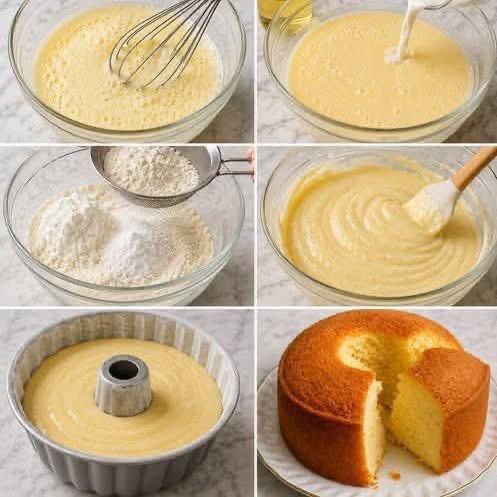
This Classic Vanilla Sponge Cake is light, fluffy, tender, and beautifully golden. Made with simple pantry ingredients, this easy homemade cake has a delicate vanilla flavor and a soft crumb that makes every slice irresistible.
Baked in a tube or Bundt-style pan, it is an elegant yet simple dessert that is perfect for birthdays, afternoon tea, family gatherings, holidays, or everyday baking.
Recipe Overview
| Detail | Information |
| Prep Time | 15 minutes |
| Cook Time | 35–45 minutes |
| Total Time | 50–60 minutes |
| Yield | 10–12 servings |
| Pan Size | 9–10 inch tube or Bundt pan |
| Category | Dessert / Cake |
| Cuisine | Classic American |
| Difficulty | Easy |
Why You’ll Love This Recipe
This homemade vanilla sponge cake has a wonderfully soft and airy texture without requiring complicated ingredients.
The eggs provide structure and help create the cake’s fluffy crumb, while whole milk and vegetable oil keep it tender and moist.
Sifting the dry ingredients and gently folding the batter are important steps that help preserve the light texture.
The finished cake is delicious on its own but can easily be dressed up with powdered sugar, whipped cream, fresh berries, or a simple vanilla glaze.
Ingredients
Dry Ingredients
| Ingredient | Amount | Notes |
| All-purpose flour | 2 cups (250 g) | Sifted |
| Baking powder | 2 tsp | Fresh for best rise |
| Salt | 1/4 tsp | Balances the sweetness |
Wet Ingredients
| Ingredient | Amount | Notes |
| Large eggs | 4 | Room temperature |
| Granulated sugar | 1 1/2 cups (300 g) | |
| Whole milk | 1 cup (240 ml) | Room temperature |
| Vegetable oil | 1/2 cup (120 ml) | Use a neutral oil |
| Vanilla powder | 1 tsp | Alcohol-free vanilla flavoring can be used |
Step-by-Step Instructions
1. Preheat the Oven
Preheat your oven to 350°F (175°C).
Generously grease a 9- or 10-inch tube pan or Bundt pan, making sure to coat the bottom, sides, and center tube thoroughly.
For particularly detailed pans, lightly dust with flour after greasing.
2. Bring Ingredients to Room Temperature
For the best texture, allow the eggs and milk to come to room temperature before starting.
Room-temperature ingredients combine more evenly and help produce a smoother batter.
3. Whip the Eggs and Sugar
Add the eggs and granulated sugar to a large mixing bowl.
Using an electric mixer, beat on medium-high speed for approximately 5–7 minutes, until the mixture becomes pale, thick, and noticeably increased in volume.
If using a hand whisk, whisk vigorously until the mixture is pale and frothy, although an electric mixer will make this step considerably easier.
4. Add the Milk, Oil, and Vanilla
Reduce the mixer speed to low.
Slowly pour in the milk and vegetable oil while mixing gently.
Add the vanilla powder or alcohol-free vanilla flavoring.
Mix just until everything is evenly incorporated.
Do not overmix at this stage.
5. Sift the Dry Ingredients
Place a fine-mesh sieve over the bowl.
Add the flour, baking powder, and salt.
Sift the dry ingredients directly over the egg mixture.
This removes lumps and helps distribute the baking powder evenly throughout the batter.
6. Fold the Batter
Using a silicone spatula, gently fold the dry ingredients into the wet mixture.
Use slow, sweeping motions from the bottom of the bowl upward.
Continue folding only until the flour disappears.
Do not aggressively stir the batter, as excessive mixing can deflate the eggs and create a dense cake.
7. Fill the Pan
Pour the batter evenly into the prepared tube or Bundt pan.
Gently smooth the surface with a spatula.
Tap the pan very lightly on the counter once to remove any unusually large air pockets.
8. Bake
Place the cake in the center of the preheated oven.
Bake for approximately 35–45 minutes.
The cake is ready when the top is golden brown and a wooden skewer inserted into the thickest part comes out clean or with a few moist crumbs.
Avoid opening the oven during the first 30 minutes of baking.
9. Cool
Remove the cake from the oven.
Allow it to cool in the pan for approximately 15 minutes.
Carefully loosen the edges with a thin knife if necessary.
Place a wire rack over the pan and carefully invert the cake.
Allow it to cool completely before slicing.
Best Tips for a Fluffy Sponge Cake
Use Room-Temperature Ingredients
Room-temperature eggs and milk incorporate more smoothly and help create a consistent batter.
Beat the Eggs and Sugar Properly
This is one of the most important steps for achieving a light texture.
Beat until the mixture becomes pale, thick, and frothy.
Always Sift the Flour
Sifting helps remove lumps and evenly distribute the baking powder and salt.
Fold Gently
Once the flour is added, avoid vigorous mixing.
Gentle folding helps preserve the air incorporated into the eggs.
Don’t Overbake
Overbaking can cause the cake to become dry.
Begin checking around the 35-minute mark.
Best Ingredient Options
Vanilla: Vanilla powder, alcohol-free vanilla flavoring, or pure vanilla extract can be used.
Milk: Whole milk produces the richest texture. Reduced-fat milk can work, although the cake may be slightly less tender.
Oil: Canola, sunflower, or another neutral vegetable oil works well.
Flour: All-purpose flour provides the right structure for this recipe.
Recipe Variations
Lemon Vanilla Sponge Cake
Add 1 tablespoon finely grated lemon zest to the batter for a bright citrus flavor.
Orange Vanilla Cake
Add 1 tablespoon orange zest and replace 2 tablespoons of the milk with fresh orange juice.
Coconut Vanilla Cake
Replace 1/4 cup of the flour with finely shredded unsweetened coconut.
Chocolate Marble Cake
Prepare the batter as directed, then mix 2 tablespoons cocoa powder into approximately one-third of the batter.
Alternate spoonfuls of vanilla and chocolate batter in the pan and gently swirl with a knife.
Almond Vanilla Cake
Add 1/2 teaspoon almond extract along with the vanilla for a subtle nutty flavor.
What to Serve With Vanilla Sponge Cake
This cake is delicious served simply with powdered sugar.
For a more elegant dessert, serve it with:
- Fresh strawberries
- Blueberries
- Raspberries
- Whipped cream
- Vanilla ice cream
- Fresh fruit
- Strawberry sauce
- Chocolate sauce
- Lemon curd
- Caramel sauce
A slice alongside a cup of coffee or tea makes a wonderful afternoon treat.
Make-Ahead Instructions
The cake can be baked 1 day ahead.
Allow it to cool completely, then wrap it tightly in plastic wrap or store it in an airtight container.
Keep it at room temperature until ready to serve.
If adding whipped cream or fresh fruit, add those toppings shortly before serving.
Storage
Store the cooled cake in an airtight container at room temperature for up to 3 days.
If your kitchen is particularly warm, refrigerate the cake.
Bring refrigerated slices to room temperature before serving for the best texture.
Reheating
This cake is usually delicious at room temperature and does not require reheating.
If desired, warm an individual slice in the microwave for approximately 10 seconds.
Avoid excessive heating, which can dry the cake.
Freezing
Vanilla sponge cake freezes well.
Allow the cake to cool completely before wrapping it tightly in plastic wrap.
Place it in a freezer-safe bag or container.
Freeze for up to 3 months for the best quality.
Thaw at room temperature while still wrapped to help prevent condensation from forming directly on the cake.
Common Mistakes to Avoid
Overmixing the Batter
Once the flour is incorporated, stop mixing.
Overmixing can develop gluten and deflate the air in the batter.
Skipping the Sifting Step
Lumps of flour can create an uneven crumb.
Sifting also helps distribute the dry ingredients more evenly.
Using Cold Eggs
Cold eggs may not whip as effectively.
Room-temperature eggs generally produce better volume.
Opening the Oven Too Early
Avoid opening the oven during the first 30 minutes because a sudden temperature change can cause the cake to sink.
Not Greasing the Pan Properly
Bundt and tube pans have many edges and curves where cake can stick.
Grease every section thoroughly before adding the batter.
Removing the Cake Too Quickly
Let the cake cool in the pan for about 15 minutes before inverting it.
This gives the structure time to stabilize.
Nutrition Estimate
Approximate values per serving, assuming 12 servings:
| Nutrient | Approximate Amount |
| Calories | 300 kcal |
| Protein | 5 g |
| Carbohydrates | 42 g |
| Fat | 13 g |
| Saturated Fat | 3 g |
| Fiber | 1 g |
| Sugar | 25 g |
| Sodium | 170 mg |
Nutrition information is an estimate and varies according to the ingredients and serving size.
Frequently Asked Questions
Can I use vanilla extract instead of vanilla powder?
Yes. Use approximately 2 teaspoons of pure vanilla extract in place of the vanilla powder.
Why did my sponge cake become dense?
The most common causes are overmixing after adding the flour or not whipping the eggs and sugar sufficiently.
Can I bake this in a regular cake pan?
Yes. Two 8-inch round cake pans can work, although the baking time will need to be reduced. Begin checking the cakes earlier.
Can I use a Bundt pan?
Yes. A 9- or 10-inch Bundt pan works well. Make sure it is generously greased.
Can I add fruit to the batter?
Yes, but fresh fruit can add extra moisture. Small amounts of berries or finely diced fruit work best when lightly coated with flour before being folded into the batter.
Can I frost this cake?
Absolutely. Cream cheese frosting, vanilla buttercream, whipped cream, or a simple powdered sugar glaze all pair beautifully with vanilla sponge cake.
How do I keep the cake moist?
Do not overbake it, measure the flour carefully, and store the cooled cake in an airtight container.
Final Thoughts
This Classic Fluffy Vanilla Sponge Cake is a simple recipe that delivers a beautifully soft, tender, and golden cake every time.
The combination of whipped eggs, creamy milk, neutral oil, and vanilla creates a delicate crumb that is delicious enough to enjoy plain while still providing the perfect base for fruit, whipped cream, frosting, or glaze.
Whether you are baking for a family gathering, afternoon tea, birthday celebration, or simply want an easy homemade dessert, this classic vanilla cake is a recipe worth keeping in your collection.