
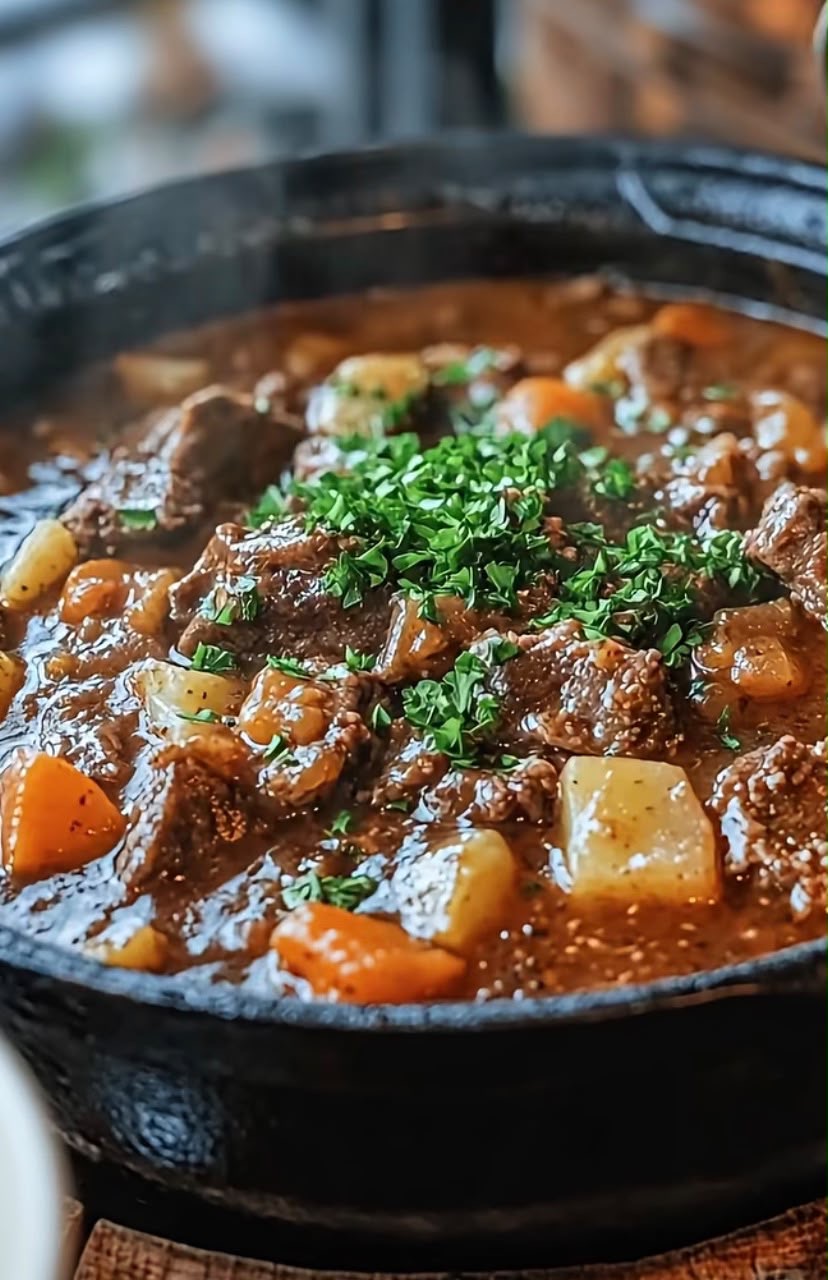
There is nothing quite as comforting as a bowl of warm, hearty beef stew. Tender chunks of beef are slowly simmered with onions, garlic, carrots, and potatoes in a rich, savory gravy until everything becomes incredibly tender and flavorful.
This classic beef stew is perfect for cozy family dinners, especially on cold days. The beef develops a deep, rich flavor from being browned first, while the vegetables slowly cook in the savory broth and absorb all those delicious flavors.
With simple ingredients and a straightforward cooking method, this is a dependable homemade dinner that tastes even better the next day.
Recipe Overview
| Details | Information |
| Recipe Name | Classic Hearty Beef Stew |
| Prep Time | 20 minutes |
| Cook Time | 2 hours |
| Total Time | 2 hours 20 minutes |
| Servings | 6 |
| Cuisine | American-inspired |
| Category | Dinner / Stew |
| Cooking Method | Stovetop |
Why You’ll Love This Recipe
This beef stew is packed with tender beef, hearty vegetables, and a rich homemade gravy. Browning the beef before simmering creates a deeper, more developed flavor that makes the finished stew especially satisfying.
The combination of carrots and potatoes makes this a complete one-pot meal, while fresh parsley adds a bright finishing touch.
It is also an excellent make-ahead meal because the flavors become even richer after resting overnight.
Ingredients
For the Beef Stew
| Ingredient | Amount |
| Beef chuck roast, trimmed and cut into 1-inch cubes | 2 lbs (900 g) |
| Olive oil | 3 tbsp, divided |
| Large yellow onion, chopped | 1 |
| Garlic, minced | 3 cloves |
| Tomato paste | 2 tbsp |
| All-purpose flour | 3 tbsp |
| Dry red wine or beef broth | 1 cup |
| Low-sodium beef broth | 4 cups |
| Worcestershire sauce | 1 tbsp |
| Dried thyme | 1 tsp |
| Dried rosemary | 1 tsp |
| Bay leaves | 2 |
| Large carrots, peeled and thickly sliced | 3 |
| Yukon Gold or Russet potatoes, peeled and cubed | 3 medium |
| Salt | To taste |
| Freshly ground black pepper | To taste |
| Fresh parsley, finely chopped | 1/4 cup |
Step-by-Step Instructions
1. Prepare the Beef
Pat the beef cubes dry with paper towels. This helps them brown properly instead of steaming.
Season the beef generously with salt and freshly ground black pepper.
Heat 2 tablespoons of olive oil in a large Dutch oven or heavy-bottomed pot over medium-high heat.
Working in batches, add the beef without overcrowding the pot. Sear the cubes for approximately 5–7 minutes total, turning them occasionally so they become deeply browned on multiple sides.
Transfer the browned beef to a plate and set aside.
2. Sauté the Aromatics
Add the remaining 1 tablespoon of olive oil to the same pot.
Add the chopped onion and cook for approximately 3–4 minutes, stirring occasionally, until softened.
Add the minced garlic and tomato paste. Stir continuously and cook for about 1 minute, until the garlic becomes fragrant and the tomato paste begins to caramelize slightly.
3. Build the Gravy Base
Sprinkle the flour over the onion mixture.
Stir constantly for about 1 minute to cook the flour and prevent lumps.
Slowly pour in the red wine while scraping the bottom of the pot with a wooden spoon.
Those browned bits stuck to the bottom contain a lot of flavor, so make sure to loosen them thoroughly.
If you prefer not to use wine, simply substitute the red wine with additional beef broth.
Allow the mixture to simmer for approximately 2 minutes, stirring until it begins to thicken slightly.
4. Begin Simmering the Beef
Return the browned beef and any juices that accumulated on the plate to the pot.
Pour in the beef broth and add the Worcestershire sauce, thyme, rosemary, and bay leaves.
Season lightly with salt and black pepper.
Bring the liquid to a gentle boil.
Once boiling, cover the pot with a lid and reduce the heat to low.
Allow the stew to simmer gently for approximately 1 hour and 15 minutes.
The low-and-slow cooking process helps break down the connective tissue in the beef, resulting in tender, flavorful pieces.
5. Add the Vegetables
After the initial simmering period, add the chopped carrots and potatoes.
Stir gently so the vegetables are submerged in the flavorful broth.
Cover the pot again and continue simmering for approximately 35–40 minutes.
The stew is ready when the beef is fork-tender and the carrots and potatoes can easily be pierced with a fork.
6. Finish the Stew
Remove the bay leaves and any fresh herb stems if you used fresh herbs.
Taste the gravy and adjust the seasoning with additional salt and freshly ground black pepper as needed.
If the gravy is thinner than you prefer, leave the lid slightly open and simmer for a few additional minutes to allow some of the liquid to reduce.
7. Garnish and Serve
Ladle the hot beef stew into bowls.
Generously sprinkle freshly chopped parsley over the top.
Serve immediately with crusty bread, dinner rolls, or another favorite side.
Best Tips for Success
Patting the beef dry before seasoning is one of the easiest ways to improve browning. Excess moisture can prevent the beef from developing that flavorful golden-brown crust.
Do not overcrowd the pot when searing the beef. Work in batches if necessary so the pieces have enough room to brown properly.
Keep the stew at a gentle simmer rather than a rapid boil. Cooking the beef too aggressively can make it tougher instead of tender.
For the best texture, add the carrots and potatoes later in the cooking process. This prevents them from becoming overly soft while the beef continues to tenderize.
Taste the stew toward the end of cooking and adjust the seasoning gradually. The broth, Worcestershire sauce, and beef all contribute salt and flavor.
Best Ingredient Options
Beef chuck roast is one of the best choices for stew because it contains enough connective tissue and fat to become tender during slow cooking.
You can substitute another suitable beef stewing cut if chuck is unavailable.
Yukon Gold potatoes are excellent because they hold their shape well while becoming creamy inside. Russet potatoes can also be used and will give the stew a softer, starchier texture.
Fresh thyme and rosemary can replace the dried herbs. Use approximately 3 sprigs of fresh thyme and 1 sprig of fresh rosemary.
For the liquid, dry red wine adds extra depth and richness. If you prefer to cook without wine, use beef broth instead.
Recipe Variations
For a mushroom beef stew, add sliced mushrooms during the last 30–35 minutes of cooking.
For extra vegetables, add celery, peas, green beans, or additional carrots.
For a richer gravy, add a small amount of butter toward the end of cooking and stir until melted.
You can also add a little smoked paprika for a subtle smoky flavor.
If you prefer a thicker stew, simmer uncovered near the end of cooking until the gravy reaches your desired consistency.
What to Serve With Beef Stew
This stew is hearty enough to serve on its own, but warm crusty bread is an excellent companion for soaking up the rich gravy.
Dinner rolls, garlic bread, or homemade biscuits also work beautifully.
For an extra vegetable side, serve the stew with a simple green salad or steamed green beans.
If you want an especially comforting meal, spoon the stew over creamy mashed potatoes.
Make-Ahead Instructions
Beef stew is an excellent make-ahead meal.
You can prepare the entire stew a day in advance and refrigerate it once completely cooled.
When reheated the next day, the flavors often become even deeper and more developed.
If the stew becomes too thick after refrigeration, add a small amount of beef broth while reheating until the desired consistency is reached.
Storage
Allow leftover stew to cool before transferring it to airtight containers.
Refrigerate for up to 3–4 days.
Keep the stew refrigerated promptly and reheat only the portion you plan to serve.
Reheating
Reheat the stew gently on the stovetop over medium-low heat, stirring occasionally.
If the gravy has thickened, add a splash of beef broth or water.
You can also reheat individual portions in the microwave, stirring halfway through to ensure even heating.
Freezing
Beef stew freezes very well.
Allow it to cool completely before transferring it to freezer-safe containers.
Leave a little space at the top of each container to allow for expansion.
Freeze for up to 2–3 months for best quality.
Thaw overnight in the refrigerator before reheating gently on the stovetop or in the microwave.
Common Mistakes to Avoid
Skipping the Beef Sear
Browning the beef creates a flavorful crust and adds depth to the finished stew. Avoid simply putting raw beef directly into the broth.
Crowding the Pot
Too much beef in the pot at once can cause the meat to steam instead of brown. Sear in batches when necessary.
Boiling Too Aggressively
A gentle simmer is ideal. A hard boil can cause the beef to become tougher.
Adding Vegetables Too Early
Carrots and potatoes do not need the full cooking time required by the beef. Adding them later helps preserve their texture.
Not Scraping the Pot
The browned bits left after searing contain concentrated flavor. Deglazing the pot helps incorporate them into the gravy.
Not Tasting Before Serving
Seasoning should always be adjusted at the end. Taste the broth and add salt or pepper gradually.
Nutrition Estimate
Approximate values will vary depending on the exact ingredients and portion size.
| Nutrient | Estimated Amount |
| Calories | 520–600 kcal |
| Protein | 40–45 g |
| Carbohydrates | 35–40 g |
| Fat | 25–30 g |
| Saturated Fat | 7–9 g |
| Fiber | 5–6 g |
| Sugar | 6–8 g |
| Sodium | 700–1,000 mg |
Frequently Asked Questions
What is the best cut of beef for stew?
Beef chuck roast is an excellent choice because its connective tissue and marbling break down during slow cooking, creating tender meat and a flavorful broth.
Can I make beef stew without red wine?
Yes. Replace the red wine with an equal amount of beef broth. The stew will still be rich and flavorful.
Why is my beef stew meat tough?
Beef stew usually becomes tender through low, slow cooking. If the beef is still tough, it may simply need more simmering time.
Can I add other vegetables?
Absolutely. Celery, mushrooms, peas, green beans, and additional carrots are all excellent additions.
How can I make the gravy thicker?
Allow the stew to simmer uncovered for several minutes so excess liquid can evaporate. You can also mix a small amount of flour or cornstarch with cold water and add it gradually while simmering.
Can I make this recipe in advance?
Yes. Beef stew is particularly well suited to make-ahead cooking, and the flavor often improves after resting overnight.
Final Thoughts
Classic Hearty Beef Stew is the kind of comforting homemade meal that brings everything you want in a cozy dinner together in one pot.
Tender beef, soft potatoes, sweet carrots, aromatic herbs, and a rich savory gravy make every spoonful satisfying.
Whether you prepare it for a Sunday family dinner, a cold evening, or a make-ahead weekday meal, this classic beef stew is simple, hearty, and packed with homemade flavor.