
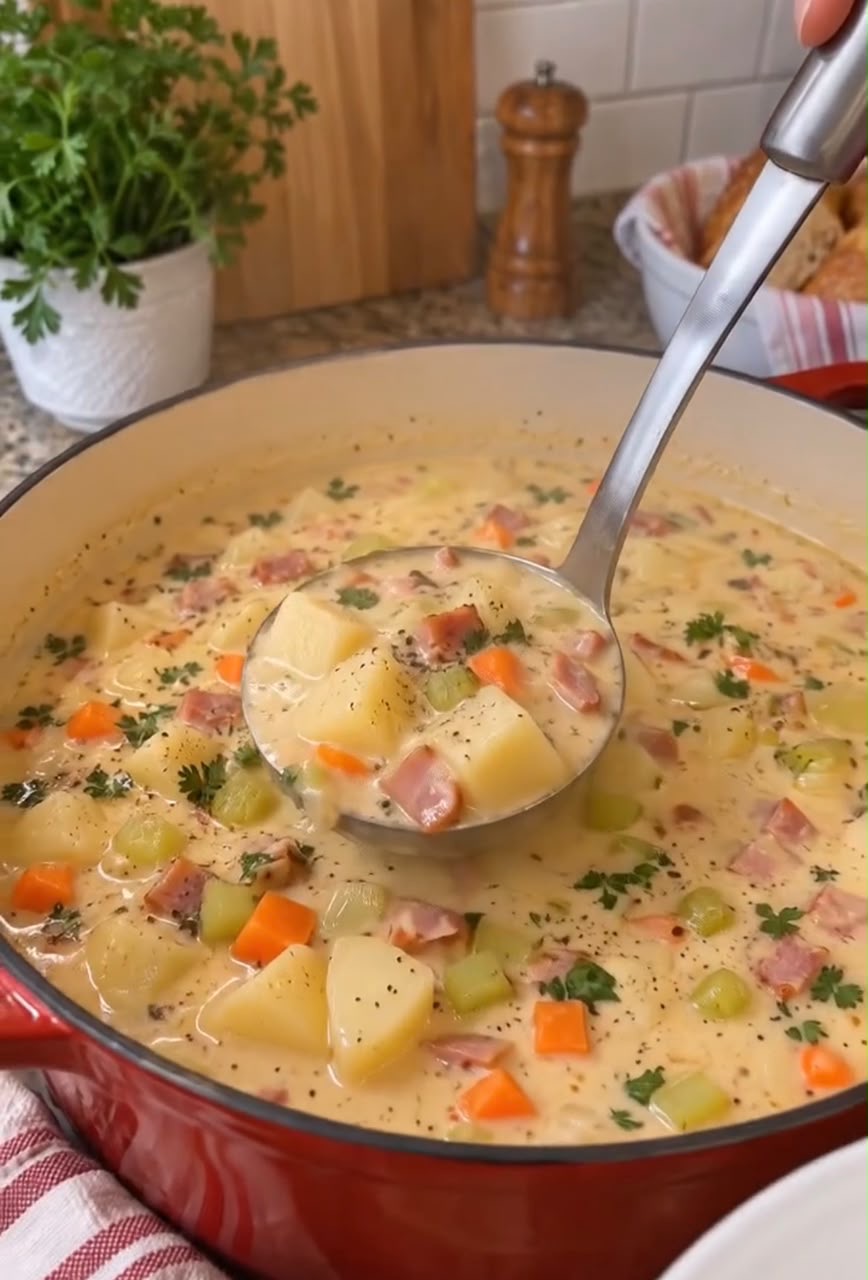
This Creamy Ham and Potato Chowder is the ultimate cozy comfort food for a chilly evening. Tender potatoes, savory diced ham, sweet carrots, celery, onion, and garlic come together in a rich, silky cream broth that is hearty enough to serve as a complete meal.
The potatoes become wonderfully tender as they simmer in seasoned chicken broth, while the cream creates a smooth and comforting finish. It is an easy one-pot soup that comes together with simple ingredients and makes a generous family-sized batch.
Whether you’re looking for a satisfying weeknight dinner, a comforting lunch, or an easy way to use leftover cooked ham, this creamy potato chowder is a delicious choice.
Recipe Overview
| Category | Details |
| Prep Time | 15 minutes |
| Cook Time | 30–35 minutes |
| Total Time | 45–50 minutes |
| Servings | 6 |
| Cuisine | American-inspired |
| Difficulty | Easy |
| Cooking Method | Stovetop |
| Best For | Lunch, dinner, cold-weather meals |
Why You’ll Love This Creamy Ham and Potato Chowder
This chowder is incredibly comforting without requiring complicated cooking techniques.
The combination of potatoes and ham makes it hearty and satisfying, while carrots, celery, onion, and garlic add layers of savory flavor.
The creamy broth is rich and silky, but the soup still has plenty of texture from the tender vegetables and chunks of potato.
It is also a practical recipe for using leftover cooked ham, making it especially useful after a holiday meal or family gathering.
Best of all, everything cooks in one pot, which means less cleanup after dinner.
Ingredients
Main Ingredients
| Ingredient | Amount |
| Potatoes, peeled and diced | 2½–3 lbs |
| Cooked ham, diced | 1½–2 cups |
Yukon Gold potatoes are an excellent choice because they become creamy and tender while holding their shape. Russet potatoes also work well and give the chowder a naturally thicker texture.
Vegetables and Aromatics
| Ingredient | Amount |
| Yellow or white onion, diced | 1 medium |
| Carrots, peeled and diced | 2 medium |
| Celery, diced | 2–3 stalks |
| Garlic, minced | 2–3 cloves |
These vegetables create the flavorful aromatic base that gives the chowder its classic savory character.
Broth and Cream
| Ingredient | Amount |
| Low-sodium chicken broth or stock | 4 cups |
| Heavy cream, half-and-half, or whole milk | 2 cups |
Heavy cream creates the richest and creamiest result. Half-and-half gives you a slightly lighter chowder, while whole milk works well for an everyday version.
Thickener and Seasonings
| Ingredient | Amount |
| Butter | 2 tablespoons |
| Olive oil | A small splash |
| All-purpose flour | 2–3 tablespoons |
| Italian seasoning or dried thyme | 1 teaspoon |
| Salt | To taste |
| Freshly ground black pepper | To taste |
| Fresh parsley, chopped | For garnish |
Step-by-Step Instructions
1. Prepare the Vegetables
Peel the potatoes and cut them into evenly sized bite-sized cubes. Try to keep the pieces similar in size so they cook at approximately the same rate.
Dice the onion, carrots, and celery, then mince the garlic.
Cut the cooked ham into small cubes or bite-sized pieces.
2. Sauté the Aromatics
Place a large Dutch oven or heavy-bottomed soup pot over medium heat.
Add the butter and a small splash of olive oil. Once the butter has melted, add the diced onion, carrots, and celery.
Cook for about 5–7 minutes, stirring occasionally, until the vegetables begin to soften.
Add the minced garlic and Italian seasoning or dried thyme. Cook for approximately 1 minute, stirring constantly, until the garlic becomes fragrant.
Avoid browning the garlic, as burnt garlic can make the chowder taste bitter.
3. Create the Thickened Base
Sprinkle the flour evenly over the softened vegetables.
Stir continuously for 1–2 minutes. This allows the flour to cook and removes its raw taste.
Gradually pour in the chicken broth while stirring or whisking continuously. Adding the broth slowly helps create a smooth base and prevents lumps from forming.
Continue stirring until the flour is fully incorporated into the broth.
4. Add the Potatoes and Ham
Add the diced potatoes and cooked ham directly to the pot.
Season with freshly ground black pepper and a small amount of salt.
Because ham and chicken broth can already contain a significant amount of sodium, it is best to start with less salt and adjust it toward the end of cooking.
5. Simmer Until the Potatoes Are Tender
Bring the chowder to a gentle boil.
Reduce the heat to medium-low, cover the pot, and simmer for approximately 12–15 minutes.
The potatoes should be fork-tender but should still hold their shape.
Avoid overcooking them, or they may break apart too much and make the chowder overly thick.
6. Add the Cream
Once the potatoes are tender, pour in the heavy cream, half-and-half, or whole milk.
Stir gently to combine.
If you are using cornstarch instead of flour as the thickener, whisk the cornstarch with a little cold water first to make a smooth slurry, then stir it into the chowder at this stage.
Simmer the chowder gently, uncovered, for another 3–5 minutes.
Do not let the cream boil aggressively. Gentle heat helps maintain a smooth, creamy texture.
7. Adjust the Seasoning
Taste the chowder and adjust the seasoning as needed.
Add additional black pepper, salt, or a little extra dried thyme if desired.
For an especially silky texture, you can lightly mash a few pieces of potato against the side of the pot and stir them back into the chowder. This naturally thickens the soup without adding extra flour.
8. Serve
Ladle the hot chowder into serving bowls.
Finish each bowl with freshly chopped parsley and an extra crack of black pepper.
Serve immediately while the chowder is warm, creamy, and comforting.
Best Tips for Perfect Chowder
Cut the potatoes into evenly sized pieces so they cook at the same rate. Very large pieces may remain firm while smaller pieces become overly soft.
Use low-sodium chicken broth when possible. The ham contributes plenty of savory saltiness, so starting with a lower-sodium broth gives you better control over the final seasoning.
For the creamiest texture, heavy cream is the best option. If you prefer something lighter, half-and-half or whole milk can be used instead.
Do not boil the chowder vigorously after adding the cream. A gentle simmer is enough to finish the soup while helping maintain its smooth consistency.
For a thicker chowder, mash a small portion of the cooked potatoes directly in the pot. This gives the soup additional body while keeping the texture naturally creamy.
Best Ingredient Options
Potatoes
Yukon Gold potatoes are ideal because they have a naturally buttery texture and hold together well during cooking. Russet potatoes are another excellent option and tend to break down slightly more, creating a thicker chowder.
Ham
Use fully cooked diced ham with a good savory flavor. Leftover roasted ham works particularly well, but pre-cooked diced ham can also be used for convenience.
Cream
Heavy cream produces the richest result. Half-and-half provides a creamy texture with less richness, while whole milk makes a lighter chowder.
Herbs
Italian seasoning works beautifully, but dried thyme is particularly good with potatoes and ham. Fresh thyme can also be used for a more pronounced herbal flavor.
Recipe Variations
Cheesy Ham and Potato Chowder
For a richer, cheesy version, stir in shredded cheddar cheese at the very end. Remove the pot from the heat and gradually add the cheese, stirring until melted and smooth.
Ham, Potato and Corn Chowder
Add 1–1½ cups of sweet corn during the final stage of cooking. The corn adds sweetness, color, and extra texture.
Loaded Potato Chowder
Top each serving with shredded cheese, chopped green onions, extra diced ham, and freshly cracked black pepper for a loaded baked-potato-inspired version.
Garlic and Herb Chowder
Increase the garlic slightly and add fresh thyme or parsley for a more aromatic, herb-forward chowder.
Extra-Vegetable Chowder
Add additional diced carrots, celery, peas, or corn to make the chowder even more substantial.
What to Serve With Ham and Potato Chowder
A warm loaf of crusty bread is one of the best choices for serving alongside this creamy chowder. The bread is perfect for soaking up the rich broth.
For a lighter meal, serve the chowder with a crisp green salad tossed with a simple vinaigrette.
Garlic bread, dinner rolls, or homemade biscuits also pair beautifully with the creamy potatoes and savory ham.
For a complete comfort-food dinner, serve smaller bowls of chowder alongside a fresh vegetable salad and warm bread.
Make-Ahead Instructions
This chowder can be prepared ahead of time and refrigerated until you’re ready to serve it.
For the best texture, prepare the soup through the potato-cooking stage and add the cream when reheating. This can help prevent the dairy from becoming overly thick or changing texture during storage.
If making the entire chowder in advance, allow it to cool properly before transferring it to an airtight container and refrigerating.
Storage
Store leftover chowder in an airtight container in the refrigerator for up to 3–4 days.
Because the recipe contains dairy, refrigerate leftovers promptly rather than leaving the soup at room temperature for an extended period.
The chowder may become thicker after refrigeration, which is completely normal.
Reheating
Reheat individual portions gently in the microwave, stirring occasionally.
For larger portions, place the chowder in a saucepan over medium-low heat and stir frequently.
If the chowder has thickened considerably, add a small splash of chicken broth or milk while reheating until the desired consistency is reached.
Avoid bringing the chowder to a rapid boil.
Freezing
This chowder can be frozen, but dairy-based soups may sometimes separate slightly after thawing.
For the best results, freeze the chowder before adding the cream. Thaw it in the refrigerator, reheat gently, and stir in fresh cream or milk toward the end.
If freezing the fully prepared chowder, expect a possible slight change in texture after thawing. Stirring well while reheating can help restore a smoother consistency.
Common Mistakes to Avoid
Cutting the Potatoes Unevenly
Large potato pieces take much longer to cook than small pieces. Keep the cubes relatively uniform for even cooking.
Adding Too Much Salt Early
Ham and chicken broth can both be salty. Season gradually and taste the chowder before adding additional salt.
Boiling the Cream
A hard boil can negatively affect the texture of a cream-based chowder. Keep the heat gentle once the cream has been added.
Adding Flour Directly to the Broth
Sprinkling flour directly into liquid can create lumps. Cooking the flour briefly with the sautéed vegetables first helps create a smoother chowder.
Overcooking the Potatoes
Potatoes should be tender enough to pierce easily with a fork but not completely falling apart unless you intentionally want a thicker, more rustic texture.
Nutrition Estimate
The following values are approximate and will vary depending on the type of ham, cream, broth, and serving size used.
| Nutrient | Approximate Amount Per Serving |
| Calories | 400–500 kcal |
| Protein | 15–20 g |
| Carbohydrates | 45–55 g |
| Fat | 18–25 g |
| Fiber | 5–7 g |
| Sodium | Varies by ham and broth |
| Sugar | 5–7 g |
Frequently Asked Questions
Can I use leftover ham?
Yes. This recipe is an excellent way to use leftover cooked ham. Simply dice it into bite-sized pieces and add it during the potato-simmering stage.
Can I use milk instead of heavy cream?
Yes. Whole milk works well for a lighter chowder. Half-and-half provides a nice balance between richness and a lighter texture.
How can I make the chowder thicker?
You can use the full amount of flour, add a cornstarch slurry, or mash some of the cooked potatoes directly into the soup.
Can I make this chowder without flour?
Yes. Cornstarch can be used instead. Mix it with a small amount of cold water before adding it to the hot chowder to prevent clumping.
Can I use Russet potatoes?
Absolutely. Russet potatoes work very well and can create an especially thick and creamy texture as some of the potato naturally breaks down during cooking.
Can I add cheese?
Yes. Cheddar, Monterey Jack, or another good melting