
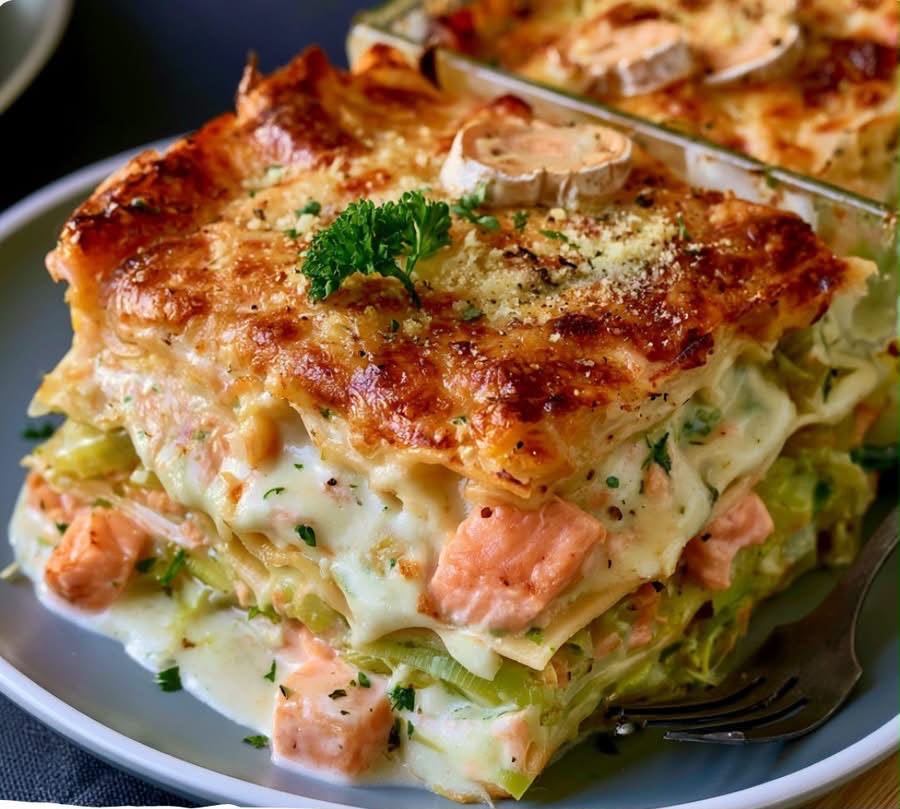
Creamy Salmon and Leek Lasagna is an elegant twist on traditional lasagna, combining tender salmon, buttery leeks, creamy béchamel sauce, and layers of pasta under a beautifully golden cheese topping.
The mild sweetness of the leeks pairs wonderfully with the rich salmon, while Gruyère, Parmesan, and creamy goat cheese add plenty of savory flavor. It is comforting enough for a family dinner but impressive enough for a special occasion.
Recipe Overview
| Details | Information |
| Prep Time | 25 minutes |
| Cook Time | 40 minutes |
| Resting Time | 10–15 minutes |
| Total Time | About 1 hour 20 minutes |
| Servings | 6 |
| Oven Temperature | 190°C (375°F) |
| Dish | 9 × 13-inch baking dish |
| Cuisine | French-inspired / Italian-inspired |
Why You’ll Love This Recipe
This salmon and leek lasagna is wonderfully creamy without relying on a heavy tomato sauce. The béchamel creates a smooth, velvety texture that complements the delicate salmon perfectly.
The sautéed leeks add a naturally sweet and buttery flavor, while fresh lemon juice brings a subtle brightness that keeps the dish from tasting too rich.
The combination of Gruyère or mozzarella, Parmesan, and goat cheese creates a golden, bubbling topping with a delicious contrast of creamy and slightly tangy flavors.
It is also an excellent make-ahead dinner because the lasagna can be assembled in advance and baked when you’re ready to serve it.
Ingredients
For the Leek and Salmon Filling
| Ingredient | Quantity |
| Fresh salmon fillets, skinless | 500 g (1.1 lbs) |
| Large leeks, white and light green parts | 3 |
| Unsalted butter | 2 tbsp |
| Olive oil | 1 tbsp |
| Garlic, minced | 2 cloves |
| Fresh lemon juice | 1 tbsp |
| Salt | To taste |
| Freshly ground black pepper | To taste |
For the Béchamel Sauce
| Ingredient | Quantity |
| Unsalted butter | 50 g (3½ tbsp) |
| All-purpose flour | 50 g (about ⅓ cup) |
| Whole milk, warmed | 750 ml (3 cups) |
| Gruyère or mozzarella, grated | 100 g (1 cup) |
| Ground nutmeg | Pinch |
| Salt | To taste |
| Freshly ground black pepper | To taste |
For Assembly and Topping
| Ingredient | Quantity |
| Lasagna sheets | 9–12 sheets |
| Parmesan or Gruyère, grated | 100 g (1 cup) |
| French goat cheese | 1 small log |
| Fresh parsley, finely chopped | 2 tbsp |
Step-by-Step Instructions
1. Prepare the Salmon
Remove the skin from the salmon if necessary and check carefully for any remaining bones.
Cut the salmon into bite-sized cubes. Keep the salmon refrigerated while preparing the other ingredients.
The salmon will cook in the oven, so there is no need to cook it beforehand.
2. Sauté the Leeks
Wash the leeks thoroughly, especially between the layers, because they can contain soil.
Slice the white and light green parts into thin pieces.
Heat the butter and olive oil in a large skillet over medium heat. Add the sliced leeks and minced garlic.
Cook for about 10–12 minutes, stirring occasionally, until the leeks become soft, tender, and translucent.
Add the fresh lemon juice and season with salt and freshly ground black pepper. Stir well, then remove from the heat.
3. Make the Béchamel Sauce
Melt 50 g of butter in a saucepan over medium heat.
Whisk in the flour and cook for 1–2 minutes, stirring continuously. The mixture should become smooth and lightly bubbling without browning.
Gradually pour in the warm milk while whisking constantly.
Continue whisking until the sauce becomes smooth and begins to thicken.
Reduce the heat slightly and simmer for approximately 5–7 minutes, stirring frequently.
Remove the saucepan from the heat and add the nutmeg, salt, pepper, and grated Gruyère or mozzarella.
Stir until the cheese melts completely and the sauce becomes smooth and creamy.
4. Preheat the Oven
Preheat the oven to 190°C (375°F).
Lightly butter a 9 × 13-inch baking dish.
5. Assemble the Lasagna
Spread a thin layer of béchamel sauce across the bottom of the baking dish.
Arrange a single layer of lasagna sheets over the sauce.
Add half of the sautéed leeks, followed by half of the raw salmon cubes.
Spoon a generous layer of béchamel over the salmon and leeks.
Add another layer of lasagna sheets.
Repeat with the remaining leeks, remaining salmon, and more béchamel sauce.
Finish with the final layer of lasagna sheets.
Pour the remaining béchamel evenly over the top, making sure the pasta is well covered.
6. Add the Cheese Topping
Sprinkle the grated Parmesan or Gruyère evenly over the surface.
Slice the goat cheese log into rounds and arrange the rounds across the top of the lasagna.
The goat cheese will soften and become beautifully golden as the lasagna bakes.
7. Bake the Lasagna
Place the baking dish in the preheated oven.
Bake for approximately 30–35 minutes, or until the sauce is bubbling around the edges and the top is golden brown.
The salmon should be fully cooked and opaque in the center. For food safety, the thickest pieces should reach 63°C (145°F).
If the top starts browning too quickly, loosely cover the dish with aluminum foil for part of the baking time.
8. Rest and Serve
Remove the lasagna from the oven and let it rest for 10–15 minutes before slicing.
This resting time allows the creamy layers to settle, making the lasagna easier to portion.
Garnish with freshly chopped parsley and serve warm.
Best Tips for Perfect Salmon and Leek Lasagna
Choose fresh salmon with a firm texture and a mild, pleasant smell. Skinless fillets make preparation easier, but you can remove the skin yourself if needed.
Wash the leeks carefully before slicing them. Dirt can hide deep inside the layers, so separating the pieces and rinsing them thoroughly is important.
Do not rush the leek-cooking step. Slowly cooking them until tender brings out their natural sweetness and gives the filling a much better texture.
Keep the béchamel smooth by adding the milk gradually while whisking continuously. Warm milk also helps the sauce thicken more evenly.
Avoid cutting the lasagna immediately after removing it from the oven. Giving it 10–15 minutes to rest helps the layers hold together when sliced.
Best Ingredient Options
For the salmon, fresh skinless salmon fillets work particularly well because they remain tender during baking. You can also use boneless salmon portions cut into evenly sized pieces.
Gruyère gives the béchamel a rich, nutty flavor, while mozzarella creates a milder and stretchier result.
Parmesan provides a stronger savory flavor on top. If you prefer a gentler cheese flavor, use additional Gruyère instead.
French goat cheese adds a distinctive creamy and slightly tangy finish. If you prefer a milder topping, mozzarella can be used instead.
Whole milk produces the richest béchamel, but you can use a lower-fat milk if desired. The sauce may be slightly lighter in texture.
Recipe Variations
For a fresh vegetable variation, add a small amount of finely chopped spinach to the cooked leeks. Make sure excess moisture is removed before adding it to the lasagna.
For extra freshness, add a little lemon zest to the béchamel or sprinkle fresh dill over the finished dish.
For a stronger cheese flavor, combine Gruyère and Parmesan in the béchamel and use goat cheese only for the topping.
You can also add thinly sliced mushrooms to the leek mixture. Cook them thoroughly until their excess moisture evaporates before assembling the lasagna.
What to Serve With Salmon and Leek Lasagna
A simple green salad with a light lemon vinaigrette makes an excellent side dish. The acidity of the dressing balances the creamy lasagna.
Steamed green beans, asparagus, or broccoli can also be served alongside the dish for a simple vegetable-based accompaniment.
For a more indulgent meal, serve it with warm crusty bread to soak up the creamy béchamel sauce.
Make-Ahead Instructions
The lasagna can be assembled several hours ahead of time.
Prepare the leek mixture and béchamel, then assemble the lasagna as directed. Cover it tightly and refrigerate until ready to bake.
Because the dish starts cold from the refrigerator, it may require a little additional baking time. Make sure the center is thoroughly hot and the salmon is fully cooked before serving.
For the best texture, avoid leaving the assembled uncooked lasagna refrigerated for an excessively long period.
Storage
Allow leftovers to cool, then transfer them to an airtight container or cover the baking dish tightly.
Refrigerate for up to 3 days.
For the best texture, store individual portions separately so they can be reheated evenly.
Reheating
Reheat individual portions in the microwave in short intervals until hot throughout.
For a larger portion, place the lasagna in an oven-safe dish and cover loosely with foil. Reheat at approximately 175°C (350°F) until heated through.
Adding a small spoonful of milk or cream around the edges before reheating can help maintain the creamy texture.
Freezing
For best results, freeze the lasagna after baking and cooling.
Cut it into individual portions and wrap them tightly before placing them in a freezer-safe container.
Freeze for up to 2 months for the best quality.
Thaw overnight in the refrigerator before reheating.
Common Mistakes to Avoid
Using too much liquid can make the lasagna watery. Cook the leeks until their excess moisture has evaporated and make sure the béchamel is properly thickened.
Cutting the salmon into very large pieces can make the filling cook unevenly. Bite-sized pieces distribute more evenly between the pasta layers.
Adding cold milk all at once to the roux can make the béchamel more difficult to smooth out. Warm the milk and add it gradually while whisking.
Leaving the top layer of pasta uncovered can result in dry, hard edges. Make sure the final sheets are completely covered with béchamel.
Skipping the resting period can cause the layers to slide apart when serving. Allowing the lasagna to rest makes it much easier to slice cleanly.
Nutrition Estimate
The following values are approximate and can vary depending on the exact ingredients and portion sizes.
| Nutrient | Approximate Amount Per Serving |
| Calories | 620–680 kcal |
| Protein | 35–40 g |
| Carbohydrates | 45–50 g |
| Fat | 32–38 g |
| Saturated Fat | 16–19 g |
| Fiber | 3–5 g |
| Sugar | 7–9 g |
| Sodium | 700–900 mg |
Frequently Asked Questions
Can I use frozen salmon?
Yes. Frozen salmon can be used, but thaw it completely in the refrigerator and pat it dry before cutting it into cubes. Excess water can make the lasagna watery.
Can I prepare this lasagna without goat cheese?
Absolutely. Simply replace the goat cheese with additional Parmesan, Gruyère, or mozzarella.
Can I use no-boil lasagna sheets?
Yes. No-boil sheets work well as long as they receive enough moisture from the béchamel sauce. Follow the package instructions if they specify a particular amount of liquid or baking time.
Can I use another type of fish?
You can replace the salmon with another firm, boneless fish, although the flavor and cooking time may change. Choose a fish that can withstand baking without becoming overly dry.
How do I know when the salmon is cooked?
The salmon should become opaque and flake easily. For a precise check, the thickest pieces should reach 63°C (145°F).
Why is my lasagna watery?
The most common causes are overly moist leeks, watery vegetables, or a béchamel that was not thickened enough. Cooking the leeks thoroughly and allowing the béchamel to simmer until thick helps prevent this.
Final Thoughts
Creamy Salmon and Leek Lasagna brings together tender salmon, sweet sautéed leeks, silky béchamel, and a delicious combination of cheeses in one comforting baked dish.
The fresh lemon juice adds brightness, while the golden cheese and creamy sauce make every layer rich and satisfying.
Whether you’re preparing a cozy family dinner or looking for an elegant seafood recipe for guests, this salmon and leek lasagna is a delicious centerpiece that’s both comforting and impressive.