
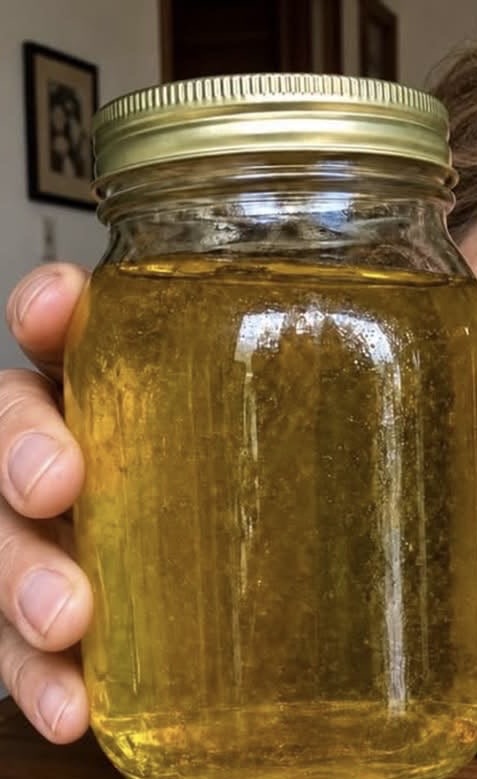
This homemade aloe vera hair oil is a simple natural hair-care treatment made with fresh aloe vera and a nourishing carrier oil. It can help condition the hair, reduce the feeling of dryness, and leave the scalp and hair feeling softer and more moisturized.
Ingredients
| Ingredient | Amount |
| Fresh aloe vera leaf | 1 large leaf |
| Coconut oil, extra virgin olive oil, or sweet almond oil | 1 cup (about 250 ml) |
| Fenugreek seeds | 1 tablespoon, optional |
| Rosemary essential oil | 5–10 drops, optional |
How to Make Aloe Vera Hair Oil
1. Prepare the Aloe Vera
Wash the aloe vera leaf thoroughly under running water.
Trim off both ends and carefully remove the spiky edges along the sides.
For a gentler preparation, use the clear inner gel and remove as much of the green outer skin as possible. Allow the yellow latex-like sap to drain away before using the gel, as it may irritate some people’s skin.
Cut the aloe vera gel into small pieces.
2. Combine the Ingredients
Pour 1 cup of your chosen carrier oil into a small saucepan.
Add the chopped aloe vera pieces.
If desired, add 1 tablespoon of fenugreek seeds.
3. Gently Heat
Place the saucepan over very low heat.
Warm the mixture for approximately 15–20 minutes, stirring occasionally.
Do not allow the oil to boil vigorously. Gentle heating is preferable to prevent the ingredients from burning.
When the aloe vera pieces have noticeably shrunk and become lightly brownish, remove the saucepan from the heat.
4. Cool and Strain
Allow the mixture to cool completely.
Pour the oil through a fine strainer, cheesecloth, or clean piece of gauze to remove the plant residue.
Transfer the filtered oil into a clean, completely dry glass jar.
If you are using rosemary essential oil, add it only after the mixture has completely cooled. Stir well.
5. How to Apply
Divide your hair into several sections.
Apply a small amount of the oil directly to the scalp.
Gently massage with your fingertips for 5–10 minutes. Avoid scratching or rubbing the scalp aggressively.
You can also apply a small amount to the lengths and ends if your hair is dry.
Leave the oil on for approximately 30–60 minutes, then wash thoroughly with a mild shampoo.
Use this treatment 1–2 times per week if your scalp tolerates it well.
Potential Benefits
Aloe vera is commonly used in hair-care products because it can provide a refreshing and soothing sensation on the scalp.
Plant oils can help condition the hair shaft, improve softness, and reduce the feeling of dryness.
Regular scalp massage can also make the treatment relaxing and encourage a consistent hair-care routine.
However, these cosmetic benefits do not mean that aloe vera oil can treat every cause of hair loss.
Can Aloe Vera Hair Oil Grow Hair in 3 Days?
No. Human hair grows gradually and cannot realistically become significantly thicker in only three days.
Average hair growth is roughly 1–1.25 cm (about 0.4–0.5 inches) per month, although the rate varies from person to person.
A homemade hair oil may improve the appearance and conditioning of the hair, but it cannot turn a thinning area into thick hair within a few days.
What About Hair Thinning?
Hair thinning can have many different causes, including genetics, hormonal changes, nutritional deficiencies, stress, certain medications, and medical conditions.
Hair loss that develops later in life can also be associated with genetic and hormonal factors.
If you are experiencing significant, sudden, or persistent hair loss, a dermatologist can help identify the underlying cause and recommend appropriate treatment.
Depending on the diagnosis, medically established treatments such as topical minoxidil may be considered.
⚠️ Patch Test Before Use
Before applying the oil to your entire scalp, test a small amount on a limited area of your inner forearm.
Wait approximately 24 hours and observe your skin.
If you develop redness, itching, burning, swelling, or irritation, do not use the oil.
If you add rosemary essential oil, use it carefully because essential oils are highly concentrated and can cause skin irritation or allergic reactions in some people. Never apply rosemary essential oil undiluted directly to the scalp.
Storage
Store the prepared oil in a clean, tightly closed container away from excessive heat and direct sunlight.
Because this is a homemade preparation containing fresh aloe vera and no professional preservative system, its shelf life and stability cannot be guaranteed.
It is best to prepare a small batch and discard it if you notice an unusual smell, significant changes in color or texture, cloudiness, or any signs of contamination.
Common Mistakes to Avoid
Do not heat the aloe vera and oil over high heat.
Do not aggressively massage an irritated, scratched, or damaged scalp.
Do not add excessive amounts of rosemary essential oil.
Do not rely on this homemade treatment as a replacement for medical evaluation when hair loss is significant or persistent.
⚠️ Important Safety Warning
This homemade hair oil may not be suitable for everyone and can cause skin irritation or an allergic reaction please consult a doctor.
It is not a medically proven treatment for baldness or hair loss.
If you experience sudden hair loss, bald patches, severe scalp itching, scalp pain, inflammation, or persistent thinning, consult a doctor or dermatologist to determine the underlying cause.
Final Thoughts
DIY aloe vera hair oil can be a simple addition to a hair-care routine when used appropriately. It may help condition the hair and provide a pleasant, nourishing feeling on the scalp.
However, it should be viewed as a cosmetic hair-care treatment rather than a miracle hair-growth solution.
Healthy hair growth takes time, and persistent hair loss is best addressed by identifying and treating its underlying cause.
⚠️ This recipe may not be suitable for everyone, so it is advisable to consult a doctor or dermatologist if you have persistent hair loss or scalp problems.