
Introduction
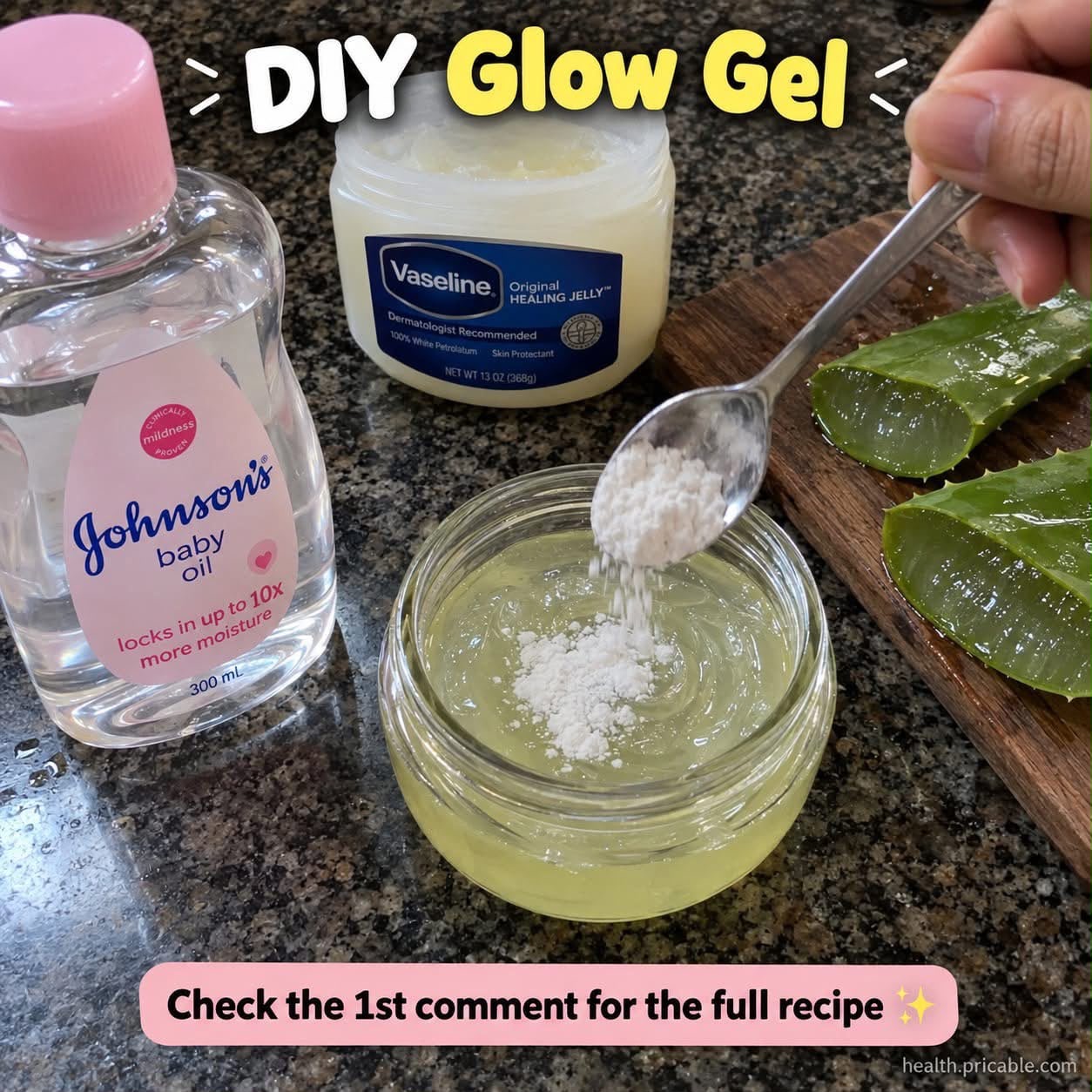
Looking for a simple skincare recipe that leaves your skin feeling soft, smooth, and moisturized? This DIY Glow Gel combines aloe vera gel, petroleum jelly, baby oil, and a small amount of cornstarch to create a creamy skincare mixture.
Aloe vera gel is commonly used in skincare products for its lightweight, soothing feel. Petroleum jelly helps reduce moisture loss, while baby oil helps soften the skin. Cornstarch adds a powdery texture that may make the mixture feel smoother when applied.
However, this homemade blend has not been scientifically tested as a complete formula, and it should not be considered a treatment for dark spots, acne, wrinkles, or other skin conditions. Because aloe vera gel is water-based and petroleum jelly and baby oil are oil-based, the ingredients may separate without an appropriate formulation.
For a safer and more consistent skincare routine, use a commercially formulated facial moisturizer if you have sensitive or acne-prone skin.
Recipe Overview
| Detail | Information |
| Recipe Name | DIY Glow Gel |
| Preparation Time | 5–10 minutes |
| Difficulty | Easy |
| Main Ingredients | Aloe vera gel, petroleum jelly, baby oil, and cornstarch |
| Texture | Creamy, potentially glossy, and powdery |
| Intended Use | External skincare |
| Application | A small amount on clean skin |
| Storage | Fresh preparation recommended |
Why You May Like This DIY Glow Gel
This recipe uses familiar skincare ingredients that are easy to find. When used individually and appropriately, aloe vera gel can provide a lightweight moisturizing feel, while petroleum jelly helps form a protective layer that reduces moisture loss.
Baby oil can soften the skin, and a small amount of cornstarch may create a smoother, less slippery feel. The final texture will depend on the products used and their proportions.
It is important to remember that a glossy finish does not necessarily mean healthier skin. This mixture may temporarily make the skin look dewy, but it cannot guarantee a brighter complexion or permanently change skin texture.
Ingredients
The original recipe does not specify exact quantities for the aloe vera gel, petroleum jelly, or baby oil. The following small-batch amounts are a cautious starting point for experimentation, not a validated skincare formula.
| Ingredient | Suggested Amount | Purpose |
| Commercial aloe vera gel | 1 tablespoon | Provides a lightweight gel base |
| Plain petroleum jelly (Vaseline) | ¼ teaspoon | Helps reduce moisture loss |
| Baby oil | 2–3 drops | Helps soften the skin |
| Cornstarch or cosmetic-grade rice powder | Up to ¼ teaspoon | Adds a powdery texture |
Important: These ingredients may not combine into a stable, uniform gel. Do not assume that mixing them produces a preserved or microbiologically safe cosmetic product. For facial use, a properly formulated commercial product is the safer option.
Choose fragrance-free products when possible, especially if your skin is sensitive. Do not use raw rice flour or kitchen powders on irritated skin.
Equipment Needed
You will need a small, clean mixing bowl, a clean spoon or cosmetic spatula, measuring spoons, and a clean, dry container if you are preparing a small amount for immediate use.
Wash your hands before preparing the mixture. Keep water out of any stored oil-based ingredients, and avoid dipping wet fingers into cosmetic containers.
Step-by-Step Instructions
Step 1: Prepare the Aloe Vera Gel
For a simpler option, use a commercially prepared aloe vera gel intended for cosmetic use. Choose a product with a clear ingredient list and follow its storage instructions.
Fresh aloe vera leaves are less suitable for a homemade facial mixture because the gel can become contaminated and has no reliable preservation system. The yellow latex found just beneath the leaf skin can also irritate the skin. A commercial product formulated for topical use is preferable.
Step 2: Measure the Base
Place 1 tablespoon of commercial aloe vera gel into a clean mixing bowl. This provides the water-based portion of the mixture.
Step 3: Add the Petroleum Jelly
Add approximately ¼ teaspoon of plain petroleum jelly. Mix thoroughly, understanding that the petroleum jelly may not blend evenly with the water-based aloe vera gel.
Step 4: Add the Baby Oil
Add just 2–3 drops of baby oil and stir gently. Avoid adding too much, as the mixture may become greasy.
If the baby oil contains fragrance, it may be unsuitable for sensitive facial skin.
Step 5: Add the Powder
If you choose to experiment with the texture, add a very small amount of cosmetic-grade cornstarch or rice powder. The original recipe mentions approximately 1 teaspoon, but that quantity may be excessive for a small batch and could leave a dry residue.
Do not apply the mixture if the powder forms gritty lumps or if the ingredients separate noticeably.
Step 6: Mix Carefully
Stir until the mixture appears as uniform as possible. Because the ingredients have different properties, the result may resemble a cream or paste rather than a stable gel.
Do not add preservatives or other skincare ingredients at random to make the formula last longer.
Step 7: Test Before Use
Before applying any new mixture to your face, test a small amount on a limited area of skin. Observe the area for irritation and avoid facial use if you experience redness, itching, burning, or swelling.
A patch test can help identify some reactions, but it cannot guarantee that a product will be safe for everyone.
How to Apply the Glow Gel
Start with clean, dry skin. If the mixture has separated, developed an unusual smell, or changed in appearance, do not use it.
Apply only a very small amount to a limited area, avoiding the eyes, lips, and broken or irritated skin. Do not rub the mixture aggressively.
Because petroleum jelly and baby oil can leave a heavy, occlusive layer, people with oily or acne-prone skin may find this mixture uncomfortable. A lightweight, non-comedogenic facial moisturizer may be a better option.
If you experience irritation or worsening breakouts, stop using the mixture and gently wash it off.
Best Tips for a Better Skincare Routine
Choose products specifically intended for facial use whenever possible. Products designed for the body may contain fragrances or other ingredients that are not suitable for every face.
Keep your routine simple. A gentle cleanser, a suitable moisturizer, and broad-spectrum sunscreen during the day are generally more useful for maintaining healthy-looking skin than a complicated homemade mixture.
Avoid applying homemade mixtures to active rashes, broken skin, or inflamed acne. Do not use this recipe as a substitute for treatment recommended by a healthcare professional.
If your goal is to improve the appearance of dark spots or uneven skin tone, use products formulated for that purpose rather than relying on a homemade glow gel.
Ingredient Alternatives
For a lightweight finish: Use a commercial aloe vera gel on its own, provided that the product is suitable for your skin.
For dry skin: Apply a small amount of plain petroleum jelly over a suitable moisturizer instead of mixing it with aloe vera gel.
For sensitive skin: Choose fragrance-free products and avoid unnecessary powders, fragrances, and optional ingredients.
For oily or acne-prone skin: Consider a lightweight, non-comedogenic moisturizer rather than a mixture containing petroleum jelly and baby oil.
For a smoother texture: Choose a professionally formulated gel-cream instead of adding kitchen powders to a homemade product.
Common Mistakes to Avoid
Adding too much powder: Excess cornstarch or rice powder may make the mixture thick, chalky, or difficult to spread.
Expecting a stable gel: Water-based aloe vera gel and oil-based ingredients do not necessarily combine into a uniform formula.
Using fresh aloe vera without proper handling: Fresh plant material can become contaminated, and the yellow latex may irritate the skin.
Ignoring fragrance sensitivity: Baby oil containing fragrance may cause irritation in susceptible individuals.
Keeping the mixture for too long: A homemade preparation containing water has no guaranteed shelf life unless it has been properly formulated and tested.
Expecting instant skin transformation: A temporary glossy appearance is not proof that the mixture treats pigmentation, acne, or wrinkles.
Storage Instructions
For the safest approach, prepare only what you need and use a properly formulated commercial product for regular facial skincare.
Do not assume that a clean, airtight jar makes a homemade mixture safe for long-term storage. Aloe vera gel contains water, and the combination described here has no validated preservation system or established shelf life.
Discard any unused homemade mixture rather than keeping it for repeated use. Never use a preparation that changes in smell, color, or texture.
Frequently Asked Questions
Does this DIY Glow Gel brighten the skin?
It may temporarily give the skin a glossy appearance and make it feel softer. However, there is no reliable evidence that this specific homemade mixture permanently brightens skin or removes dark spots.
Can I use this mixture every day?
Daily use is not recommended for an untested homemade facial formula. The mixture may separate, irritate sensitive skin, or feel too heavy. A commercially formulated moisturizer is a more reliable option for daily use.
Is this recipe suitable for oily skin?
It may be too heavy for some people with oily or acne-prone skin. Petroleum jelly and baby oil create a rich, occlusive feel, so a lightweight facial moisturizer may be more comfortable.
Can I use fresh aloe vera leaves?
Fresh aloe vera is less predictable than a properly formulated commercial gel. The plant’s yellow latex can irritate the skin, and fresh gel can become contaminated. For facial use, a commercial aloe vera gel intended for topical application is preferable.
Can I use rice powder instead of cornstarch?
The original recipe suggests rice powder as an alternative, but adding kitchen powders does not guarantee a safer or more effective product. If you choose to use a powder, select a cosmetic-grade ingredient and avoid applying it to irritated skin.
How long does homemade Glow Gel last?
There is no reliable shelf life for this untested mixture. Since it contains water-based aloe vera gel and has no validated preservation system, the safest option is not to store it for repeated facial use.
Can this gel remove wrinkles or acne?
No. This homemade mixture has not been established as a treatment for wrinkles or acne. If you have persistent breakouts, irritation, or pigmentation concerns, consult a qualified healthcare professional for advice suited to your skin.
Final Thoughts
This DIY Glow Gel combines aloe vera gel, petroleum jelly, baby oil, and a small amount of powder to create a homemade skincare mixture. Although the ingredients may offer different moisturizing or texture-related benefits individually, their combination is not a validated facial skincare formula.
For a simple, dependable routine, choose a suitable moisturizer formulated for your skin type and use sunscreen during the day. If you have sensitive or acne-prone skin, avoid experimenting with heavy homemade mixtures on your face.
⚠️ Skin Safety Note: This preparation may not be suitable for everyone. Test new products cautiously, avoid broken or irritated skin, and discontinue use if a reaction occurs. Consult a qualified healthcare professional if you have a skin condition or are unsure which skincare ingredients are appropriate for you.