
Introduction
Our hands are exposed to sunlight, frequent washing, and everyday environmental factors that can leave the skin feeling dry, rough, or dull. Over time, some people also develop dark spots, uneven skin tone, and fine lines.
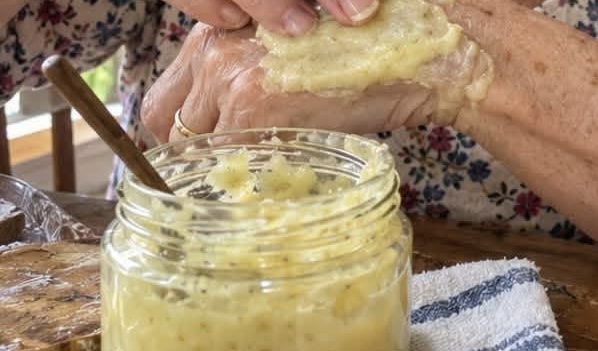
A popular homemade hand scrub combines a moisturizing base, sugar, lemon juice, and a small amount of turmeric. The sugar helps exfoliate the skin’s surface, while the moisturizing ingredients can leave the hands feeling softer.
However, it is important to understand that this DIY treatment cannot guarantee the removal of age spots or wrinkles. Lemon juice can irritate the skin, and homemade exfoliating mixtures are not suitable for everyone.
In this guide, you will learn about the ingredients, their potential benefits, safer alternatives, and the best ways to care for your hands.
Recipe Overview
| Detail | Information |
| Recipe Name | DIY Hand Scrub for Softer-Looking Hands |
| Preparation Time | 5 minutes |
| Application Time | Approximately 2–3 minutes |
| Total Time | Approximately 5–10 minutes |
| Main Ingredients | Moisturizing base, sugar, lemon juice, turmeric |
| Difficulty | Easy |
| Intended Use | Cosmetic hand care |
| Best For | People seeking a simple hand-care routine, provided the ingredients are well tolerated |
Ingredients
| Ingredient | Original Quantity | Purpose |
| Softened unsalted butter or a suitable cosmetic oil | 2 tablespoons | Provides an emollient base |
| Fresh lemon juice | 1 tablespoon | Adds acidity but may irritate the skin |
| White or brown sugar | 1–2 tablespoons | Provides physical exfoliation |
| Ground turmeric | A small pinch | Adds color and contains curcumin |
Safety note: Fresh lemon juice is not recommended for use in this scrub because it can cause irritation and may trigger phytophotodermatitis when lemon-contaminated skin is exposed to sunlight. A gentler, lemon-free version is preferable.
For a more skin-friendly alternative, use a plain fragrance-free moisturizer or a suitable cosmetic oil as the base and omit the lemon juice. If you have sensitive skin, eczema, cracked hands, or irritated skin, skip the abrasive scrub altogether.
Step-by-Step Instructions
Step 1: Prepare the Moisturizing Base
Place two tablespoons of softened, unsalted butter or a suitable cosmetic oil in a clean bowl.
A fragrance-free hand cream can be an even more practical option because it is formulated for application to the skin.
Step 2: Add the Turmeric
If you choose to use turmeric, add only a tiny pinch and mix thoroughly.
Turmeric can leave yellow stains on the skin, clothing, and towels. It may also cause irritation in some individuals, so it is not essential to the recipe.
Step 3: Add the Sugar
For the original scrub, gradually mix in one tablespoon of sugar until the preparation becomes slightly grainy.
Use the smallest amount necessary and avoid coarse sugar crystals, which can scratch or irritate the skin.
For a gentler hand-care routine, consider skipping the sugar and using a moisturizer alone.
Step 4: Apply Gently
If you decide to use a mild, lemon-free scrub, apply a small amount to damp hands and massage very gently for no more than a short period.
Do not scrub aggressively or apply the mixture to cuts, cracked skin, irritated areas, or freshly shaved skin.
Stop immediately if you notice stinging, burning, itching, or redness.
Step 5: Rinse and Moisturize
Rinse your hands thoroughly with lukewarm water and pat them dry with a clean towel.
Apply a fragrance-free hand moisturizer while the skin is still slightly damp to help maintain hydration.
Because homemade mixtures have not been tested for stability or contamination, prepare only a small amount for immediate use and discard any leftovers.
Why You May Like This Hand-Care Routine
It Can Help Your Hands Feel Softer
A suitable moisturizing ingredient can soften the skin and reduce the feeling of dryness. Regular moisturizing is especially helpful when your hands are frequently washed or exposed to cleaning products.
Gentle Exfoliation Can Smooth Rough Skin
Physical exfoliation removes some dead skin cells from the skin’s surface. However, excessive scrubbing can damage the skin barrier and make dryness or irritation worse.
Gentle exfoliation is optional, not essential for healthy hands.
It Encourages a Consistent Skincare Habit
Taking a few minutes to moisturize your hands regularly can improve comfort and help maintain the skin barrier. A simple routine is often more useful than frequently trying strong homemade treatments.
Understanding the Ingredients
Moisturizing Butter or Oil
A suitable emollient helps soften the skin and reduce moisture loss. Some people prefer a fragrance-free hand cream because it combines moisturizing ingredients in a formula designed for skin use.
Kitchen butter is not necessarily the best choice for skincare, particularly if it contains salt, flavorings, or other additives. Choose a product intended for topical use whenever possible.
Sugar
Sugar acts as a physical exfoliant by creating friction against the skin’s surface. However, the crystals may cause tiny scratches when rubbed too hard.
Avoid sugar scrubs if your hands are sensitive, inflamed, cracked, or affected by eczema.
Lemon Juice
Lemon juice is acidic and may irritate the skin. Although it contains vitamin C, applying fresh lemon juice does not provide the same controlled formulation or proven results as a properly formulated skincare product.
Lemon juice can also react with sunlight and cause phytophotodermatitis, a reaction that may result in redness, blisters, and persistent dark marks.
For these reasons, lemon juice should be left out of this hand scrub.
Turmeric
Turmeric contains curcumin, a compound studied for various biological properties. However, there is insufficient evidence to conclude that a homemade turmeric scrub reliably removes age spots or wrinkles.
Turmeric may stain the skin temporarily and can cause reactions in some people.
Best Tips for Softer, More Even-Looking Hands
Moisturize after washing. Apply a fragrance-free hand cream after washing your hands, especially when the skin feels tight or dry.
Protect your hands from the sun. Use broad-spectrum sunscreen with SPF 30 or higher on the backs of your hands when they are exposed to daylight. Reapply as directed, particularly after washing.
Wear gloves when cleaning. Household cleaning products can dry out or irritate the skin. Protective gloves help reduce direct exposure.
Avoid aggressive scrubbing. More friction does not mean better results. Excessive exfoliation can cause inflammation and sometimes worsen pigmentation.
Be patient with dark spots. Pigmented spots may take weeks or months to improve, depending on their cause. Some require professional assessment and treatment.
Best Ingredient Alternatives
For Dry Hands
Choose a fragrance-free cream containing ingredients such as glycerin, ceramides, or petrolatum. These can help support the skin barrier and reduce moisture loss.
For Rough Hands
Rather than using coarse sugar, consider a professionally formulated hand cream containing urea or lactic acid. These ingredients can help soften rough skin when used according to the product instructions.
They may sting on cracked or irritated skin, so choose a suitable concentration and seek professional advice if needed.
For Uneven Skin Tone
Daily sunscreen is an important first step because ultraviolet exposure can contribute to dark spots and uneven pigmentation.
If you want to address persistent age spots, consider a dermatologist’s advice about suitable ingredients or treatments. New, changing, irregular, or bleeding spots should be assessed by a healthcare professional rather than treated with a scrub.
Recipe Variations
Simple Moisturizing Hand Treatment
Mix a small amount of fragrance-free hand cream with a few drops of a suitable cosmetic oil, if compatible with the product. Massage it gently into clean hands and leave it on as a moisturizer.
Gentle Hand-Care Routine for Sensitive Skin
Skip the sugar, lemon juice, and turmeric. Wash with a mild cleanser, pat the skin dry, and apply a fragrance-free moisturizer.
Overnight Hand Moisturizing Treatment
Before bed, apply a generous layer of fragrance-free hand cream. If your skin tolerates it, you can wear clean cotton gloves overnight to help keep the moisturizer in place.
These alternatives focus on hydration and skin-barrier support rather than promising instant whitening or anti-aging effects.
Common Mistakes to Avoid
Using lemon juice to lighten dark spots: Lemon juice can irritate the skin and may contribute to additional pigmentation after sun exposure.
Scrubbing too hard: Aggressive exfoliation can cause redness, small abrasions, and increased sensitivity.
Leaving the mixture on for too long: Longer contact does not necessarily improve results and may increase irritation.
Expecting immediate results: A homemade scrub cannot reliably erase age spots, deep wrinkles, or sun damage.
Ignoring sun protection: Without regular sun protection, existing pigmentation may persist or become more noticeable.
Saving leftovers: Homemade mixtures lack validated preservation systems. Prepare only what you need and discard the remainder.
Frequently Asked Questions
1. Can this hand scrub remove age spots?
No. It may temporarily smooth the skin’s surface, but there is no reliable evidence that this homemade mixture removes age spots. Persistent pigmentation may require professional assessment.
2. Does lemon juice brighten the skin?
Lemon juice is acidic, but that does not make it a safe or reliable skin-lightening treatment. It can cause irritation and sun-related skin reactions. A properly formulated skincare product is a safer option.
3. How often should I exfoliate my hands?
There is no need to exfoliate your hands on a fixed schedule. If your skin is healthy and tolerates exfoliation, use a gentle approach sparingly. Avoid exfoliation entirely when your hands are irritated, cracked, or inflamed.
4. Can I use this recipe on my face?
This recipe is designed for discussion as a hand-care treatment, not a facial treatment. Sugar crystals and lemon juice may irritate facial skin, so avoid applying this mixture to your face.
5. Is turmeric safe for all skin types?
No. Some people may experience irritation or allergic reactions, and turmeric can temporarily stain the skin. It is not essential for an effective moisturizing routine.
6. What is the best way to prevent age spots on the hands?
Regular broad-spectrum sunscreen, protective clothing when appropriate, and consistent moisturizing are useful measures. A dermatologist can advise on the treatment of existing spots.
7. Can this scrub remove wrinkles?
No. Exfoliation may temporarily improve the feel of rough skin, but it does not remove established wrinkles or reverse skin aging.
Final Thoughts
A homemade hand scrub made with a moisturizing base and sugar is a popular DIY skincare idea, but its benefits should not be exaggerated. Gentle exfoliation may temporarily smooth rough skin, while regular moisturizing can help keep hands comfortable and soft.
The lemon juice in the original recipe is best omitted because of the risk of irritation and sun-related skin reactions. For long-term hand care, prioritize a fragrance-free moisturizer, daily sun protection, and gentle skincare habits.
⚠️ This homemade treatment may not be suitable for everyone. If you have sensitive skin, eczema, persistent dark spots, or another skin condition, consult a dermatologist or qualified healthcare professional before trying a new treatment.