
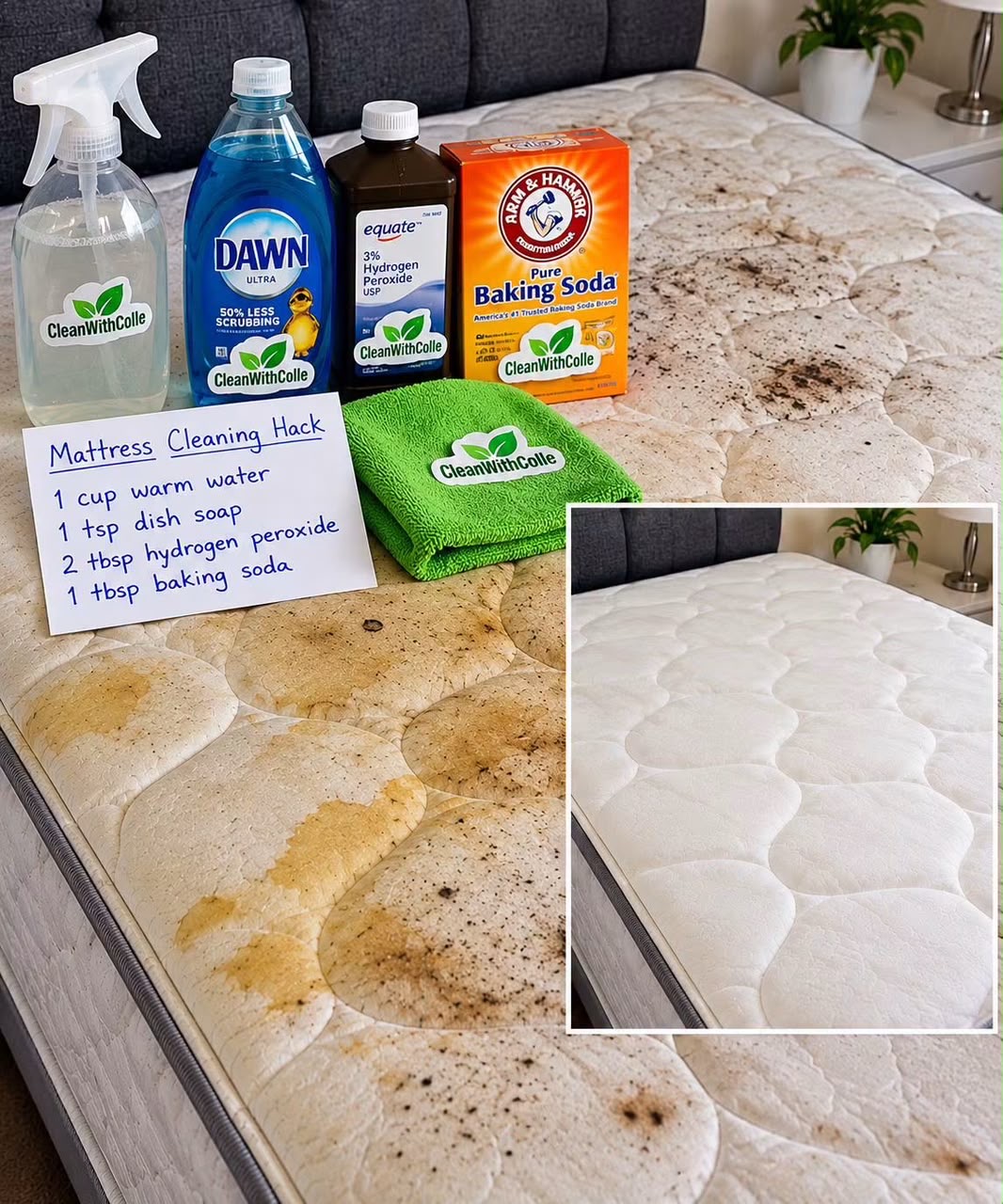
Is your mattress looking stained, dirty, or less fresh than it used to? This simple homemade mattress cleaner is an easy and affordable way to tackle everyday surface stains and refresh your sleeping area using a few common household ingredients.
Made with warm water, dish soap, hydrogen peroxide, and baking soda, this DIY cleaning solution helps loosen dirt and certain stains while making mattress maintenance easier.
Whether you’re dealing with small spills, everyday marks, or visible surface dirt, this homemade mattress-cleaning recipe is a practical option to try at home.
Recipe Overview
| Details | Information |
| Preparation Time | 5 minutes |
| Application Time | 5 minutes |
| Cleaning Time | 5–10 minutes |
| Drying Time | Several hours or longer |
| Yield | Approximately 1 cup |
| Difficulty | Easy |
| Method | Spray and wipe |
| Best For | Suitable surface stains |
Why You’ll Love This Recipe
This homemade mattress cleaner uses simple ingredients that many households already have in their cleaning cupboard.
The dish soap helps loosen oily residue, while 3% hydrogen peroxide can help lighten certain organic stains. Baking soda provides additional cleaning support.
It’s also easy to prepare and requires very little equipment, making it a convenient option for occasional mattress maintenance.
Ingredients
| Ingredient | Quantity | Purpose |
| Warm water | 1 cup | Dilutes the cleaning solution |
| Dish soap (Dawn) | 1 teaspoon | Helps remove greasy residue |
| Hydrogen peroxide (3%) | 2 tablespoons | Helps treat certain stains |
| Baking soda | 1 tablespoon | Provides additional cleaning action |
Equipment Needed:
- A clean spray bottle
- A small mixing bowl
- A clean microfiber cloth
- A soft cleaning cloth
- Protective gloves
Step-by-Step Instructions
Step 1: Prepare the Cleaning Solution
Pour 1 cup of warm water into a small bowl.
Add 1 teaspoon of dish soap, 2 tablespoons of 3% hydrogen peroxide, and 1 tablespoon of baking soda.
Stir gently until the ingredients are combined.
Baking soda does not dissolve completely, so avoid putting the mixture into a fine-mist spray bottle because particles may clog the nozzle. A cloth or sponge is a better application method.
Step 2: Test a Small Area
Before cleaning the entire mattress, test the solution on a small, hidden area.
Allow the test spot to dry completely and check for discoloration or damage.
This is especially important because hydrogen peroxide can lighten or bleach certain mattress fabrics.
Step 3: Apply the Solution
Apply a small amount of the mixture to a clean microfiber cloth.
Gently dab the stained areas of the mattress.
Avoid soaking the fabric or spraying large quantities directly onto the mattress, as excess moisture can penetrate the interior layers.
Step 4: Gently Clean the Stains
Allow the solution to sit for approximately 3–5 minutes, provided the mattress manufacturer’s instructions permit this treatment.
Use a clean microfiber cloth to gently blot the affected areas.
Avoid aggressive scrubbing, which can damage delicate mattress fabrics or spread the stain.
Step 5: Remove Excess Moisture
Use a separate clean cloth lightly dampened with plain water to remove any remaining cleaning residue.
Then press a dry towel against the treated areas to absorb excess moisture.
Step 6: Allow the Mattress to Dry
Let the mattress air-dry completely before replacing the bedding.
Open windows or use a fan to improve air circulation.
Make sure the mattress is completely dry, including beneath the surface, before sleeping on it again.
Best Tips
Always treat stains as soon as possible for easier cleaning. Blot spills instead of rubbing them, and use only a small amount of cleaning solution.
Good ventilation is essential because mattresses can retain moisture. Never cover a damp mattress with sheets or blankets.
Best Ingredient Options
A mild, color-safe dish soap is a good option for helping loosen everyday dirt and oily marks.
Use only standard 3% hydrogen peroxide, and remember that it can affect fabric colors. Baking soda is useful as a mild cleaning ingredient, but it should not be considered a disinfectant.
Mattress Cleaning Variations
For a simple maintenance routine, use a lightly dampened microfiber cloth with a little mild soap and water, provided the manufacturer’s instructions allow it.
For fresh spills, begin by blotting the moisture with a dry towel before choosing an appropriate cleaning method for the mattress material.
Always test any new cleaning product before applying it to a larger area.
What to Clean With This Solution
This mixture may be suitable for certain compatible mattress fabric surfaces, but it is not appropriate for every mattress type.
Check the care label before cleaning memory foam, latex, pillow-top mattresses, or mattresses with special protective coatings.
Avoid applying liquid to seams, deep layers, electrical components, or areas that cannot dry properly.
Make-Ahead Instructions
For best results, prepare the cleaning mixture immediately before use.
Hydrogen peroxide can gradually break down when exposed to light and air, so a freshly prepared solution is preferable.
Storage
Do not store leftover homemade cleaning solution for future use.
Discard any remaining mixture after cleaning and rinse your cleaning equipment thoroughly.
Reusing and Reapplying
For persistent stains, allow the treated area to dry completely before deciding whether another cleaning attempt is appropriate.
Avoid repeatedly applying hydrogen peroxide, as excessive use may discolor or damage mattress fabric.
Common Mistakes to Avoid
Using too much liquid is one of the biggest mistakes when cleaning a mattress. Excess moisture can penetrate the internal filling and encourage mold or unpleasant odors.
Never skip the colorfastness test, especially when using hydrogen peroxide on colored or delicate fabrics.
Do not mix this solution with bleach, vinegar, ammonia, or other household cleaning chemicals. Avoid using a sealed spray bottle for a mixture containing baking soda, and never apply the solution to a mattress that the manufacturer recommends cleaning only with dry methods.
Frequently Asked Questions
Can this homemade solution remove yellow mattress stains?
It may help lighten some organic stains, but results depend on the stain’s age, the mattress material, and the fabric color. Older stains may not disappear completely.
Does hydrogen peroxide remove mattress stains?
3% hydrogen peroxide can help treat certain organic stains. However, it may also bleach fabrics, so always perform a small hidden-area test first.
Can I use this cleaner on a memory foam mattress?
Check the manufacturer’s care instructions first. Memory foam can absorb moisture, making it difficult to dry completely. Spot cleaning with minimal moisture may be recommended.
How long should I leave the solution on the mattress?
For compatible fabrics, approximately 3–5 minutes is a reasonable starting point. Avoid allowing the solution to soak deeply into the mattress.
Can I sleep on my mattress immediately after cleaning?
No. Wait until the treated area and the surrounding mattress are completely dry before replacing your bedding or sleeping on it.
Can I use this solution on an entire mattress?
It is better suited to small, localized stains rather than soaking the entire mattress. Excessive moisture can damage the internal materials.
How often should I clean my mattress?
Lightly clean visible stains when necessary and follow the manufacturer’s maintenance recommendations. Regular vacuuming with an appropriate upholstery attachment can also help remove dust and debris.
Final Thoughts
This DIY mattress cleaner is a simple homemade option for tackling certain surface stains and refreshing compatible mattress fabrics.
With a few common household ingredients and careful application, you can make mattress maintenance easier without using a complicated cleaning routine.
Remember to test the solution first, avoid excessive moisture, and allow the mattress to dry completely before using it again.