
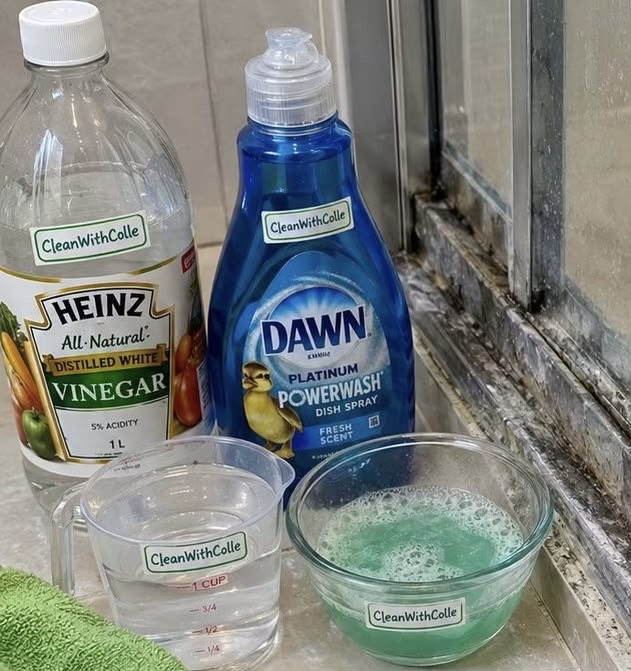
Shower door tracks can quickly accumulate soap scum, hard water deposits, dirt, and moisture. These narrow spaces are often difficult to clean with ordinary bathroom products, but a simple homemade cleaning solution can help loosen stubborn buildup and make scrubbing easier.
This easy DIY shower door track cleaner combines white vinegar, dish soap, and warm water to help refresh your shower rails without expensive cleaning products.
Recipe Overview
| Detail | Information |
| Preparation Time | 5 minutes |
| Cleaning Time | 15–20 minutes |
| Total Time | Approximately 20–25 minutes |
| Difficulty | Easy |
| Cost | Budget-friendly |
| Best For | Shower door tracks, soap scum, and mineral deposits |
Ingredients
| Ingredient | Quantity | Purpose |
| White vinegar | ½ cup (120 ml) | Helps dissolve certain mineral deposits |
| Dish soap | 1 tablespoon | Helps remove greasy residue and soap scum |
| Warm water | ½ cup (120 ml) | Dilutes the mixture and helps loosen dirt |
Step-by-Step Instructions
Step 1: Prepare the Cleaning Solution
Pour the white vinegar and warm water into a small bowl or suitable cleaning container. Add the dish soap and stir gently until combined.
If using a spray bottle, make sure it is clean and compatible with the ingredients. Avoid shaking vigorously, as the dish soap may create excessive foam.
Step 2: Apply the Cleaner to the Shower Tracks
Pour or carefully apply the mixture along the shower door tracks, concentrating on areas where soap residue, mineral deposits, and dirt have accumulated.
For narrow corners, use a small cleaning brush to distribute the solution evenly.
Important: Check the manufacturer’s care instructions before using vinegar on your shower hardware. Acidic cleaners can damage certain natural stones, cement-based surfaces, and some metal finishes.
Step 3: Let the Solution Sit
Allow the cleaner to work for approximately 10–15 minutes.
This gives the solution time to soften some of the buildup, making it easier to remove. Do not allow it to dry on the surface.
Step 4: Scrub the Tracks
Use an old toothbrush, a small nylon cleaning brush, or a soft detailing brush to scrub the tracks and corners.
Work gently around seals, drainage openings, and moving parts to avoid damaging them.
For stubborn deposits, repeat the application rather than using excessive force or abrasive tools.
Step 5: Rinse Thoroughly
Rinse the tracks with clean water, taking care not to flood areas that should remain dry.
Remove all remaining cleaner and loosened dirt. If the tracks are difficult to rinse, wipe them several times with a clean, damp microfiber cloth.
Step 6: Dry and Polish
Wipe the tracks thoroughly with a dry microfiber cloth.
Drying the area helps reduce moisture accumulation and water marks. Leave the shower door open for a while to improve ventilation and allow the tracks to dry completely.
Why You’ll Love This DIY Cleaning Recipe
Affordable and convenient: The ingredients are common household products, making this an economical option for routine bathroom maintenance.
Helps loosen mineral deposits: White vinegar can help dissolve certain hard water deposits, particularly those containing calcium carbonate.
Cuts through soap residue: Dish soap helps lift oily residue and grime from shower door tracks.
Easy to use: A small brush makes it possible to reach narrow corners that are often missed during regular bathroom cleaning.
Best Tips for Cleaner Shower Door Tracks
Clean regularly. Wiping the tracks once a week can prevent heavy buildup and reduce the need for intensive scrubbing.
Remove standing water. Use a cloth to dry the tracks after showering, especially around corners and drainage openings.
Choose the right brush. A small, soft nylon brush can reach tight spaces without scratching many common surfaces.
Test before cleaning. Apply a small amount of the solution to an inconspicuous area first, particularly if your shower has coated metal hardware or delicate finishes.
Improve ventilation. Running an exhaust fan or opening a window when appropriate helps reduce excess bathroom moisture.
Important Cleaning and Safety Tips
Never mix vinegar with bleach. Combining these products can release toxic chlorine gas.
Avoid incompatible surfaces. Do not use vinegar on marble, limestone, travertine, or other acid-sensitive natural stone. Follow the manufacturer’s recommendations for aluminum, plated finishes, and shower seals.
Do not assume visible mold is fully eliminated. This solution may help remove surface grime, but it is not a guaranteed mold treatment or a registered disinfectant. Persistent mold, particularly around damaged seals, may require a suitable product and professional attention.
Wear gloves if needed. People with sensitive skin may benefit from wearing household cleaning gloves and rinsing their hands after use.
Common Mistakes to Avoid
Leaving the Cleaner on Too Long
Allowing the mixture to dry on the tracks can leave residue or affect sensitive finishes. Follow the recommended contact time and rinse thoroughly.
Scrubbing with Metal Tools
Steel wool and sharp tools can scratch metal, plastic, and coated surfaces. Use a soft brush instead.
Ignoring Hidden Corners
Dirt often accumulates near screws, corners, drainage openings, and rubber seals. Clean these areas gently without forcing water into inaccessible cavities.
Forgetting to Dry the Tracks
Leaving the tracks wet encourages further water marks and moisture buildup. Always finish with a clean, dry cloth.
Frequently Asked Questions
How often should I clean shower door tracks?
For most bathrooms, once a week is a good starting point. Clean more frequently if you have hard water or notice soap residue accumulating quickly.
Can white vinegar remove hard water stains?
White vinegar can dissolve certain mineral deposits, especially calcium-based scale. However, it may not remove every type of stain, and it should not be used on acid-sensitive materials.
Can I use this cleaner on black shower hardware?
Use caution. Some black finishes are coated or plated and may be damaged by acidic cleaners. Check the manufacturer’s instructions and use a compatible pH-neutral cleaner if necessary.
Will this recipe remove mold?
It may help remove some surface grime and discoloration, but it does not guarantee mold elimination. If mold returns repeatedly or appears behind damaged caulk or seals, investigate the moisture source and consider an appropriate mold-removal method.
Can I store leftover cleaning solution?
It is best to prepare a small fresh batch when needed. If you store any leftover mixture, label the container clearly, keep it away from children and pets, and never place it in a bottle that could be mistaken for a beverage.
Final Thoughts
Keeping shower door tracks clean does not have to be difficult or expensive. This simple homemade cleaner uses white vinegar, dish soap, and warm water to help loosen soap residue, mineral deposits, and everyday bathroom grime.
For the best results, apply the solution carefully, scrub with a small brush, rinse thoroughly, and dry the tracks with a microfiber cloth. Regular maintenance and good bathroom ventilation will help keep your shower looking cleaner for longer.