
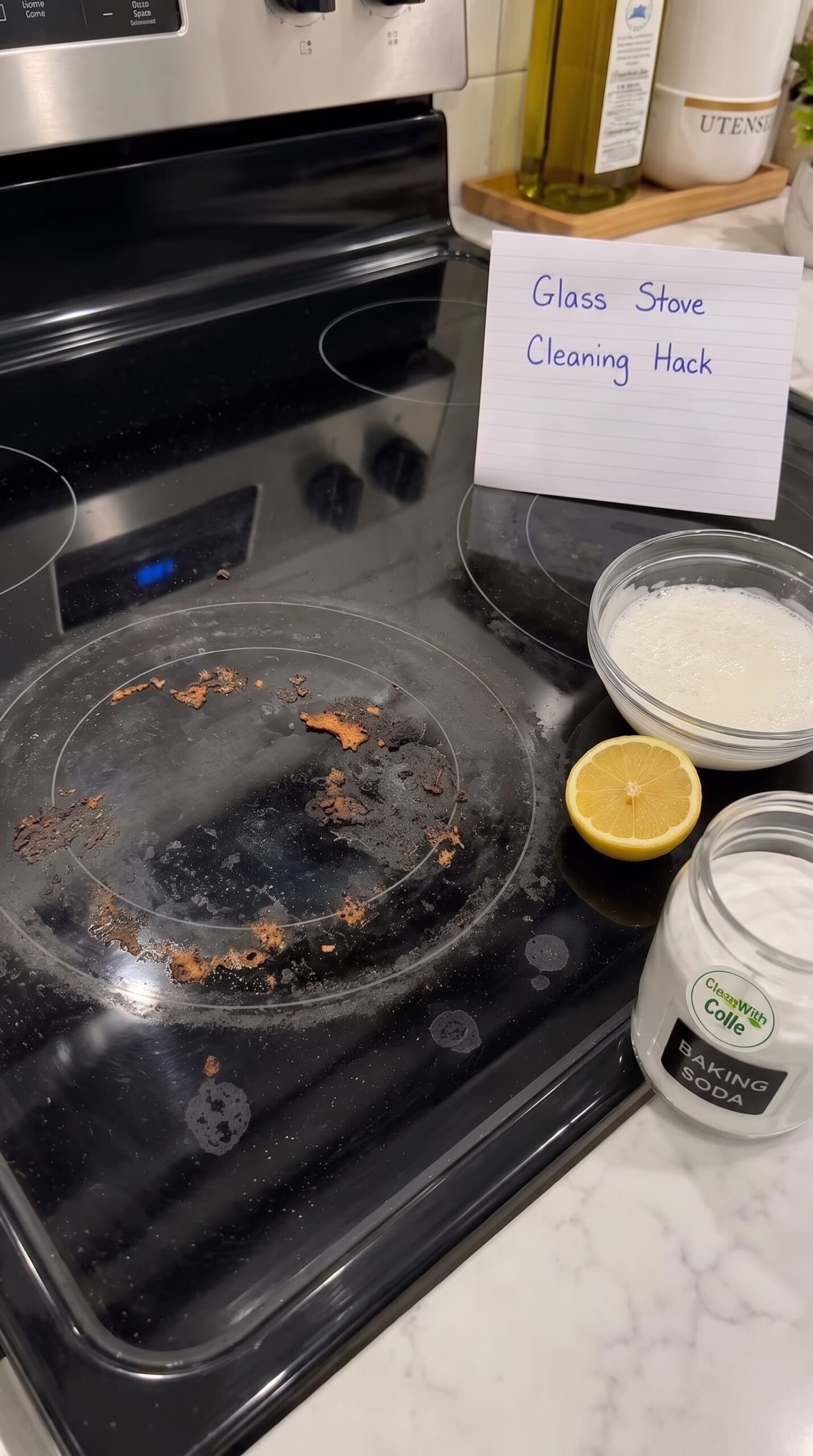
✨ Easy Baking Soda and Lemon Glass Stove Cleaning Hack
Introduction
Keeping a glass stovetop clean can be challenging, especially when grease, food splatters, and burnt-on residue build up after cooking.
This simple baking soda and lemon cleaning hack is an easy homemade method for freshening up your stovetop and removing everyday kitchen grime.
🧂 Ingredients & Tools
- 🧂 2–3 tablespoons baking soda
- 🍋 ½ fresh lemon
- 💧 A small amount of water, if needed
- 🥣 Small bowl
- 🧽 Microfiber cloth or soft sponge
- ✨ Clean, dry cloth for polishing
🧼 How to Make the Cleaning Paste
Add the baking soda to a small bowl.
Gradually add a few drops of fresh lemon juice or a little water.
Mix until you create a thick, spreadable paste that can easily stick to greasy or stained areas.
🧽 How to Clean a Glass Stovetop
Prepare the Surface
Make sure the stovetop is completely turned off and cool to the touch before cleaning.
Remove any loose crumbs or food particles from the surface.
Apply the Baking Soda Paste
Spread the baking soda paste over areas affected by grease, food residue, or light burnt-on stains.
Apply a slightly thicker layer to particularly dirty areas.
Scrub Gently With Lemon
Take the remaining lemon half and gently rub it over the paste using small circular movements.
Do not apply excessive pressure, and avoid using anything abrasive that could scratch the glass.
Let It Sit
Allow the mixture to sit for approximately 10–15 minutes.
This gives the paste time to soften some of the residue, making the surface easier to wipe clean.
Wipe the Surface
Dampen a microfiber cloth or soft sponge with water.
Wipe away the baking soda paste and loosened dirt.
Rinse the cloth as needed and continue wiping until the surface is clean.
Polish for a Shine
Use a clean, dry microfiber cloth to buff the stovetop.
Gently polish the surface until excess moisture and streaks are removed.
✨ Best Tips for a Clean Glass Stovetop
Clean spills regularly once the stovetop has cooled.
For stubborn residue, repeat the process instead of aggressively scrubbing the glass.
Always use soft cloths or non-abrasive sponges.
Avoid steel wool, harsh scouring pads, and abrasive cleaners that may scratch the surface.
Never apply cold water or cleaning solutions to an extremely hot stovetop.
Always check your appliance manufacturer’s instructions before using homemade cleaning solutions.
🧪 Why Baking Soda and Lemon Can Help
Baking soda provides gentle cleaning action and can help loosen certain food residues.
Lemon juice contains natural citric acid, which can help break down some grease and mineral deposits.
When lemon juice comes into contact with baking soda, the mixture fizzes. This reaction can help loosen surface grime, although the fizz itself is not a substitute for gentle wiping and cleaning.
For heavily carbonized or stubborn burnt-on stains, a cleaner specifically formulated for glass cooktops may work better.
⚠️ Important Safety Tips
Always make sure the stovetop is off and completely cool before cleaning.
Never mix this method with bleach, ammonia, or other household cleaning chemicals.
Do not use knives, razor blades, metal scrubbers, or abrasive materials unless your appliance manufacturer specifically recommends an appropriate scraper.
If your stovetop has a special coating or finish, follow the manufacturer’s cleaning instructions.
Keep lemon juice and baking soda away from electrical controls and openings.
🏠 How Often Should You Clean a Glass Stovetop?
For everyday maintenance, wipe the stovetop after cooking once it has cooled sufficiently.
A deeper cleaning can be done whenever grease and residue begin to build up.
Regular cleaning is much easier than allowing burnt-on food and grease to accumulate for a long period.
Conclusion
With just baking soda, a fresh lemon, and a microfiber cloth, you can create a simple homemade cleaning paste for maintaining your glass stovetop.
The method is inexpensive, easy to prepare, and useful for everyday grease and food residue.
For severe stains or delicate cooktop surfaces, always follow the manufacturer’s recommended cleaning method.