
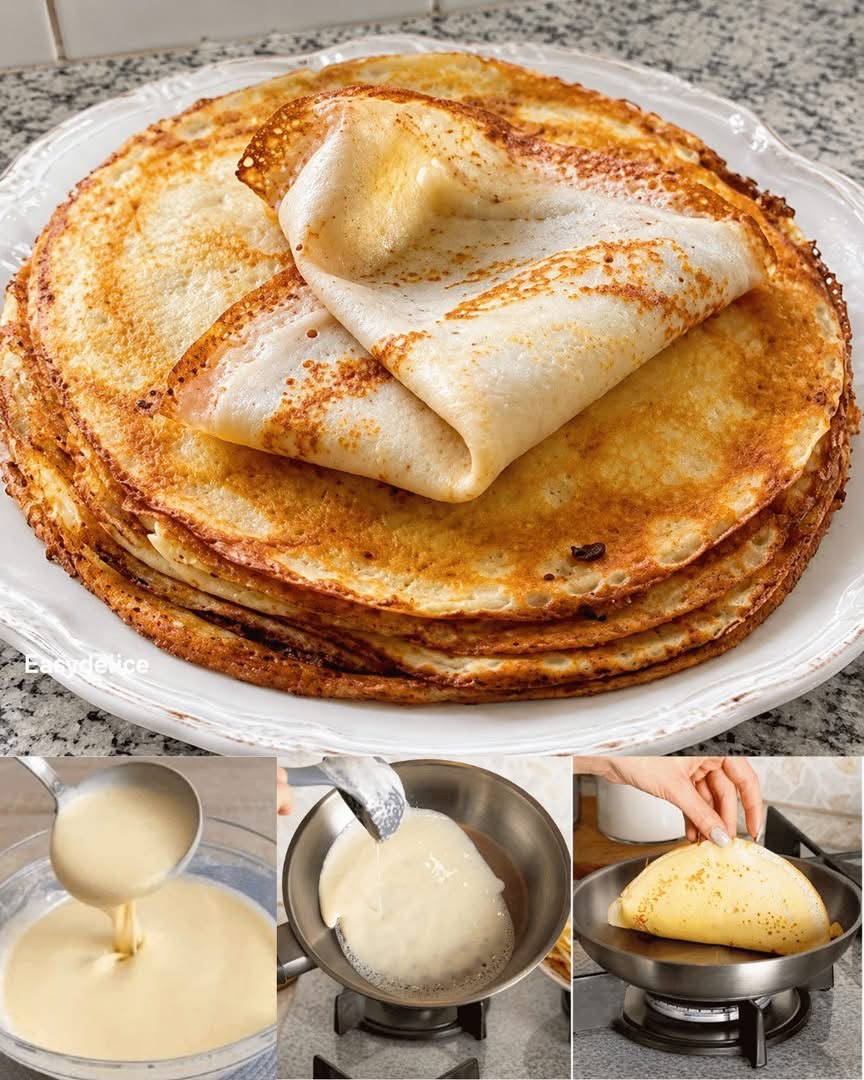
There is nothing quite like a stack of warm, buttery French crepes fresh from the skillet. Thin, delicate, golden around the edges, and wonderfully tender in the center, these homemade crepes are an easy breakfast or brunch favorite that can be enjoyed in countless ways.
This classic crepe recipe uses simple ingredients such as flour, eggs, milk, water, and butter. The batter comes together quickly, and once your skillet is hot, each crepe cooks in just a couple of minutes.
Unlike fluffy American pancakes, French crepes are intentionally thin and delicate. They can be served sweet with fresh fruit, chocolate hazelnut spread, whipped cream, or powdered sugar, or transformed into a savory meal with cheese, vegetables, chicken, or other favorite fillings.
The best part is that you do not need a special crepe maker. A regular non-stick skillet is all you need to make beautiful homemade crepes in your own kitchen.
Recipe Overview
| Category | Details |
| Recipe | Homemade French Crepes |
| Cuisine | French |
| Prep Time | 10 minutes |
| Resting Time | 30 minutes |
| Cook Time | 15 minutes |
| Total Time | 55 minutes |
| Servings | 8–10 crepes |
| Difficulty | Easy |
| Cooking Method | Stovetop |
Why You’ll Love This Recipe
These homemade French crepes are incredibly simple to prepare and require everyday ingredients that are easy to keep in your kitchen.
The batter is smooth, light, and versatile, making it suitable for both sweet and savory crepes.
Each crepe cooks quickly, making this recipe perfect for relaxed weekend breakfasts, brunch gatherings, desserts, or quick meals.
The finished crepes are thin and tender with beautifully delicate, slightly crisp edges.
You can customize every crepe with your favorite fillings and toppings, so the same basic recipe can be enjoyed in many different ways.
Ingredients
For the Crepe Batter
| Ingredient | Quantity | Notes |
| All-purpose flour | 1 cup (125 g) | Spoon and level the flour |
| Large eggs | 2 | Room temperature is ideal |
| Whole milk | ½ cup (120 ml) | Adds richness and tenderness |
| Water | ½ cup (120 ml) | Keeps the batter light and thin |
| Unsalted butter | 3 tbsp | Melted, plus extra for the skillet |
| Granulated sugar | 1 tbsp | Optional for sweet crepes |
| Salt | ¼ tsp | Enhances the flavor |
| Vanilla extract | 1 tsp | Optional, best for sweet crepes |
Step-by-Step Instructions
1. Prepare the Batter
Add the milk, water, eggs, melted butter, sugar, salt, vanilla extract, and flour to a blender.
Blend for approximately 10–15 seconds, just until the mixture is completely smooth and no visible lumps remain.
If you do not have a blender, whisk the eggs, milk, water, and melted butter together in a large bowl. Gradually add the flour while whisking continuously until you have a smooth batter.
The finished batter should be very thin and pourable, similar to heavy cream.
2. Let the Batter Rest
Allow the batter to rest at room temperature for at least 30 minutes.
You can also cover it and refrigerate it for up to 24 hours if you want to prepare it ahead of time.
Resting allows the flour to fully hydrate and helps relax the gluten, resulting in softer, more tender crepes that are less likely to tear during cooking.
3. Heat the Skillet
Place an 8-inch non-stick skillet over medium heat.
Lightly grease the surface with a small amount of butter.
The pan should be hot enough for the batter to begin cooking immediately, but it should not be smoking.
4. Pour the Batter
Give the batter a quick stir before cooking.
Lift the skillet slightly away from the heat and pour approximately ¼ cup of batter into the center.
Immediately tilt and rotate the skillet in a circular motion, allowing the batter to spread across the entire bottom of the pan.
Work quickly because the batter begins setting as soon as it touches the hot skillet.
5. Cook the First Side
Return the skillet to the heat and cook for approximately 1–1½ minutes.
The crepe is ready to flip when the edges look lightly golden and begin lifting away from the pan.
The center should look set rather than wet.
6. Flip the Crepe
Carefully slide a thin spatula underneath the edge of the crepe.
Gently loosen it from the skillet and flip it over.
Cook the second side for approximately 20–30 seconds, or until lightly golden.
The second side usually cooks much faster than the first.
7. Repeat
Transfer the cooked crepe to a plate and continue with the remaining batter.
Stack the finished crepes on top of one another to keep them soft and warm.
You generally only need to lightly grease the skillet occasionally. If the crepes begin sticking, add a very small amount of butter before continuing.
8. Serve
Serve the crepes warm with your favorite fillings and toppings.
Fold them into quarters, roll them into cylinders, or serve them flat and fill them generously.
Best Tips for Perfect French Crepes
The consistency of the batter is one of the most important factors. It should be thin enough to spread quickly across the skillet. If your batter seems too thick, add a tablespoon or two of milk or water until it reaches the right consistency.
Allowing the batter to rest is highly recommended. It gives the flour time to hydrate and helps create tender crepes with a smooth texture.
Keep the skillet at medium heat. If the pan is too hot, the crepe can brown before you have enough time to spread the batter evenly. If it is too cool, the crepe may take too long to cook and can become dry.
Do not pour too much batter into the skillet. A thin layer produces the classic delicate texture associated with French crepes.
The first crepe is often a test crepe. Use it to determine whether your pan needs more or less heat and whether you need to adjust the amount of batter.
For consistently thin crepes, swirl the pan immediately after pouring the batter.
Best Ingredient Options
Whole milk provides a rich and tender texture, but you can use another type of milk if needed. The final texture may vary slightly depending on the milk used.
Unsalted butter gives the crepes a lovely buttery flavor while allowing you to control the amount of salt in the batter.
For sweet crepes, vanilla extract adds a subtle dessert-like flavor. You can also add a little extra sugar if you prefer sweeter crepes.
For savory crepes, simply omit the sugar and vanilla. The neutral batter can then be paired with a wide variety of savory fillings.
Sweet Crepe Variations
For a classic dessert-style crepe, spread each warm crepe with chocolate hazelnut spread and add sliced strawberries or bananas.
For a simple breakfast version, fold the crepes with butter and sprinkle them with powdered sugar before serving.
You can also fill them with whipped cream and fresh berries for an elegant brunch dessert.
For a citrus-inspired variation, add a little fresh lemon juice and powdered sugar before folding the crepe.
A cinnamon-sugar filling is another easy option that works beautifully with warm crepes.
Savory Crepe Variations
For savory crepes, leave out the sugar and vanilla from the basic batter.
Fill them with melted cheese and sautéed vegetables for a simple meat-free meal.
You can also create a hearty breakfast crepe with scrambled eggs, cheese, mushrooms, and fresh herbs.
For a satisfying lunch, add cooked chicken, cheese, spinach, and a creamy sauce before folding the crepe.
What to Serve With French Crepes
Fresh berries are an easy and colorful topping. Strawberries, blueberries, raspberries, and blackberries all work beautifully.
Bananas pair especially well with chocolate, caramel, cinnamon, or powdered sugar.
For a classic presentation, serve the crepes with a light dusting of powdered sugar and fresh fruit.
Whipped cream adds a soft, creamy contrast to the delicate crepes.
For a savory meal, serve filled crepes alongside a fresh green salad or roasted vegetables.
Make-Ahead Instructions
The crepe batter can be prepared up to 24 hours ahead.
Cover the batter and store it in the refrigerator. Before cooking, stir it well. If it has thickened slightly, add a small splash of milk or water to restore its pourable consistency.
You can also cook the crepes in advance and keep them refrigerated until needed.
Storage
Allow cooked crepes to cool completely before storing.
Stack them with parchment paper between the layers and place them in an airtight container or resealable bag.
Store them in the refrigerator for up to 3 days.
Reheating
To reheat refrigerated crepes, warm them individually in a lightly buttered skillet over low to medium heat.
You can also microwave them briefly, covering the stack with a damp paper towel to help prevent them from drying out.
For the best texture, avoid overheating them.
Freezing
French crepes freeze very well.
Place parchment paper between each crepe, then transfer the stack to a freezer-safe bag or airtight container.
Freeze for up to 2 months for the best quality.
Thaw the crepes in the refrigerator or gently reheat them directly from frozen in a skillet.
Common Mistakes to Avoid
Using too much batter is one of the most common mistakes. A small amount is enough to create a thin, delicate crepe.
Cooking over very high heat can cause the edges to brown too quickly while making the crepe difficult to spread evenly.
Skipping the resting period is possible when you are short on time, but resting generally gives the crepes a more tender texture.
Adding too much butter to the skillet can make the batter slide unevenly. A very light coating is usually enough.
Flipping the crepe too early can cause it to tear. Wait until the edges are set and beginning to lift naturally.
Nutrition Estimate
Nutrition will vary depending on the exact ingredients and toppings used.
| Nutrient | Approximate Amount per Crepe |
| Calories | 105–120 kcal |
| Carbohydrates | 12–14 g |
| Protein | 3–4 g |
| Fat | 5–6 g |
| Saturated Fat | 3 g |
| Sugar | 1–2 g |
| Sodium | 70–100 mg |
Nutrition estimates are based on the basic crepe recipe without additional fillings or toppings.
Frequently Asked Questions
Can I make crepe batter without a blender?
Yes. Simply whisk the wet ingredients together and gradually add the flour while whisking continuously. A fine-mesh sieve can also help remove any remaining lumps.
Why are my crepes tearing?
Crepes can tear if the batter is too thin, the crepe is flipped too early, or the skillet is not properly heated. Allowing the batter to rest can also help improve its structure.
Why are my crepes not thin enough?
You may be using too much batter. Try reducing the amount to approximately ¼ cup and immediately swirl the skillet after pouring.
Can I make these crepes savory?
Absolutely. Omit the sugar and vanilla extract from the batter and use fillings such as cheese, vegetables, chicken, eggs, or herbs.
Can I make the batter ahead of time?
Yes. The batter can be covered and refrigerated for up to 24 hours. Stir it well before cooking.
How do I keep crepes warm?
Stack cooked crepes on a plate and cover them loosely with foil or a clean kitchen towel. You can also keep them warm in a low-temperature oven for a short period.
What size pan is best for crepes?
An 8-inch non-stick skillet is ideal for making individual crepes, although a 9- or 10-inch skillet can also be used.
Final Thoughts
These Easy Classic Homemade French Crepes are proof that an impressive breakfast does not require complicated ingredients or special equipment.
With a simple batter, a non-stick skillet, and a little practice with the swirling technique, you can create thin, golden, tender crepes right at home.
Serve them sweet with fruit, powdered sugar, chocolate hazelnut spread, or whipped cream, or turn them into a satisfying savory meal with cheese, vegetables, eggs, or chicken.
Once you master this basic recipe, you will have an incredibly versatile homemade favorite that is perfect for breakfast, brunch, dessert, and everything in between.