
Introduction
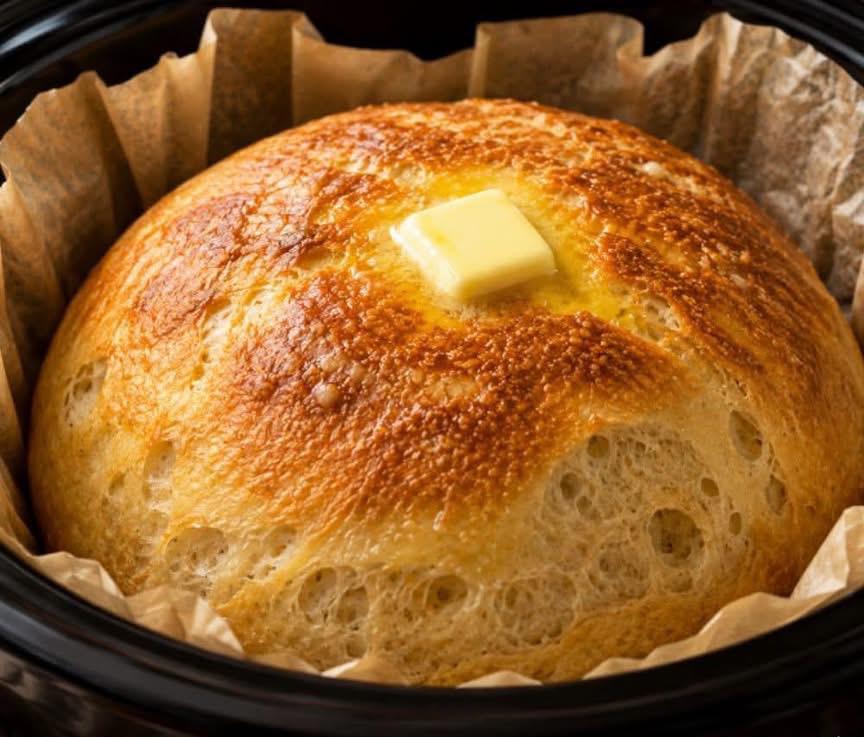
If you have ever wanted to bake fresh artisan bread at home without the hassle of kneading or turning on your hot oven, this easy slow cooker bread recipe is exactly what you need. This beautifully rustic loaf has a soft, airy center and a golden crust, yet it requires very little hands-on work. It is a wonderful option for beginner bakers, busy families, and anyone looking for an easy homemade bread recipe.
The slow cooker creates a warm, enclosed environment that helps the dough cook gently. For the best crust, the finished loaf can be briefly placed under a broiler or in a hot oven after slow cooking.
Recipe Overview
| Prep Time | Rise Time | Cook Time | Total Time | Servings |
| 15 minutes | 60 minutes | 2 hours | 3 hours 15 minutes | 10 slices |
Why You’ll Love This Recipe
This easy slow cooker artisan bread is perfect when you want homemade bread without complicated techniques. The no-knead dough requires only a few minutes of preparation, and the ingredients are simple pantry staples.
The result is a rustic loaf with a tender, chewy interior and delicious homemade flavor. It is also budget-friendly and versatile enough to serve alongside soups, stews, pasta, roasted meats, or your favorite breakfast spreads.
Ingredients
For the Bread
| Ingredient | Measurement | Notes |
| Warm water | 1½ cups (360 ml) | 105–115°F (40–46°C) |
| Active dry yeast | 2¼ teaspoons | 1 standard packet |
| Granulated sugar | 1 tablespoon | Helps activate the yeast |
| All-purpose flour | 3½ cups (420 g) | Spoon and level for accuracy |
| Fine sea salt | 1½ teaspoons | Adds flavor |
| Olive oil | 1 tablespoon | For coating the dough and parchment |
| Unsalted butter | 1 tablespoon | Optional, for serving |
Optional Toppings
| Ingredient | Amount |
| Sesame seeds | 1 teaspoon |
| Dried rosemary | ½ teaspoon |
| Coarse sea salt | A small pinch |
| Garlic powder | ¼ teaspoon |
Step-by-Step Instructions
1. Activate the Yeast
Add the warm water, sugar, and active dry yeast to a large mixing bowl. Stir gently and let the mixture stand for about 5–10 minutes.
The yeast should become slightly foamy. If there is no visible activity, the yeast may be old or the water may have been too hot or too cold.
2. Make the Dough
Add the flour and salt to the yeast mixture. Stir with a wooden spoon or sturdy spatula until a sticky, shaggy dough forms.
Do not worry about making the dough perfectly smooth. This is a no-knead bread, so there is no need for extensive kneading.
3. Let the Dough Rise
Lightly coat the dough with olive oil and cover the bowl with plastic wrap or a clean kitchen towel.
Place it in a warm, draft-free area and let it rise for approximately 45–60 minutes, or until it has noticeably increased in size.
For a deeper flavor, you can let the dough rise more slowly in the refrigerator for several hours or overnight.
4. Prepare the Slow Cooker
Line the bottom of your slow cooker with a piece of parchment paper.
Lightly brush the parchment with a little olive oil. Make sure the parchment fits comfortably inside the cooker without extending too far over the sides.
5. Shape the Dough
Transfer the risen dough onto a lightly floured work surface.
Gently shape it into a round loaf. Avoid adding too much flour because the dough should remain soft and slightly sticky.
Place the shaped dough onto the parchment paper inside the slow cooker.
6. Cook the Bread
Place the lid securely on the slow cooker.
Cook on HIGH for approximately 1½–2 hours, depending on the size and shape of your slow cooker.
The bread is ready when the center is fully set and the internal temperature reaches approximately 190–200°F (88–93°C).
Because slow cookers vary considerably in temperature, begin checking the loaf around the 90-minute mark.
7. Remove the Bread
Carefully lift the bread from the slow cooker using the parchment paper.
Place it on a wire rack and allow it to cool for at least 20–30 minutes before slicing.
The bread will continue to set as it cools, so avoid cutting it immediately.
8. Make the Crust Extra Golden
A slow cooker creates a moist cooking environment, so the bread may have a softer or paler crust than traditional oven-baked artisan bread.
For a crispier golden crust, place the cooked loaf on a baking sheet and broil it under a preheated broiler for approximately 2–4 minutes, watching it carefully.
Alternatively, place it in a preheated 425°F (220°C) oven for 8–12 minutes.
Do not leave the bread unattended because the crust can brown quickly.
9. Finish and Serve
While the bread is still warm, brush the top with melted butter if desired.
Allow it to cool slightly, then slice with a serrated bread knife and serve.
Best Tips
Use properly warmed water when activating the yeast. Water that is too hot can damage the yeast, while water that is too cool may slow down activation.
Do not add excessive flour to the dough. A slightly sticky dough helps create a lighter and more tender loaf.
Avoid opening the slow cooker repeatedly while the bread is cooking because this releases heat and moisture and can increase the cooking time.
For the best texture, allow the bread to cool before slicing. Cutting it while it is extremely hot can make the interior appear gummy.
If you want a truly crisp artisan-style crust, do not skip the final oven or broiler step.
Best Ingredient Options
All-purpose flour works very well for this recipe, but bread flour can also be used for a slightly chewier texture.
Active dry yeast is convenient and reliable. If using instant yeast, it can generally be mixed directly with the dry ingredients without needing to proof it separately.
Fine sea salt provides even seasoning throughout the dough. Kosher salt can also work, although the volume measurement may need slight adjustment depending on the brand.
Extra-virgin olive oil adds subtle flavor, while regular olive oil works perfectly well for coating the dough.
Recipe Variations
Garlic Herb Bread
Add 1 teaspoon of garlic powder and 1 teaspoon of dried Italian herbs to the flour mixture. Finish the warm loaf with melted butter and chopped fresh parsley.
Rosemary Artisan Bread
Fold 1–2 teaspoons of finely chopped fresh rosemary into the dough before the first rise.
Cheesy Bread
Add approximately ¾ cup of shredded cheddar, mozzarella, or Parmesan to the dough before shaping.
Everything-Seasoned Bread
Sprinkle the top with everything bagel seasoning before cooking or before the final oven-browning step.
Whole Wheat Version
Replace up to 1 cup of the all-purpose flour with whole wheat flour. Add a tablespoon or two of extra water if the dough feels excessively dry.
What to Serve With
This homemade artisan bread pairs beautifully with creamy soups, tomato soup, chili, stews, roasted chicken, pasta dishes, and hearty salads.
For breakfast, serve toasted slices with butter, honey, jam, peanut butter, or scrambled eggs.
It also makes an excellent base for garlic toast, grilled cheese sandwiches, bruschetta, and simple open-faced sandwiches.
Make-Ahead Instructions
The dough can be prepared in advance and refrigerated after mixing. Cover it tightly and allow it to slowly develop flavor in the refrigerator for up to 24 hours.
When ready to bake, allow the dough to sit at room temperature for approximately 30–60 minutes before shaping and placing it in the slow cooker.
Storage
Once completely cooled, store the bread in an airtight container or bread bag at room temperature for up to 2–3 days.
Avoid refrigerating the bread unless necessary, as refrigeration can cause homemade bread to become stale more quickly.
Reheating
For individual slices, toast them in a toaster or dry skillet until warm and lightly crisp.
For a whole loaf, wrap it loosely in foil and warm it in a 325°F (165°C) oven for approximately 10–15 minutes.
For an extra-crispy crust, remove the foil during the final few minutes.
Freezing
Allow the bread to cool completely before freezing.
You can freeze the whole loaf or slice it first for convenient serving. Wrap the bread tightly in plastic wrap, then place it in a freezer-safe bag or container.
Freeze for up to 3 months for the best quality.
Thaw at room temperature and warm in the oven before serving.
Common Mistakes to Avoid
Using water that is too hot: Extremely hot water can kill the yeast and prevent the dough from rising properly.
Adding too much flour: A dry dough can produce a dense loaf. Start with the recommended amount and add only a small amount more if absolutely necessary.
Overcooking the bread: Slow cookers differ in temperature, so cooking times can vary. Check the bread early and use an instant-read thermometer when possible.
Expecting a crisp crust directly from the slow cooker: The enclosed steam keeps the crust relatively soft. A short oven or broiler finish creates a much more traditional artisan-style crust.
Slicing immediately: Letting the bread cool allows the crumb to finish setting and makes slicing easier.
Nutrition Estimate
The following values are approximate and will vary depending on the exact ingredients and slice size.
| Nutrient | Approximate Amount per Slice |
| Calories | 175 kcal |
| Carbohydrates | 33 g |
| Protein | 5 g |
| Fat | 3 g |
| Saturated Fat | 1 g |
| Fiber | 1 g |
| Sugar | 1 g |
| Sodium | 360 mg |
Frequently Asked Questions
Can I make artisan bread in a slow cooker?
Yes. A slow cooker can be used to cook a simple homemade yeast bread. However, because it traps moisture, the crust will usually be softer than bread baked entirely in a conventional oven.
Why is my slow cooker bread pale?
The slow cooker does not provide the same dry, intense heat as an oven. For a golden crust, transfer the cooked loaf to a hot oven or place it briefly under a broiler.
Can I use instant yeast?
Yes. Instant yeast can be substituted for active dry yeast. You can mix it directly with the flour, although following the package instructions is always a good idea.
How do I know when the bread is fully cooked?
The center should be firm and fully set. For the most reliable result, check the internal temperature with an instant-read thermometer. It should be approximately 190–200°F (88–93°C).
Can I make this bread without kneading?
Yes. The recipe is specifically designed as a no-knead bread, so the dough only needs to be mixed until the ingredients are combined.
Why is my bread dense?
Dense bread can result from inactive yeast, insufficient rising time, adding too much flour, or allowing the dough to become too cold. Make sure the yeast is active and give the dough enough time to rise.
Conclusion
This Easy Slow Cooker Artisan Bread is a simple way to enjoy fresh homemade bread without complicated baking techniques. With basic ingredients, minimal kneading, and a slow cooker, you can create a rustic loaf with a soft, flavorful interior.
For the best results, let the dough rise properly, avoid adding excessive flour, and finish the cooked loaf in a hot oven or under the broiler for a beautiful golden crust. Serve it warm with butter, alongside soup, or use it for sandwiches and toast.