
Introduction
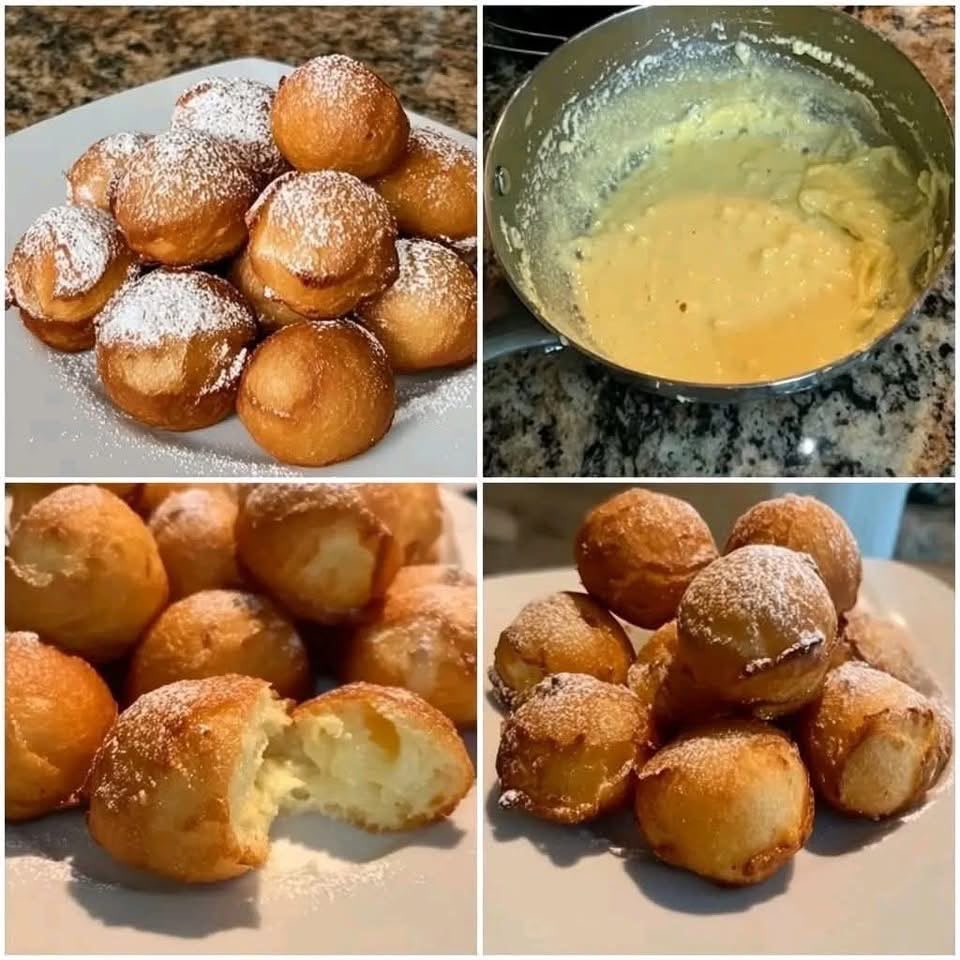
These Golden Fried Choux Pastry Balls are light, fluffy, and beautifully crisp on the outside while remaining soft and tender inside.
The dough is prepared on the stovetop before being fried until perfectly golden. A generous dusting of powdered sugar gives these little treats their classic bakery-style finish.
They are wonderful for breakfast, afternoon coffee, dessert, or a special weekend treat. The recipe uses simple ingredients and creates an impressive homemade dessert without complicated equipment.
Recipe Overview
| Category | Details |
| Recipe | Golden Fried Choux Pastry Balls |
| Preparation Time | 20 minutes |
| Cooking Time | 20–25 minutes |
| Total Time | About 45 minutes |
| Servings | 20–24 balls |
| Difficulty | Easy to Moderate |
| Cuisine | European-inspired |
| Method | Stovetop + Deep Frying |
| Serving | Warm or at room temperature |
Why You’ll Love This Recipe
These fried pastry balls have a wonderfully crisp golden exterior and a soft, delicate center. They are especially delicious when served warm with plenty of powdered sugar.
The dough is made directly in a saucepan, which gives these treats their characteristic light texture. Once the dough is ready, small portions are fried until beautifully puffed and golden.
This is also an affordable homemade dessert because the ingredients are simple pantry staples. You can prepare a generous batch without needing expensive specialty ingredients.
Ingredients
For the Pastry Dough
| Ingredient | Quantity |
| Water | 1 cup (240 ml) |
| Unsalted butter | 4 tablespoons (56 g) |
| Granulated sugar | 1 tablespoon |
| Salt | ¼ teaspoon |
| All-purpose flour | 1 cup (125 g) |
| Eggs | 3 large |
| Vanilla extract | 1 teaspoon |
| Lemon zest | 1 teaspoon, optional |
For Frying
| Ingredient | Quantity |
| Neutral frying oil | 4–6 cups, as needed |
| Powdered sugar | For dusting |
Canola, sunflower, or vegetable oil works well for frying.
Step-by-Step Instructions
1. Prepare the Pan
Add the water, butter, sugar, and salt to a medium saucepan.
Place the saucepan over medium heat and bring the mixture to a gentle boil.
The butter should be completely melted before the mixture reaches a boil.
2. Add the Flour
Once the liquid is boiling, remove the saucepan from the heat.
Add all of the flour at once.
Immediately stir vigorously with a wooden spoon or sturdy spatula until the flour is completely incorporated.
3. Cook the Dough
Return the saucepan to low-medium heat.
Continue stirring for approximately 1–2 minutes.
The dough should come together into a smooth ball and begin pulling away from the sides of the pan.
A thin film may form on the bottom of the saucepan. This is normal and indicates that some moisture has cooked out of the dough.
4. Cool Slightly
Transfer the dough to a mixing bowl.
Let it cool for approximately 5–10 minutes.
The dough should be warm but not extremely hot.
This step is important because adding eggs to very hot dough can cause them to cook prematurely.
5. Add the Eggs
Add the eggs one at a time, mixing thoroughly after each addition.
At first, the dough may look separated or slippery. Continue mixing until each egg is fully incorporated before adding the next one.
Add the vanilla extract and lemon zest if using.
The finished dough should be smooth, thick, and slightly sticky.
6. Heat the Oil
Pour the frying oil into a deep, heavy saucepan or Dutch oven.
Heat the oil to approximately 340–350°F (170–175°C).
A kitchen thermometer is highly recommended because maintaining the correct temperature helps the pastry cook evenly.
If the oil is too hot, the outside can brown before the center cooks.
If the oil is too cool, the pastry can absorb excessive oil.
7. Fry the Pastry Balls
Using two small spoons or a small cookie scoop, carefully drop small portions of dough into the hot oil.
Do not overcrowd the pan. Fry in small batches so the temperature of the oil remains stable.
The pastry balls should gradually puff and turn golden brown.
Fry for approximately 4–6 minutes, turning them gently as needed so they brown evenly on all sides.
8. Drain
Once beautifully golden, remove the pastry balls with a slotted spoon.
Transfer them to a plate lined with paper towels or, preferably, a wire rack placed over a baking sheet.
Allow excess oil to drain.
9. Add Powdered Sugar
Let the fried pastry balls cool for a few minutes.
Generously dust them with powdered sugar just before serving.
For an especially attractive presentation, add another light layer of powdered sugar immediately before bringing them to the table.
Best Tips
Keep the dough portions relatively small. Small pieces cook more evenly and have a better chance of becoming beautifully crisp outside while remaining tender inside.
Make sure the dough has cooled slightly before adding the eggs. This prevents the eggs from scrambling when they come into contact with the warm pastry mixture.
Use a thermometer to monitor the frying oil. Maintaining approximately 340–350°F (170–175°C) gives you much better control over the final texture.
Avoid overcrowding the pan. Too many pastry balls at once can significantly lower the oil temperature and result in greasy pastries.
Dust with powdered sugar shortly before serving for the best appearance and texture.
Best Ingredient Options
All-purpose flour is ideal for this recipe because it produces a light but stable dough.
Unsalted butter gives you better control over the amount of salt. If using salted butter, reduce the added salt slightly.
Fresh lemon zest adds a subtle brightness that balances the richness of the fried pastry. It can be omitted for a more traditional vanilla flavor.
For a richer flavor, replace the vanilla extract with a small amount of orange blossom water or add a little orange zest.
Recipe Variations
For a cinnamon-sugar version, combine powdered sugar with a small amount of ground cinnamon and dust the warm pastries generously.
For a citrus variation, add orange zest to the dough and finish the pastries with powdered sugar.
You can also fill the cooled pastry balls with vanilla pastry cream, chocolate cream, or a thick fruit preserve using a piping bag.
For a simple chocolate finish, drizzle the cooled pastries with melted chocolate instead of using only powdered sugar.
What to Serve With
These golden pastry balls are excellent with coffee, espresso, tea, or hot chocolate.
For dessert, serve them with fresh berries and a small bowl of vanilla pastry cream or chocolate sauce for dipping.
They are also delicious alongside fresh fruit and lightly sweetened whipped cream.
Make-Ahead Instructions
The pastry dough is best fried shortly after preparation for the lightest texture.
However, the cooked pastry balls can be prepared a few hours ahead and kept uncovered or loosely covered at room temperature.
Dust them with powdered sugar just before serving rather than several hours in advance.
Storage
Allow the fried pastries to cool completely before storing.
Place them in an airtight container and keep them at room temperature for up to 2 days.
The exterior will gradually lose some of its crispness during storage.
Reheating
For the best texture, reheat the pastries in a 325°F (165°C) oven for approximately 5–8 minutes.
An air fryer can also be used at approximately 300°F (150°C) for 3–5 minutes.
Avoid microwaving if you want to preserve the crisp exterior.
Freezing
The fried pastry balls can be frozen after they have cooled completely.
Place them in a freezer-safe container with parchment paper between layers.
Freeze for up to 2 months.
Reheat directly from frozen in a 325°F (165°C) oven until warmed through, then dust with fresh powdered sugar.
Common Mistakes to Avoid
Do not add the flour gradually. Adding it all at once after the liquid boils helps the dough come together properly.
Do not add the eggs while the dough is extremely hot. Give it several minutes to cool before incorporating them.
Avoid making the pastry balls too large. Oversized pieces can become deeply browned outside while remaining undercooked in the center.
Do not let the frying oil become excessively hot. A temperature that is too high can cause rapid browning and uneven cooking.
Avoid frying too many pieces simultaneously. Small batches produce more consistent results.
Nutrition Estimate
| Nutrient | Approx. Per Serving |
| Calories | 110–140 kcal |
| Carbohydrates | 14 g |
| Protein | 2 g |
| Fat | 6 g |
| Saturated Fat | 2 g |
| Sugar | 3 g |
| Sodium | 45 mg |
Nutrition values are estimates and will vary depending on the amount of oil absorbed and the quantity of powdered sugar used.
Frequently Asked Questions
Why are my pastry balls not fluffy inside?
The dough may have been too dense, the eggs may not have been incorporated properly, or the oil temperature may have been too high. Keep the dough soft and maintain a frying temperature around 340–350°F (170–175°C).
Can I make these without lemon zest?
Yes. Lemon zest is optional. Vanilla alone gives the pastries a delicious flavor.
What oil is best for frying?
Neutral oils such as sunflower, canola, or vegetable oil are excellent choices because they have a mild flavor and work well at frying temperatures.
Can I fill these pastries?
Yes. Once completely cooled, use a piping bag with a small tip to fill them with pastry cream, chocolate cream, or thick jam.
Can I use powdered sugar instead of granulated sugar in the dough?
Granulated sugar is preferable for the dough because it dissolves easily in the hot liquid. Powdered sugar is best used as the finishing decoration.
How do I know when they are cooked?
They should be evenly golden brown and feel relatively light when lifted from the oil. If you’re uncertain, cut one open to check that the center is cooked through.
Final Thoughts
These Golden Fried Choux Pastry Balls are a delicious homemade treat with a wonderfully crisp exterior and soft, tender center.
The simple stovetop dough, careful frying, and generous dusting of powdered sugar create a dessert that looks impressive but uses everyday ingredients.
Serve them fresh with coffee or tea, fill them with your favorite cream, or simply enjoy them warm with powdered sugar. This is an easy dessert recipe to keep ready whenever you want something golden, comforting, and homemade.