
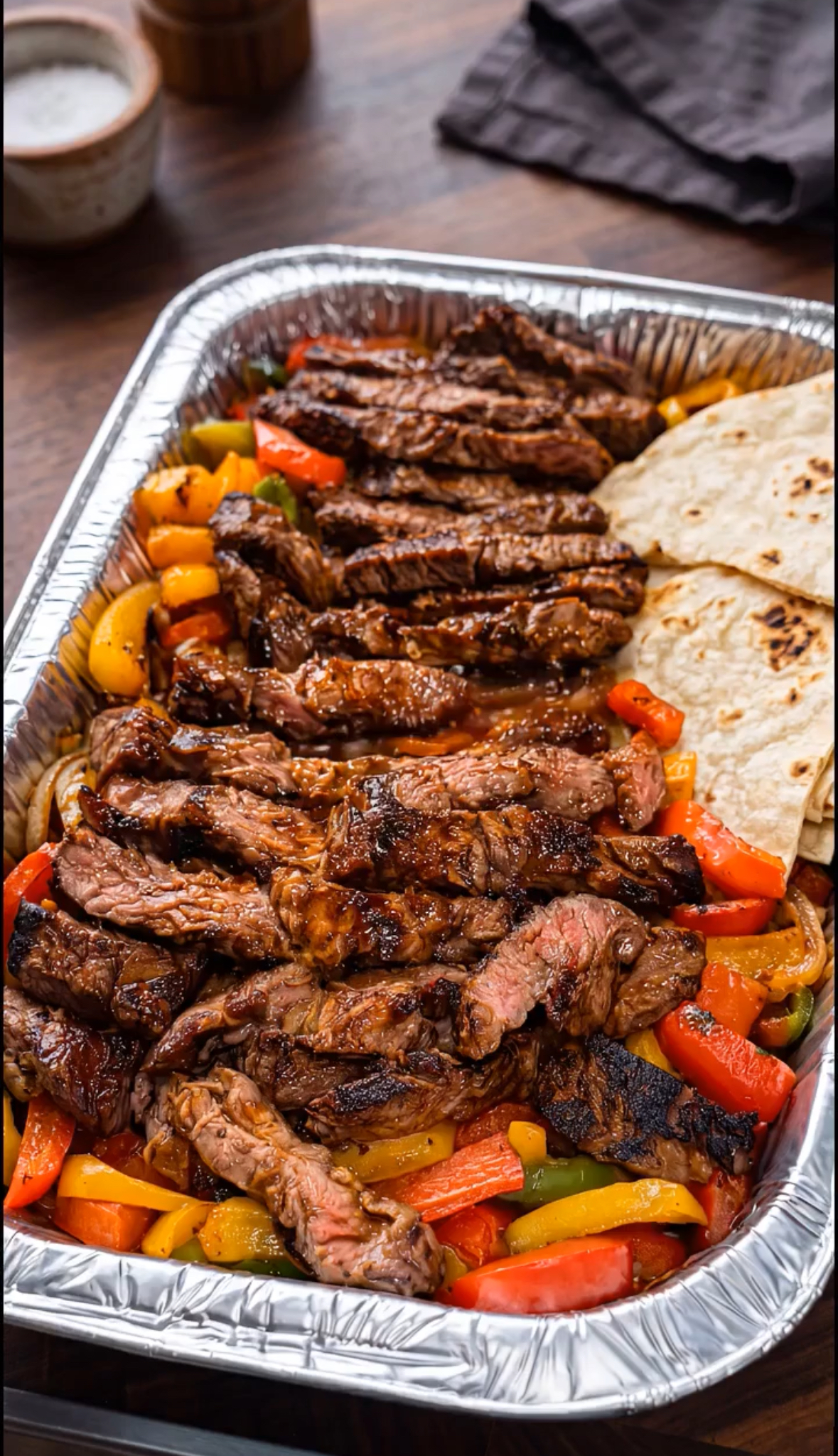
These Grilled Beef Fajitas are a flavorful, colorful, and satisfying dinner made with tender grilled beef, caramelized onions, colorful bell peppers, and warm flour tortillas.
The beef is seasoned with a smoky fajita spice blend and fresh lime juice, then grilled over high heat to create beautifully browned edges while keeping the inside tender and juicy. The vegetables are cooked until softened and lightly caramelized, adding sweetness and texture to every bite.
Serve everything family-style with warm tortillas, fresh salsa, creamy guacamole, sour cream, and fresh cilantro. This easy beef fajita recipe is perfect for a weeknight dinner, family gathering, summer barbecue, or casual entertaining.
Recipe Overview
| Category | Details |
| Prep Time | 25 minutes |
| Marinating Time | 20–30 minutes |
| Cook Time | 15–20 minutes |
| Total Time | About 1 hour |
| Servings | 5–6 |
| Cuisine | Tex-Mex |
| Difficulty | Easy |
| Cooking Method | Grill, griddle, or cast-iron skillet |
Why You’ll Love This Recipe
These beef fajitas are packed with bold flavor but are surprisingly simple to prepare. The combination of chili powder, cumin, garlic, onion, black pepper, and optional smoked paprika creates a savory seasoning that works beautifully with grilled beef.
The colorful peppers and onions bring natural sweetness and a slightly smoky flavor when cooked over high heat. They also make the dish colorful and satisfying without requiring complicated side dishes.
Another reason to love this recipe is its versatility. You can prepare the beef on an outdoor grill, Blackstone-style griddle, grill pan, or large cast-iron skillet.
Most importantly, everyone can build their own fajita exactly the way they like it. Add plenty of vegetables, extra guacamole, fresh salsa, sour cream, or a squeeze of lime before folding everything into a warm tortilla.
Ingredients
For the Beef and Vegetables
| Ingredient | Amount |
| Skirt steak or flank steak | 2 lb (900 g) |
| Large onions | 2 |
| Red, yellow, and green bell peppers | 3 |
| Jalapeño | 1, finely chopped, optional |
| Olive oil | 1/4 cup (60 ml) |
| Fresh lime juice | Juice of 2 limes |
| Flour tortillas | 10–12 |
Homemade Fajita Seasoning
| Ingredient | Amount |
| Chili powder | 1 tablespoon |
| Ground cumin | 1 teaspoon |
| Garlic powder | 1 teaspoon |
| Onion powder | 1 teaspoon |
| Fine salt or kosher salt | 2 teaspoons |
| Ground black pepper | 1/2 teaspoon |
| Smoked paprika | 1/2 teaspoon, optional |
Optional Toppings
| Topping | Amount |
| Sour cream | As desired |
| Fresh salsa or pico de gallo | As desired |
| Guacamole | As desired |
| Sliced avocado | As desired |
| Fresh cilantro | As desired |
| Lime wedges | For serving |
Step-by-Step Instructions
1. Prepare the Beef
Pat the steak dry with paper towels. Trim away any large pieces of excess fat or tough connective tissue.
If the steak is very long, cut it into a few manageable pieces. This will make it easier to cook evenly on the grill or in a skillet.
Place the beef in a large shallow dish. Drizzle with the juice of one lime and about half of the olive oil.
Sprinkle approximately half of the fajita seasoning over both sides of the steak. Rub the seasoning gently into the meat so the surface is evenly coated.
Let the beef marinate for 20–30 minutes at room temperature if cooking immediately. Alternatively, cover and refrigerate it for up to 2 hours.
Avoid leaving raw beef at room temperature for extended periods.
2. Prepare the Vegetables
Slice the onions into thin strips.
Remove the seeds and membranes from the bell peppers, then cut them into long strips. Finely chop the jalapeño if you are using it.
Place the vegetables in a large bowl. Add the remaining olive oil and the rest of the fajita seasoning.
Toss everything until the peppers and onions are evenly coated.
3. Cook the Peppers and Onions
Preheat a grill, outdoor griddle, Blackstone-style griddle, or large cast-iron skillet over medium-high to high heat.
Add the seasoned vegetables.
Cook for approximately 8–10 minutes, stirring or tossing regularly. The vegetables should become tender with lightly browned and caramelized edges.
For deeper flavor, allow some of the vegetables to remain undisturbed for a minute or two at a time so they can develop a good sear.
Once cooked, transfer the vegetables to a serving dish and keep them warm.
4. Grill the Beef
Increase the cooking surface to high heat.
Place the seasoned steak on the hot grill or skillet.
Cook for approximately 3–5 minutes per side, depending on the thickness of the steak and your preferred level of doneness.
For the most accurate results, use an instant-read thermometer rather than relying only on cooking time. For whole cuts of beef, the USDA recommends a minimum internal temperature of 145°F (63°C), followed by a 3-minute rest.
When the beef reaches your desired doneness, remove it from the heat.
5. Rest the Beef
Transfer the cooked steak to a cutting board.
Let it rest for 5–10 minutes before slicing. Resting allows the juices to redistribute throughout the meat, helping the slices remain juicy.
Do not skip this step if you want tender, flavorful fajitas.
6. Warm the Tortillas
Wrap the flour tortillas in aluminum foil and warm them for a few minutes on the grill or in a preheated oven.
You can also warm individual tortillas briefly in a dry skillet.
The tortillas should be soft, flexible, and warm enough to fold without cracking.
7. Slice the Beef
Look carefully at the surface of the steak to identify the direction of the muscle fibers.
Using a sharp knife, slice the beef thinly against the grain, cutting perpendicular to the visible muscle fibers.
This is especially important when using skirt steak or flank steak because slicing against the grain makes the meat noticeably easier to chew.
8. Assemble the Fajitas
For a beautiful family-style presentation, arrange the grilled peppers and onions in a large serving platter.
Place the sliced beef over or beside the vegetables.
Arrange the warm tortillas on one side and place the toppings in small bowls around the platter.
Serve immediately with fresh salsa, guacamole, sour cream, cilantro, and lime wedges.
Everyone can then build their own warm beef fajita.
Best Tips for Tender Beef Fajitas
Choose a good-quality skirt steak or flank steak and avoid overcooking it. These cuts are flavorful and work particularly well with high-heat grilling.
Always slice the cooked beef against the grain. Even perfectly cooked steak can seem tough if it is sliced in the same direction as the muscle fibers.
A very hot cooking surface is essential for developing the browned, slightly charred exterior that gives fajitas their signature flavor.
Do not overcrowd the pan when cooking the vegetables. If necessary, cook them in batches so they sear instead of steaming.
Allow the steak to rest before slicing. This small step makes a noticeable difference in the final texture.
Best Ingredient Options
Skirt steak is an excellent choice when you want traditional fajita-style flavor and a pronounced beefy taste. Flank steak is another great option and is usually easy to find.
For the vegetables, use a mixture of red, yellow, orange, and green bell peppers for a colorful platter. You can also use only two colors if that is what you have available.
Fresh lime juice gives the marinade a bright flavor. For an even more citrus-forward taste, serve additional lime wedges alongside the finished fajitas.
Smoked paprika is optional, but it adds a pleasant smoky note that works especially well when the beef is cooked indoors.
Recipe Variations
For extra-spicy fajitas, add additional jalapeño or a pinch of crushed red pepper flakes to the seasoning mixture.
For a milder family-friendly version, leave out the jalapeño and serve hot sauce separately so everyone can control the heat.
You can also add sliced mushrooms, zucchini, or additional onions to the vegetable mixture for an even heartier fajita platter.
For a lighter option, serve the grilled beef and vegetables over a large salad instead of tortillas. Add avocado, pico de gallo, lime juice, and a little sour cream for a satisfying fajita-inspired salad.
For a low-carb meal, replace the flour tortillas with lettuce cups or simply serve the beef and vegetables in a bowl with your favorite toppings.
What to Serve With Beef Fajitas
These fajitas pair beautifully with Mexican-style rice, cilantro-lime rice, or seasoned black beans.
Fresh pico de gallo adds brightness and acidity, while creamy guacamole provides a rich contrast to the smoky grilled beef.
For a larger family dinner, serve the fajitas with corn, a fresh green salad, roasted vegetables, or homemade tortilla chips.
A simple bowl of lime wedges and fresh cilantro on the table also gives everyone the opportunity to customize their plate.
Make-Ahead Instructions
The fajita seasoning can be prepared several days in advance and stored in an airtight container.
The peppers and onions can also be sliced several hours ahead of time and kept refrigerated until ready to cook.
For the best texture, marinate the beef shortly before cooking rather than leaving it in the marinade for an excessively long period.
You can prepare the toppings in advance as well. Keep guacamole, salsa, sour cream, and other fresh toppings refrigerated until serving.
Storage
Store leftover cooked beef and vegetables in separate airtight containers in the refrigerator.
They are best consumed within 3–4 days when properly refrigerated.
Keep tortillas and fresh toppings separately so the tortillas do not become soggy.
Reheating
For the best results, reheat the beef and vegetables in a skillet over medium heat.
Add a small splash of water or a few drops of olive oil if the meat seems dry.
Heat only until warmed through. Avoid prolonged high heat because it can make the beef tougher.
Warm the tortillas separately in a dry skillet, microwave, or oven.
Freezing
Cooked beef can be frozen in an airtight freezer-safe container or freezer bag.
Allow it to cool completely before freezing and remove as much excess air as possible.
The cooked vegetables can also be frozen, although their texture may become softer after thawing.
For the best quality, use frozen cooked beef and vegetables within approximately 2–3 months.
Thaw overnight in the refrigerator and reheat thoroughly before serving.
Common Mistakes to Avoid
One common mistake is cooking the beef on a surface that is not hot enough. A hot grill or skillet is important for proper browning and flavor.
Another mistake is slicing the steak immediately after cooking. Give it several minutes to rest before cutting.
Slicing with the grain can also make tender beef seem unnecessarily chewy. Always look for the direction of the fibers and cut across them.
Avoid overcrowding the vegetables in the cooking pan because excess moisture can prevent them from browning properly.
Finally, do not overload the tortilla with too much filling. A moderate amount of beef, vegetables, and toppings makes the fajita easier to fold and eat.
Nutrition Estimate
Nutrition will vary depending on the exact cut of beef, tortilla size, amount of oil, and toppings used.
| Nutrient | Approximate Amount Per Serving |
| Calories | 550–650 kcal |
| Protein | 35–45 g |
| Carbohydrates | 40–50 g |
| Fat | 25–32 g |
| Fiber | 5–7 g |
| Sodium | 900–1,200 mg |
Adding guacamole, sour cream, cheese, or other toppings will increase the nutritional values.
Frequently Asked Questions
Can I make these fajitas without an outdoor grill?
Yes. A large cast-iron skillet, grill pan, or flat-top griddle works very well. Cook over high heat and avoid overcrowding the pan.
What is the best beef for fajitas?
Skirt steak and flank steak are both excellent choices. They have strong beef flavor and work particularly well when cooked quickly over high heat and sliced against the grain.
How long should I marinate the beef?
A short marinade of 20–30 minutes can add plenty of flavor. You can also refrigerate the seasoned beef for up to about 2 hours before cooking.
Why is my steak tough?
Overcooking, slicing with the grain, or using a cut that has not been prepared properly can all contribute to tough fajitas. High-heat cooking followed by a short resting period and thin slicing against the grain helps improve tenderness.
Can I prepare the fajitas ahead of time?
Yes. You can slice the vegetables, prepare the seasoning, and prepare the toppings ahead of time. For the best texture, cook the beef close to serving time.
Can I use chicken instead of beef?
Yes. Chicken breast or boneless chicken thighs can be seasoned with the same fajita spices. Cook poultry to a safe internal temperature of 165°F (74°C).
Can I make these fajitas spicy?
Absolutely. Add jalapeño, crushed red pepper flakes, cayenne pepper, or your favorite hot sauce according to your preferred heat level.
What toppings go best with beef fajitas?
Guacamole, pico de gallo, salsa, sour cream, fresh cilantro, avocado, and lime are all excellent choices.
Final Thoughts
These Grilled Beef Fajitas with Peppers and Onions are an easy way to bring a restaurant-style Tex-Mex dinner to your own kitchen.
The combination of juicy seasoned beef, colorful grilled vegetables, warm tortillas, and fresh toppings makes every bite flavorful and satisfying.
For the best results, use high heat, avoid overcooking the beef, let it rest before slicing, and always cut against the grain. Set everything on the table family-style and let everyone build their own perfect fajita.