
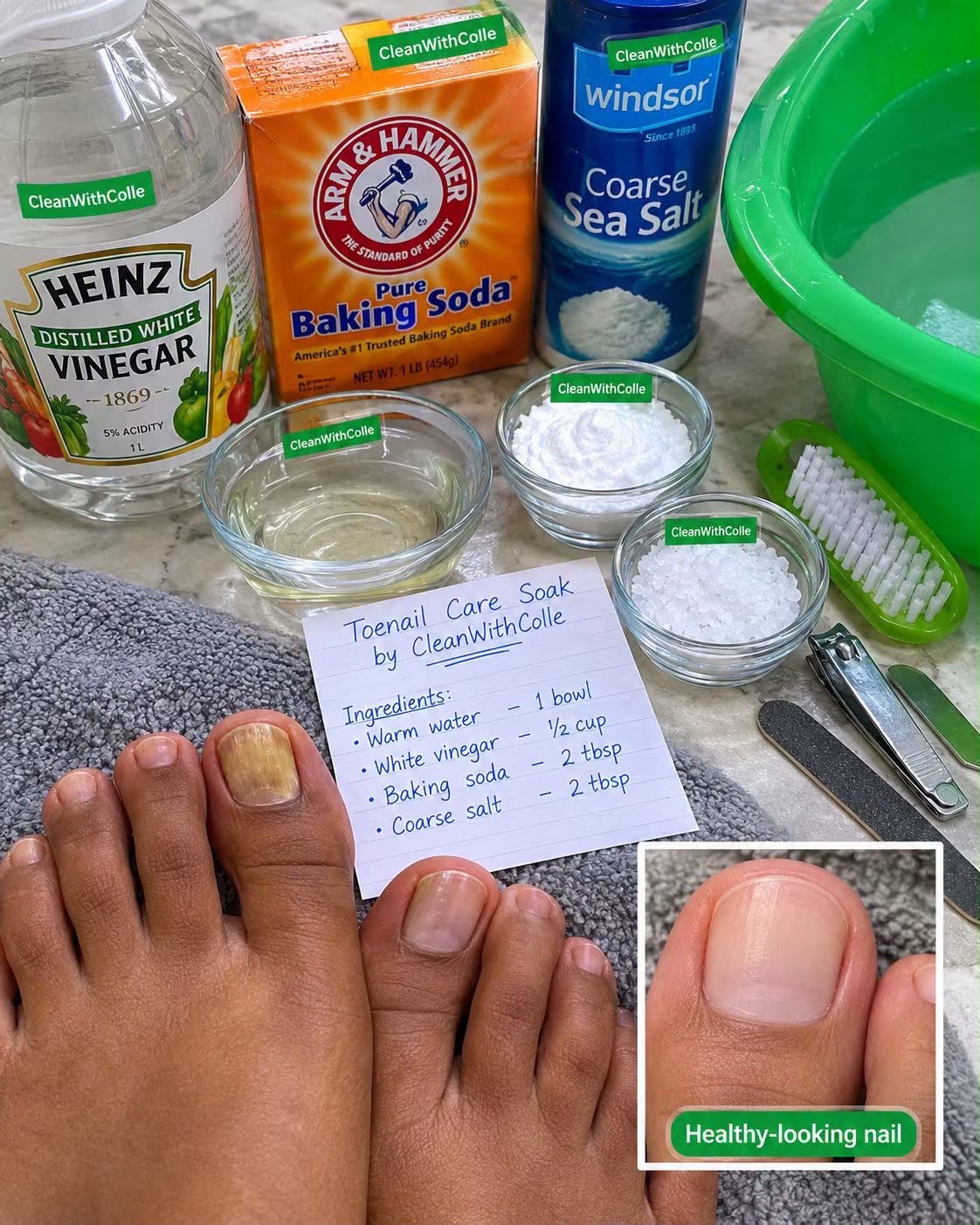
A warm foot soak can be a simple and relaxing way to clean your feet, soften dry skin, and freshen up your toenails. This homemade recipe combines warm water, white vinegar, baking soda, and coarse salt.
After soaking, gently brushing the nails can help remove surface dirt and residue while the warm water makes the skin around the nails softer and easier to clean.
Recipe Overview
| Category | Details |
| Recipe | Homemade Foot Soak |
| Preparation Time | 5 minutes |
| Soaking Time | 15–20 minutes |
| Difficulty | Very easy |
| Purpose | General foot hygiene and nail care |
Why You’ll Love This Foot Soak
Warm water provides a relaxing soak while temporarily softening the skin and dry areas around the feet.
White vinegar adds mild acidity to the mixture and can be used as part of a simple cleaning routine.
Baking soda can provide gentle cleansing and mild exfoliation when used appropriately.
Coarse salt completes the mixture and can leave the feet feeling refreshed after soaking.
This simple foot-care routine can be especially pleasant after a long day spent standing or walking.
Ingredients
| Ingredient | Amount |
| Warm water | 1 large bowl or enough to cover the feet |
| White vinegar | ½ cup |
| Baking soda | 2 tablespoons |
| Coarse salt | 2 tablespoons |
Equipment
You will need a clean basin or large bowl that is deep enough to comfortably soak both feet.
You will also need a small, soft nail brush and a clean, dry towel.
Step-by-Step Instructions
Step 1: Prepare the Water
Fill a clean basin or large bowl with warm water.
The water should feel comfortably warm, never extremely hot.
Step 2: Add the Ingredients
Add the white vinegar, baking soda, and coarse salt to the warm water.
Stir gently.
Because vinegar and baking soda react with each other, the mixture may fizz. Allow the bubbling to settle before placing your feet into the basin.
Step 3: Soak Your Feet
Place your feet in the prepared solution and soak for approximately 15–20 minutes.
Relax while the warm water softens the skin and helps loosen surface dirt around the nails.
Step 4: Gently Clean the Nails
After soaking, use a small, soft brush to gently clean the surface of the toenails and the easily accessible areas around them.
Avoid aggressive scrubbing, and never use sharp objects to dig underneath the nails.
Step 5: Rinse if Needed
If your skin feels irritated or uncomfortable, rinse your feet with clean water after the soak.
Rinsing can also remove any remaining vinegar, salt, or baking soda residue.
Step 6: Dry Thoroughly
Dry your feet carefully with a clean towel.
Pay particular attention to the spaces between your toes, as leaving excessive moisture there can contribute to certain foot-skin problems.
Best Foot-Care Tips
Always dry your feet thoroughly after washing, especially between the toes.
Keep your toenails clean and trim them regularly without cutting them excessively short.
If your feet are dry, apply a suitable moisturizer after drying. Avoid applying heavy moisturizer between the toes if those areas tend to remain damp.
Wear clean socks and choose footwear that allows your feet to stay reasonably dry and comfortable.
Do not share towels, nail brushes, or other personal foot-care items with other people.
Important Precautions
Do not use this foot soak on open wounds, deep cracks, cuts, or severely irritated skin.
Stop using the mixture if you experience significant burning, itching, redness, or irritation.
People with medical conditions that affect foot sensation or circulation should ask a healthcare professional before using homemade foot soaks.
Always use a clean basin and clean equipment.
Can This Foot Soak Treat Toenail Fungus?
A homemade foot soak should not be considered a proven treatment for toenail fungus.
Fungal nail infections may cause changes such as discoloration, thickening, brittleness, or deformation of the nail. These symptoms can also have other causes.
If you notice persistent or worsening changes in your toenails, a healthcare professional can help determine the cause and recommend an appropriate treatment.
Common Mistakes to Avoid
Do not use extremely hot water, as it can irritate or burn the skin.
Do not scrub the nails or surrounding skin aggressively.
Never use sharp tools to dig underneath the toenails.
Do not leave your feet damp after soaking. Thorough drying is an important part of good foot hygiene.
Do not rely on this homemade soak as a replacement for medical treatment when an infection is suspected.
Frequently Asked Questions
How long should I soak my feet?
A 15–20 minute soak is sufficient for this simple foot-care routine.
Can I use this foot soak every day?
Daily use is generally unnecessary for a basic foot-care routine. Occasional use may be sufficient. If your skin becomes dry or irritated, stop or reduce the frequency.
Does baking soda remove toenail fungus?
Baking soda can be included in some personal hygiene routines, but it should not be considered a medical treatment proven to eliminate toenail fungus.
Can vinegar cure toenail fungus?
Vinegar should not be relied upon as a guaranteed treatment for a fungal nail infection. Persistent fungal infections may require appropriate medical evaluation and antifungal treatment.
Why is it important to dry between the toes?
Thoroughly drying between the toes helps prevent excessive moisture from remaining on the skin and is an important part of maintaining good foot hygiene.
Final Thoughts
This homemade foot soak with warm water, white vinegar, baking soda, and coarse salt can be a simple addition to a personal foot-care routine.
The warm soak can help soften the skin temporarily and make gentle cleaning around the toenails easier.
However, it should be viewed as a hygiene and relaxation routine rather than a treatment for nail fungus or infection. If you notice persistent discoloration, thickening, pain, deformation, or other unusual changes in your toenails, seek advice from a healthcare professional.