
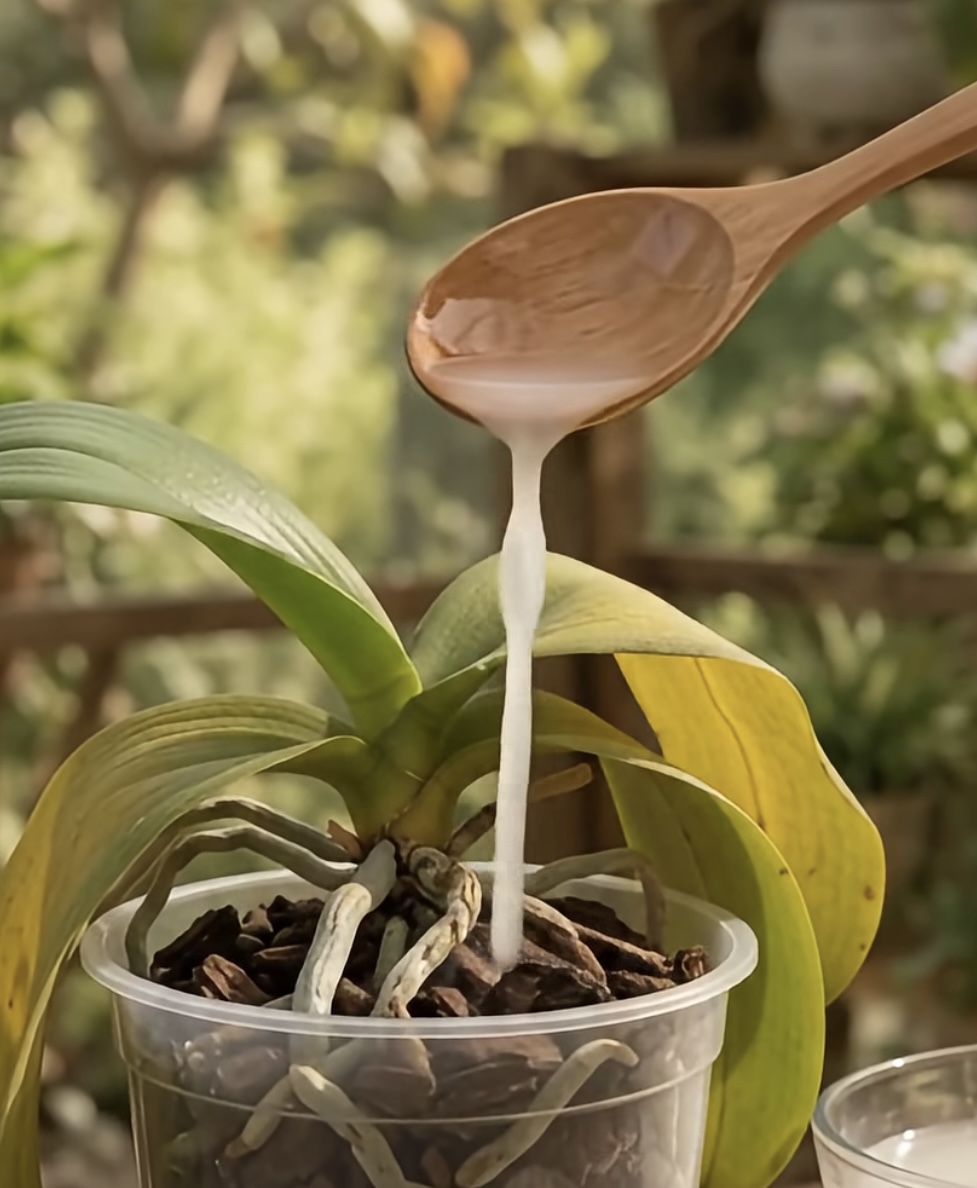
If your orchid looks weak, has slow growth, or simply needs a little extra care, this homemade rice water treatment is a simple natural option to try.
Made with uncooked white rice and water, this DIY orchid treatment is easy to prepare at home. The rice is soaked to create a cloudy liquid that can be applied to the orchid’s growing medium in small amounts.
It can be used as an occasional supplement during the growing season, alongside proper light, watering, and orchid care.
Recipe Overview
| Category | Details |
| Preparation Time | 5 minutes |
| Soaking Time | 30–45 minutes |
| Total Time | About 45–50 minutes |
| Yield | About 500 ml |
| Application | Orchid growing medium |
| Frequency | Every 2–3 weeks during active growth |
| Difficulty | Very Easy |
Why You’ll Love This Rice Water Orchid Treatment
This homemade rice water is inexpensive and requires only two basic ingredients.
It takes just a few minutes to prepare and can be made fresh whenever your orchid needs occasional supplemental care.
The cloudy soaking water contains small amounts of nutrients and starch released from the rice, although it should not be considered a complete fertilizer for orchids.
It is best used as a simple supplement rather than a replacement for a balanced orchid fertilizer.
Ingredients
| Ingredient | Amount |
| Uncooked white rice | 3 tablespoons |
| Lukewarm water | 500 ml |
| Rainwater or filtered water | Preferred |
Use water that is approximately room temperature or slightly lukewarm. Avoid using very hot water.
Step-by-Step Instructions
1. Combine the Rice and Water
Place 3 tablespoons of uncooked white rice in a clean bowl.
Pour 500 ml of lukewarm water over the rice.
Use filtered water or clean rainwater if available.
2. Soak the Rice
Stir the rice and water actively for about 2 minutes.
Then allow the mixture to rest for 30–45 minutes.
During this time, the water should become noticeably cloudy or milky as compounds from the rice are released into the water.
3. Strain the Mixture
Pour the mixture through a fine-mesh strainer or sieve.
Remove all of the rice grains and keep only the cloudy liquid.
Do not leave rice grains in the orchid potting medium because decomposing organic material can encourage unwanted microorganisms and pests.
4. Apply to the Orchid’s Growing Medium
Pour approximately 1–2 tablespoons of the prepared rice water directly onto the orchid’s bark-based growing medium around the root area.
Do not saturate the entire pot with a large quantity of rice water.
Orchids generally prefer good drainage and should not be left sitting in excess moisture.
5. Optional Leaf Cleaning
For gentle leaf cleaning, lightly dampen a clean cotton pad with the preparation.
Wipe the upper surface of the leaves gently to remove dust.
Avoid leaving liquid pooled in the crown or between the leaves, as trapped moisture can contribute to crown problems.
6. Repeat Occasionally
During the active growing season, this treatment can be used approximately once every 2–3 weeks if the plant tolerates it well.
If the orchid shows any signs of stress, unpleasant odors, mold, or other problems, discontinue the treatment and return to normal orchid care.
Best Tips
Always prepare rice water with clean utensils and fresh water.
Use only a small amount around the growing medium. More is not necessarily better for orchids.
Rice water should be treated as an occasional supplement rather than a replacement for a complete orchid fertilizer.
Good drainage is especially important because orchid roots need access to air.
Avoid applying homemade rice water to a plant that is already suffering from root rot or an overly wet growing medium.
When wiping orchid leaves, use a very soft cotton pad and avoid rubbing aggressively.
Best Ingredient Options
Rice: Plain white rice is suitable for this simple preparation. Avoid rice that has been seasoned, salted, flavored, or mixed with other ingredients.
Water: Filtered water or clean rainwater can be used. Room-temperature water is preferable.
Utensils: Use a clean bowl, spoon, and fine strainer to reduce the risk of contamination.
How to Use It Safely
This homemade preparation should be used sparingly.
Orchid health depends much more on appropriate lighting, watering, air circulation, humidity, temperature, and a suitable growing medium than on homemade fertilizer treatments.
If your orchid is weak because of root damage, pests, disease, insufficient light, or improper watering, rice water alone will not correct the underlying problem.
For orchids that require regular feeding, a properly formulated orchid fertilizer is a more reliable source of essential nutrients.
Storage
For best freshness, prepare this rice water immediately before use.
If you have leftover liquid, place it in a clean, sealed container and refrigerate it.
Use it as soon as possible rather than keeping it for an extended period. Discard it if it develops an unpleasant smell, fermentation, mold, or any unusual appearance.
Common Mistakes to Avoid
Do not pour a large amount of rice water into the orchid pot because excessive moisture can contribute to root problems.
Do not leave uncooked rice in the potting medium. Always strain the liquid thoroughly.
Do not use hot water because it can damage plant tissue if accidentally applied to the leaves or roots.
Do not wipe the leaves harshly. Orchid leaves can be damaged by excessive rubbing.
Do not allow water to collect in the center of the orchid where the leaves meet.
Do not assume that rice water can replace a complete fertilizer. Orchids need a range of essential nutrients for healthy long-term growth.
Frequently Asked Questions
Can rice water make orchids bloom?
Rice water may provide a small amount of material from the rice, but there is no guarantee that it will trigger flowering. Blooming depends on several factors, including the orchid species, light, temperature, plant maturity, watering, and overall health.
Can I use rice water on all orchids?
Many commonly grown orchids can tolerate occasional use of mild homemade preparations, but individual plants can respond differently. Start with a small amount and observe your orchid.
How often should I use rice water?
The suggested routine is approximately once every 2–3 weeks during active growth. Avoid excessive application.
Can I use rice water directly on orchid roots?
Apply a small amount to the growing medium around the roots rather than soaking exposed roots. Orchids need good air circulation around their root system.
Can I use rice water to clean orchid leaves?
A small amount can be used on a clean cotton pad to gently wipe dust from the leaves. Do not allow liquid to remain trapped in the orchid’s crown.
Is rice water a complete orchid fertilizer?
No. Rice water should not be considered a complete fertilizer. A balanced orchid fertilizer provides a more predictable supply of the nutrients orchids need.
Final Thoughts
Rice water is a simple homemade plant-care preparation that can be used occasionally as a supplement for orchids.
The recipe requires only white rice and water, making it inexpensive and easy to prepare.
For the healthiest orchids, however, rice water should be combined with proper lighting, careful watering, good drainage, adequate airflow, and appropriate orchid nutrition.
With consistent care and the right growing conditions, your orchid has a much better chance of producing healthy leaves, strong roots, and beautiful flowers.