
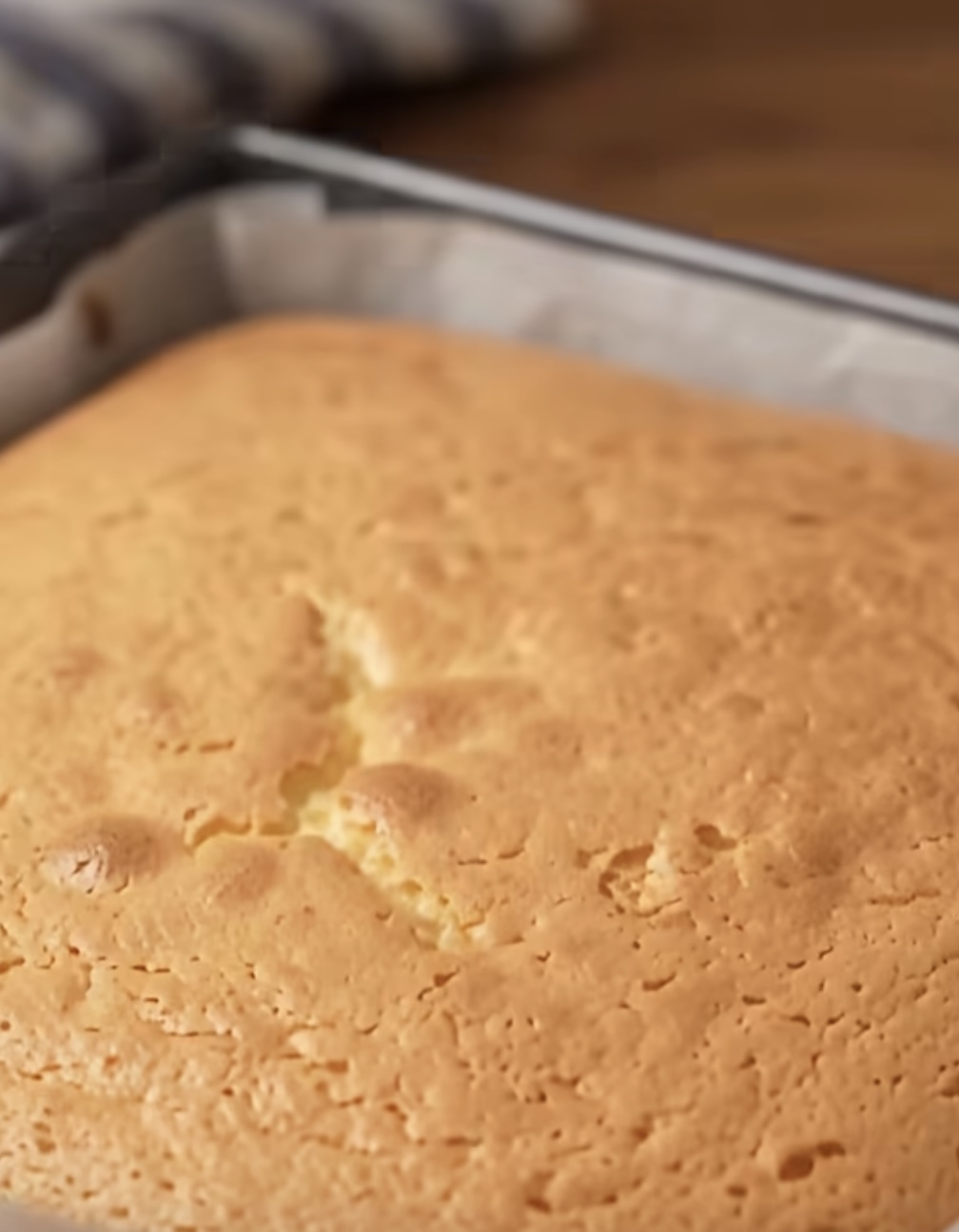
This Soft Sponge Cake is light, tender, and wonderfully fluffy. Made with simple pantry ingredients, it has a delicate texture and a subtle sweetness that makes it perfect for breakfast, afternoon tea, or as a base for layered cakes and desserts.
The key to a beautifully airy sponge is whipping the eggs and sugar until they become pale, thick, and very fluffy before gently folding in the dry ingredients.
Recipe Overview
| Details | Information |
| Prep Time | 15 minutes |
| Bake Time | 35–40 minutes |
| Total Time | About 55 minutes |
| Oven Temperature | 350°F (175°C) |
| Yield | 10–12 servings |
| Difficulty | Easy |
Ingredients
| Ingredient | Amount |
| All-purpose flour | 3 cups |
| Granulated sugar | 1 cup |
| Large eggs | 5 |
| Milk | 1 cup |
| Vegetable oil | ½ cup |
| Baking powder | 1 packet, optional |
| Vanilla extract | 1 teaspoon, optional |
Why You’ll Love This Soft Sponge Cake
This homemade sponge cake has a soft and fluffy texture that makes every bite light and enjoyable.
The recipe uses basic ingredients that you probably already have in your kitchen.
The vegetable oil helps keep the cake moist, while the whipped eggs provide a light and airy texture.
It is also versatile enough to serve plain or decorate with whipped cream, fresh fruit, frosting, or powdered sugar.
Step-by-Step Instructions
1. Prepare the Oven and Pan
Preheat your oven to 350°F (175°C).
Line the inside of a square baking pan with parchment paper. Lightly grease the pan if needed to help the parchment stay in place.
2. Whip the Eggs and Sugar
Add the 5 eggs and 1 cup of sugar to a large mixing bowl.
Using an electric mixer, beat them for approximately 5–7 minutes.
The mixture should become pale, thick, very foamy, and roughly double in volume.
This step is important because incorporating enough air helps create a lighter cake.
3. Add the Milk and Oil
Reduce the mixer to low speed.
Gradually add the milk and vegetable oil, mixing gently until incorporated.
Avoid overmixing at this stage.
4. Add the Flour
Sift the 3 cups of all-purpose flour over the egg mixture.
If using baking powder, sift it together with the flour.
Using a spatula, gently fold the flour into the batter with slow bottom-to-top movements.
Do not stir aggressively, as this can remove the air incorporated into the whipped eggs.
5. Add Vanilla
If desired, add 1 teaspoon of vanilla extract and gently fold it into the batter.
6. Bake
Pour the batter into the prepared pan and smooth the surface gently.
Place it in the preheated oven and bake for approximately 35–40 minutes.
To check whether the cake is ready, insert a toothpick into the center. It should come out clean or with only a few dry crumbs attached.
7. Cool and Serve
Remove the cake from the oven and allow it to cool for several minutes.
Carefully remove it from the pan and let it cool further before slicing.
Serve plain or decorate according to your preference.
Best Tips
Whip the eggs and sugar long enough to create a thick, pale, and airy mixture. This is one of the most important steps for achieving a fluffy sponge cake.
Sift the flour before adding it to the batter to help prevent lumps.
Fold the flour gently rather than stirring vigorously. Maintaining the air in the batter helps produce a lighter texture.
Avoid opening the oven door repeatedly during baking, especially during the first 25–30 minutes.
Let the cake cool slightly before removing it from the pan to help prevent it from breaking.
Best Ingredient Options
For the best texture, use room-temperature eggs and milk whenever possible.
You can use neutral-flavored vegetable oil such as sunflower, canola, or another mild cooking oil.
Vanilla extract adds a pleasant aroma, but it can be omitted if you prefer a simple vanilla-free sponge.
Recipe Variations
For a citrus version, add a little finely grated lemon or orange zest to the batter.
For a chocolate sponge cake, replace a small portion of the flour with unsweetened cocoa powder.
For a festive dessert, slice the cooled cake horizontally and fill it with whipped cream and fresh berries.
You can also dust the finished cake with powdered sugar for a simple presentation.
What to Serve With
Serve slices of sponge cake with fresh strawberries, blueberries, raspberries, or other seasonal fruit.
A spoonful of whipped cream makes the cake especially delicious.
You can also serve it with tea, coffee, hot chocolate, or a glass of cold milk.
Make-Ahead Instructions
The cake can be baked a day in advance.
Allow it to cool completely, then wrap it tightly or place it in an airtight container until ready to serve.
If you plan to decorate it, wait until the cake has cooled completely.
Storage
Store the cooled sponge cake in an airtight container at room temperature for up to 2 days.
For longer storage, refrigerate it in a well-sealed container for several days. Allow it to come closer to room temperature before serving for the best texture.
Freezing
You can freeze the sponge cake once it has cooled completely.
Wrap individual portions or the entire cake tightly in plastic wrap, followed by a freezer-safe bag or container.
Freeze for up to 2–3 months.
Thaw overnight in the refrigerator or allow individual slices to thaw at room temperature.
Common Mistakes to Avoid
Do not under-whip the eggs and sugar, as insufficient air can result in a denser cake.
Do not overmix after adding the flour because excessive mixing can make the cake heavy.
Avoid adding the flour all at once without sifting, especially if your flour contains lumps.
Do not remove the cake from the oven too early. Always check the center with a toothpick before taking it out.
Nutrition Estimate
Nutrition will vary depending on the exact ingredients and serving size.
| Nutrient | Approximate Amount per Serving |
| Calories | 300–350 kcal |
| Carbohydrates | 40–45 g |
| Protein | 6–8 g |
| Fat | 13–16 g |
| Sugar | 17–20 g |
Frequently Asked Questions
Can I make this cake without baking powder?
Yes. The whipped eggs provide important structure and airiness. However, adding baking powder can provide additional lift and make the recipe more forgiving.
Why did my sponge cake become dense?
The most common reasons are under-whipped eggs, overmixing after adding the flour, or using too much flour.
Can I use butter instead of vegetable oil?
Yes. Melted butter can be used, although it may produce a slightly different texture and flavor.
Can I add fruit to the batter?
Yes, but choose fruits that do not release excessive liquid. Fresh berries can be folded in carefully, although they may slightly change the texture of the cake.
How do I make the cake more moist?
Avoid overbaking the cake. You can also serve it with whipped cream, fruit, or a light syrup after it has cooled.
Final Thoughts
This Soft Sponge Cake is a simple and versatile homemade dessert with a light, tender texture. With just a few everyday ingredients and the right mixing technique, you can create a delicious cake that is perfect on its own or as a base for more elaborate desserts.
The most important secret is simple: whip the eggs and sugar well, then fold in the flour gently. This helps preserve the air needed for a beautifully soft sponge cake.