
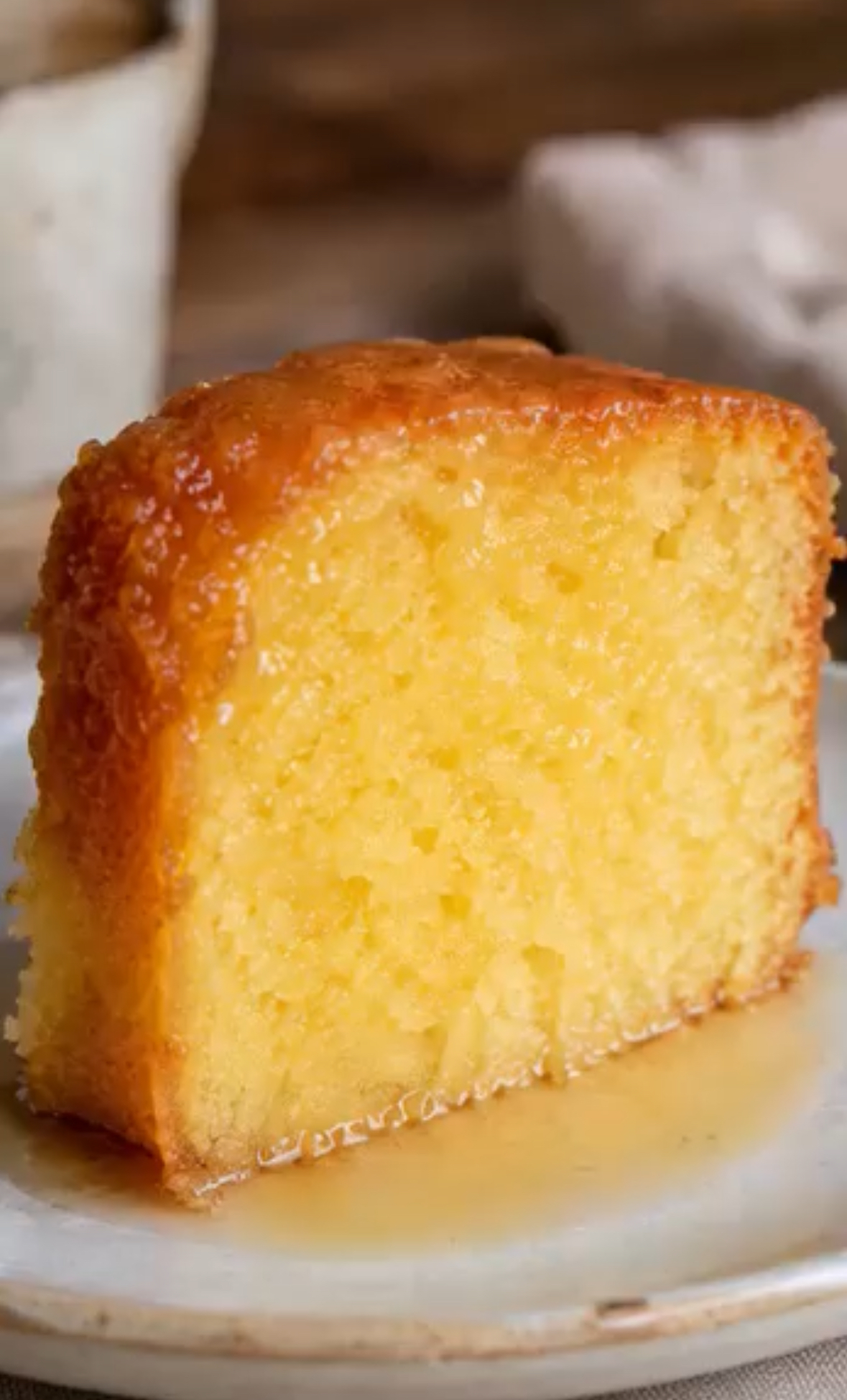
This Sticky Orange Syrup Cake is wonderfully moist, fragrant, and packed with fresh citrus flavor. Made with orange zest, fresh orange juice, and almond flour, the cake has a rich, tender crumb that becomes even more delicious when soaked with warm homemade orange syrup straight from the oven.
The citrus syrup slowly absorbs into the warm cake, creating a beautifully moist texture and a bright sweet-tangy flavor in every bite.
This easy orange cake is perfect for afternoon tea, weekend baking, family desserts, brunch, or an elegant homemade treat for guests.
Recipe Overview
| Category | Details |
| Prep Time | 20 minutes |
| Cook Time | 35–45 minutes |
| Syrup Time | 5–7 minutes |
| Cooling Time | At least 1 hour |
| Total Time | About 2 hours |
| Servings | 8–10 |
| Pan Size | 8- or 9-inch round cake pan |
| Oven Temperature | 350°F (175°C) |
| Difficulty | Easy |
Why You’ll Love This Orange Cake
Incredibly moist texture: The warm citrus syrup is poured over the freshly baked cake, allowing it to absorb into the crumb and create a wonderfully moist finish.
Fresh orange flavor: Fresh orange juice and zest give this cake a naturally bright citrus aroma and flavor.
Almond flour adds richness: A portion of almond flour gives the cake a slightly dense, tender crumb that pairs beautifully with the citrus syrup.
Easy to prepare: The batter comes together with simple ingredients and does not require complicated decorating.
Perfect for any occasion: Serve it as an afternoon tea cake, brunch dessert, family treat, or elegant dinner-party dessert.
Ingredients
For the Orange Cake
| Ingredient | Amount |
| All-purpose flour | 1½ cups (about 190 g) |
| Almond flour | ½ cup (about 50 g) |
| Baking powder | 1½ tsp |
| Salt | ¼ tsp |
| Granulated sugar | 1 cup (200 g) |
| Large eggs, room temperature | 3 |
| Vegetable oil or mild olive oil | ½ cup (120 ml) |
| Fresh orange juice | ½ cup (120 ml) |
| Finely grated zest | 2 large oranges |
| Vanilla sugar | 1 packet, about 1 tbsp |
For the Citrus Syrup
| Ingredient | Amount |
| Fresh orange juice, strained | 1 cup (240 ml) |
| Fresh lemon juice | 1 tbsp |
| Granulated sugar | ½ cup (100 g) |
Step-by-Step Instructions
Prepare the Pan
Preheat your oven to 350°F (175°C).
Grease an 8- or 9-inch round cake pan.
Line the bottom with parchment paper and lightly grease the parchment.
You can also use a loaf pan or mini Bundt pans, although the baking time will need to be adjusted depending on the size and shape.
Combine the Dry Ingredients
In a medium mixing bowl, whisk together the all-purpose flour, almond flour, baking powder, and salt.
Whisk for several seconds to distribute the baking powder and salt evenly throughout the flour mixture.
Set aside.
Whip the Eggs and Sugar
Place the eggs and granulated sugar in a large mixing bowl.
Using a hand mixer or stand mixer, beat on medium-high speed for approximately 3 minutes.
The mixture should become paler, slightly thicker, and somewhat fluffy.
This step helps create a lighter cake texture.
Add the Wet Ingredients
Reduce the mixer speed to low.
Slowly pour in the vegetable oil or mild olive oil.
Add the fresh orange juice, finely grated orange zest, and vanilla sugar.
Mix only until everything is combined.
Do not continue beating unnecessarily.
Combine the Batter
Gradually add the dry ingredients to the wet mixture.
Use a spatula to gently fold everything together.
Stop mixing as soon as there are no visible streaks of dry flour.
Avoid overmixing because it can make the finished cake heavier.
Bake the Cake
Pour the batter into the prepared cake pan.
Smooth the surface gently with a spatula.
Place the pan in the preheated oven.
Bake for approximately 35–45 minutes.
The cake should become golden on top and a toothpick inserted into the center should come out clean or with a few moist crumbs attached.
Because ovens and pan sizes vary, begin checking around the 35-minute mark.
Prepare the Citrus Syrup
While the cake has approximately 10 minutes remaining, prepare the syrup.
Add the fresh orange juice, lemon juice, and granulated sugar to a small saucepan.
Place over medium heat.
Bring the mixture to a gentle simmer and cook for approximately 5–7 minutes, stirring occasionally.
The sugar should completely dissolve and the liquid should reduce slightly.
You do not need to make the syrup extremely thick. It should remain fluid enough to soak easily into the cake.
Remove from the heat and keep warm.
Soak the Hot Cake
Remove the cake from the oven.
While it is still hot, use a wooden skewer, toothpick, or thin metal skewer to poke holes across the surface.
Make plenty of evenly distributed holes without completely breaking through the bottom of the cake.
Slowly pour the warm orange syrup over the cake.
Take your time and pour gradually so the syrup has time to absorb rather than pooling entirely on the surface.
Allow the cake to sit in the pan while it absorbs the syrup.
Cool Completely
Leave the cake in the pan for at least 1 hour.
As it cools, the cake will continue absorbing the citrus syrup and the crumb will become more moist and flavorful.
Once completely cool, carefully remove the cake from the pan.
Slice and serve.
Best Tips for a Perfect Sticky Orange Cake
Use fresh oranges: Freshly squeezed juice and freshly grated zest provide a much brighter citrus flavor than bottled juice.
Zest before juicing: Whole oranges are much easier to zest before you squeeze them.
Avoid the white pith: When grating the orange zest, remove only the colorful outer layer. The white pith underneath can taste bitter.
Use room-temperature eggs: Room-temperature eggs incorporate more easily into the batter and help create a smoother mixture.
Don’t overmix the batter: Fold the flour in gently and stop as soon as it is incorporated.
Pour the syrup slowly: Gradual pouring allows the syrup to penetrate the cake more evenly.
Poke evenly spaced holes: Distributing the holes across the entire surface ensures that the citrus syrup reaches more of the cake.
Allow enough cooling time: The cake needs time to absorb the syrup and set before slicing.
Best Ingredient Options
Oranges: Navel oranges are a convenient choice because they are widely available and naturally sweet. Other sweet eating oranges can also be used.
Oil: Neutral vegetable oil creates a delicate flavor. A mild olive oil adds a subtle fruity note without overpowering the orange.
Almond flour: Almond flour provides richness and tenderness. Use finely ground almond flour for the smoothest texture.
Vanilla sugar: If you don’t have vanilla sugar, replace it with approximately 1 teaspoon vanilla extract.
Lemon juice: A small amount of lemon juice balances the sweetness of the orange syrup and gives it a brighter flavor.
Recipe Variations
Orange and Dark Chocolate Cake
Fold ½ cup (85 g) of dark chocolate chips into the batter before baking for a delicious chocolate-orange combination.
Orange Coconut Cake
Add ½ cup (40 g) of unsweetened shredded coconut to the batter.
For an attractive finish, sprinkle toasted coconut over the cooled cake.
Orange Glazed Cake
Instead of serving the cake with only the syrup, prepare a simple powdered-sugar orange glaze and drizzle it over the completely cooled cake.
Mini Orange Cakes
Divide the batter between greased mini Bundt pans.
Begin checking for doneness earlier because smaller cakes bake faster.
Soak each warm cake with the citrus syrup after baking.
Orange Almond Cake
For a stronger almond flavor, add ½ teaspoon almond extract to the batter.
What to Serve With Sticky Orange Cake
This cake is delicious on its own, but several simple accompaniments work beautifully.
Serve slices with a spoonful of lightly sweetened whipped cream for a creamy contrast.
Greek-style yogurt also works well and adds a pleasant tang alongside the sweet orange syrup.
For a more indulgent dessert, add a scoop of vanilla ice cream.
The cake is also perfect with coffee, espresso, black tea, or a cup of herbal tea.
Make-Ahead Instructions
This orange syrup cake is an excellent make-ahead dessert.
The cake can be baked 1–2 days in advance.
Allow it to cool completely after soaking with the syrup, then cover it tightly and store it according to the storage instructions below.
In fact, the orange flavor can become even more pronounced after resting overnight.
For the best presentation, add any decorative toppings shortly before serving.
Storage
Once completely cooled, cover the cake tightly or place it in an airtight container.
It can be stored at room temperature for approximately 2 days in a cool environment.
For longer storage, refrigerate it for up to 5 days.
Because refrigeration can firm the cake slightly, allow chilled slices to sit at room temperature for about 15–20 minutes before serving.
Reheating
This cake is usually best served at room temperature.
If you prefer it slightly warm, place an individual slice in the microwave for approximately 10 seconds.
Avoid overheating because the syrup and sugar can become very hot.
Freezing
The cake can be frozen after it has completely cooled and absorbed the syrup.
Wrap individual slices tightly in plastic wrap, then place them in a freezer-safe container or bag.
Freeze for up to 2 months for the best quality.
Thaw overnight in the refrigerator or for several hours at room temperature.
Allow the cake to reach room temperature before serving for the best texture.
Common Mistakes to Avoid
Using too much zest: Orange zest adds wonderful flavor, but excessive white pith can make the cake bitter.
Overmixing the batter: This can produce a dense or chewy texture.
Making the syrup too thick: The syrup needs to remain fluid enough to penetrate the cake.
Pouring the syrup too quickly: Slow, even pouring gives the cake time to absorb the liquid.
Skipping the holes: Without holes, the syrup will mainly remain on the surface rather than soaking throughout the crumb.
Removing the cake too quickly: Allowing it to cool in the pan gives the syrup time to distribute throughout the cake.
Slicing while very hot: The cake is delicate immediately after baking. Allow it to cool and set before cutting.
Nutrition Estimate
Nutrition values are approximate and will vary according to the exact ingredients, orange size, and serving size.
| Nutrient | Approx. Per Serving |
| Calories | 390–430 kcal |
| Protein | 6–7 g |
| Carbohydrates | 55–60 g |
| Fat | 18–21 g |
| Saturated Fat | 3–4 g |
| Sugar | 35–40 g |
| Fiber | 2–3 g |
| Sodium | 150–190 mg |
Estimated when the cake is divided into 10 servings.
Frequently Asked Questions
Can I use bottled orange juice?
Fresh orange juice is recommended because it provides the brightest flavor, especially when combined with fresh orange zest. Bottled juice can be used if necessary, but the flavor may be less vibrant.
Can I use only all-purpose flour?
Yes, although the almond flour contributes to the cake’s rich and tender texture. If substituting it, the texture will be somewhat different.
Can I use olive oil?
Yes. Choose a mild olive oil rather than a strongly flavored extra-virgin olive oil if you want the orange flavor to remain dominant.
Why should I pour the syrup over the cake while it is hot?
A hot cake has a more receptive crumb, allowing the warm syrup to penetrate more easily and create the signature sticky, moist texture.
Can I make this cake in a loaf pan?
Yes. A loaf pan works very well, but the baking time may change. Begin checking the cake around 35 minutes and continue baking until a toothpick comes out clean or with a few moist crumbs.
Can I use canned orange juice?
Fresh juice gives the best result, particularly because the recipe also uses orange zest. If using prepared juice, make sure it has a clean orange flavor and is not heavily sweetened.
Can I make this cake without almond flour?
Yes. You can substitute additional all-purpose flour, although the final crumb will be slightly different and less rich.
Final Thoughts
This Sticky Orange Syrup Cake is a simple yet impressive dessert that transforms everyday ingredients into something incredibly moist and flavorful.
The combination of fresh orange zest, orange juice, almond flour, and warm citrus syrup creates a cake with a tender crumb and an irresistible sticky finish.
The secret is in the final step: pour the warm syrup over the hot cake and give it plenty of time to soak in.
Serve it simply with a cup of coffee or tea, or dress it up with whipped cream, vanilla ice cream, or a light orange glaze for a beautiful dessert worthy of any occasion.