
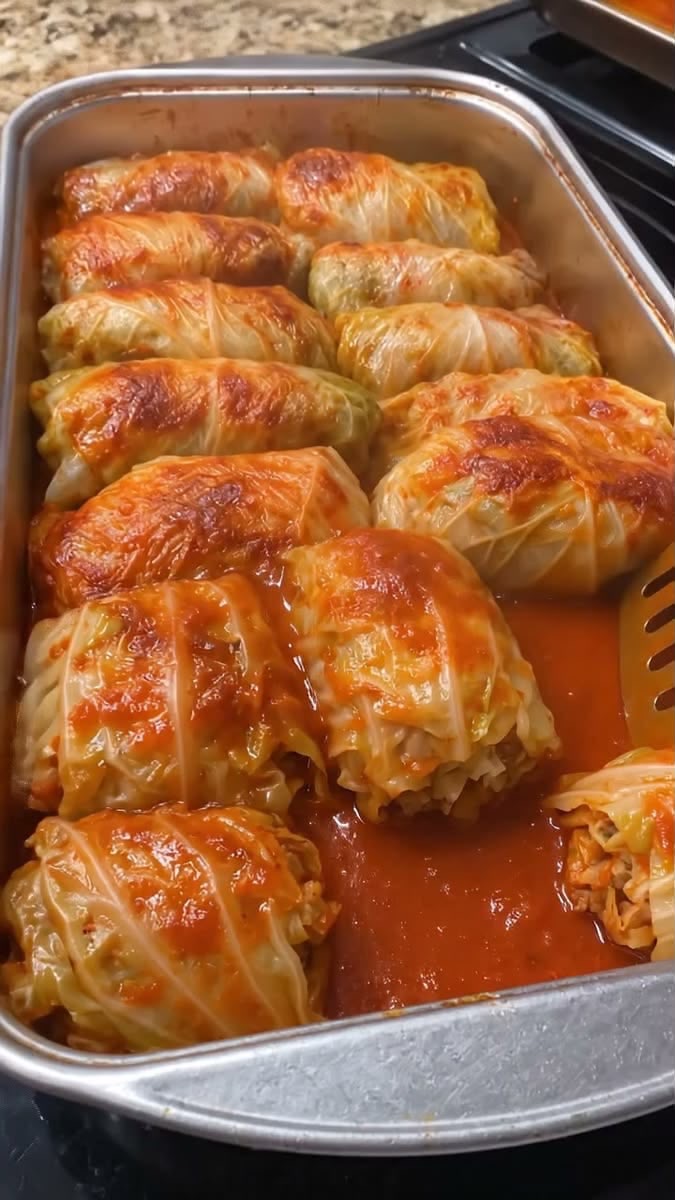
These traditional stuffed cabbage rolls are filled with seasoned ground beef, rice, onion, and garlic, then slowly baked in a rich, savory tomato sauce. Tender cabbage leaves wrap around a flavorful filling, creating a comforting homemade meal that is perfect for family dinners, Sunday lunches, or meal prep.
With simple ingredients and easy preparation, this hearty dish delivers delicious flavor in every bite.
Recipe Overview
| Details | Information |
| Prep Time | 30 minutes |
| Cook Time | 50–60 minutes |
| Total Time | 1 hour 20–30 minutes |
| Servings | 6–8 |
| Cuisine | Traditional European-Inspired |
| Cooking Method | Oven-Baked |
| Main Ingredients | Cabbage, ground beef, rice, tomato sauce |
| Difficulty | Easy to Moderate |
Why You’ll Love This Recipe
Comforting and satisfying: Tender cabbage leaves, seasoned beef, and rice create a hearty meal that everyone can enjoy.
Rich tomato flavor: The homemade tomato sauce adds a savory, slightly tangy taste that complements the beef filling beautifully.
Simple ingredients: You can prepare this recipe with everyday pantry staples and fresh vegetables.
Perfect for family meals: The recipe makes 6–8 servings, making it ideal for sharing or saving leftovers for another day.
Great for meal prep: The flavors develop as the dish rests, making these stuffed cabbage rolls just as delicious when reheated.
Ingredients
For the Cabbage Rolls
| Ingredient | Quantity |
| Large green cabbage | 1 head |
| Ground beef | 1 lb (500 g) |
| White rice, rinsed and drained | 1 cup |
| Medium onion, finely chopped | 1 |
| Garlic cloves, minced | 2 |
| Olive oil or melted butter | 2 tablespoons |
| Salt | To taste |
| Black pepper | To taste |
| Paprika | To taste |
| Ground cumin | To taste |
For the Tomato Sauce
| Ingredient | Quantity |
| Tomato passata or plain tomato sauce | 2 cups |
| Tomato paste | 2 tablespoons |
| Vegetable broth or hot water | 2 cups |
| Olive oil | 1 tablespoon |
| Salt | To taste |
| Black pepper | To taste |
Step-by-Step Instructions
Step 1: Prepare the Cabbage Leaves
Bring a large pot of salted water to a boil. Carefully remove the hard core from the cabbage.
Place the whole cabbage in the boiling water and cook for 5–8 minutes, gently separating the softened outer leaves as they loosen.
Transfer the leaves to a colander and let them drain. Allow them to cool slightly before handling.
If the thick center ribs are difficult to roll, carefully trim them with a knife without cutting through the leaves.
Step 2: Prepare the Beef and Rice Filling
In a large mixing bowl, combine the ground beef, rinsed uncooked rice, finely chopped onion, minced garlic, olive oil or melted butter, salt, black pepper, paprika, and cumin.
Mix thoroughly until the ingredients are evenly distributed.
Avoid overmixing, as this can make the filling dense. The rice will absorb moisture and cook inside the cabbage rolls during baking.
Step 3: Assemble the Cabbage Rolls
Place one cabbage leaf on a clean work surface with the stem end facing you.
Add approximately 1–2 tablespoons of filling near the bottom of the leaf, adjusting the quantity according to its size.
Fold the sides inward, then roll the leaf firmly from the bottom upward to create a compact parcel.
Repeat with the remaining cabbage leaves and filling. Set the rolls aside while you prepare the sauce.
Step 4: Make the Tomato Sauce
In a medium bowl, whisk together the tomato sauce, tomato paste, vegetable broth or hot water, olive oil, salt, and black pepper.
Mix until the tomato paste is fully incorporated and the sauce has a smooth consistency.
Taste and adjust the seasoning as needed. If you prefer a more aromatic sauce, you can add a little paprika, dried oregano, or minced garlic.
Step 5: Arrange the Cabbage Rolls
Preheat your oven to 350°F (180°C).
Arrange the cabbage rolls snugly in a large oven-safe baking dish or casserole. Place them seam-side down to help prevent them from opening during cooking.
Pour the tomato sauce evenly over the rolls, making sure they are well coated. The sauce should provide enough moisture for the rice to cook properly.
Cover the baking dish tightly with a lid or aluminum foil.
Step 6: Bake Until Tender
Bake for 50–60 minutes, or until the cabbage is tender and the tomato sauce has thickened.
Because the filling contains raw ground beef and uncooked rice, check that the center of the rolls is fully cooked. The ground beef should reach an internal temperature of 160°F (71°C), measured with a food thermometer, and the rice should be tender.
If the cabbage rolls need additional cooking time, cover them again and continue baking in 10-minute intervals, adding a little hot broth if the sauce becomes too thick before the rice is done.
For a thicker sauce, remove the cover during the final 5–10 minutes of cooking, provided the rice and beef are already cooked through.
Step 7: Rest and Serve
Remove the baking dish from the oven and let the cabbage rolls rest for 5–10 minutes before serving.
Spoon the rich tomato sauce over each roll and serve while hot.
Enjoy these traditional stuffed cabbage rolls with crusty bread, mashed potatoes, or a fresh green salad for a complete and satisfying meal.
Best Tips for Perfect Stuffed Cabbage Rolls
Choose large, flexible cabbage leaves. Green cabbage works particularly well because its leaves become pliable after blanching.
Avoid overfilling. Using too much filling can make the rolls difficult to close and may cause the leaves to split.
Roll them tightly. Folding the sides inward before rolling helps keep the beef and rice filling inside during baking.
Keep the rolls covered. A tight-fitting lid or foil traps steam and helps the rice cook evenly.
Use enough liquid. The uncooked rice needs sufficient moisture to soften. Check the sauce level during baking and add a little hot broth if necessary.
Let the dish rest. A short resting period helps the sauce settle and makes the rolls easier to serve without breaking.
Best Ingredient Options
Ground beef: Use lean or moderately fatty ground beef for a flavorful filling. Ground veal can also be combined with beef for a milder taste.
Rice: Long-grain white rice works well because it absorbs the sauce as it cooks. Brown rice requires more liquid and a longer cooking time, so it is not a direct substitute in this recipe.
Cabbage: Green cabbage is the classic choice, but Savoy cabbage is another good option because its leaves are naturally flexible.
Tomato sauce: Plain tomato passata gives the sauce a smooth texture. Crushed tomatoes can be used for a slightly chunkier result.
Broth: Vegetable broth adds flavor, while hot water works well when you prefer a simpler tomato taste.
Seasonings: Paprika and cumin provide warmth, while dried oregano or thyme can add a Mediterranean-inspired flavor.
Recipe Variations
Garlic and Herb Stuffed Cabbage: Add extra garlic, dried oregano, and chopped parsley to the beef filling for a more aromatic flavor.
Spicy Tomato Cabbage Rolls: Add a pinch of chili flakes or cayenne pepper to the sauce for a gentle kick.
Beef and Herb Cabbage Rolls: Mix fresh parsley or cilantro into the filling for a fresh, savory taste.
Cheesy Tomato Cabbage Rolls: Sprinkle a little shredded mozzarella over the rolls during the final 10 minutes of baking for a cheesy finish.
Extra Vegetable Version: Add finely grated carrots or chopped bell peppers to the filling for extra flavor and texture.
What to Serve With Stuffed Cabbage Rolls
Mashed potatoes: Creamy mashed potatoes pair beautifully with the rich tomato sauce.
Crusty bread: Serve warm bread alongside the rolls to soak up every bit of the flavorful sauce.
Fresh green salad: A crisp salad with cucumber, tomatoes, and a light vinaigrette balances the hearty filling.
Roasted vegetables: Roasted carrots, zucchini, or green beans make an easy and colorful side dish.
Steamed rice: If you want a more substantial meal, serve a small portion of extra rice alongside the cabbage rolls.
Make-Ahead Instructions
You can prepare the cabbage leaves and beef filling up to one day in advance. Store the prepared components separately in airtight containers in the refrigerator.
For convenience, you can also assemble the cabbage rolls, arrange them in the baking dish, and cover them with the tomato sauce before refrigerating. Keep the dish refrigerated and bake within 24 hours.
For the best results, cook the dish thoroughly before serving. If baking directly from the refrigerator, allow extra cooking time and check the internal temperature to ensure the filling is fully cooked.
Storage Instructions
Allow leftover cabbage rolls to cool slightly before transferring them to an airtight container.
Refrigerator: Store for 3–4 days at 40°F (4°C) or below.
Refrigerate leftovers within 2 hours of cooking, or within 1 hour if the surrounding temperature is above 90°F (32°C).
Store the rolls with some tomato sauce to help keep them moist during reheating.
Reheating Instructions
Oven: Place the cabbage rolls in an oven-safe dish with their sauce. Cover and reheat at 325°F (165°C) until heated through.
Microwave: Place one or two rolls in a microwave-safe container with a spoonful of sauce. Cover loosely and heat in short intervals, turning or rearranging as needed.
Stovetop: Place the rolls in a covered saucepan with a little extra broth or water. Heat gently over low to medium-low heat until thoroughly warmed.
For food safety, reheat leftovers to an internal temperature of 165°F (74°C).
Freezing Instructions
These stuffed cabbage rolls freeze well after cooking.
Allow the dish to cool, then transfer the rolls and tomato sauce into freezer-safe containers. Freeze in individual portions or family-sized batches.
For the best quality, use within 2–3 months. Thaw overnight in the refrigerator before reheating, or reheat directly from frozen with additional time and moisture as needed.
Always check that the center of the rolls reaches 165°F (74°C) when reheating.
Common Mistakes to Avoid
Using cabbage leaves that are too firm: Leaves that have not been softened enough can crack during rolling. Blanch them until they bend easily.
Adding too much filling: Overfilled rolls may open during baking. Use smaller portions and fold the sides securely.
Not providing enough cooking liquid: Uncooked rice needs moisture to soften. Make sure the rolls are coated with sauce and check the liquid level during cooking.
Cooking at too high a temperature: Excessive heat can cause the sauce to evaporate before the rice is tender. Maintain the oven temperature at 350°F (180°C) and keep the dish covered for most of the cooking time.
Skipping the temperature check: The outside may appear cooked before the center is ready. Confirm that the beef filling reaches 160°F (71°C) and the rice is tender before serving.
Serving immediately: Letting the rolls rest for a few minutes helps them hold their shape and makes serving easier.
Nutrition Estimate
The following values are approximate and will vary according to the type of ground beef, amount of oil, and serving size. Estimates are based on 8 servings.
| Nutrient | Per Serving |
| Calories | 280–360 kcal |
| Protein | 17–22 g |
| Carbohydrates | 25–35 g |
| Fat | 10–16 g |
| Saturated Fat | 3–6 g |
| Fiber | 3–5 g |
| Sugar | 5–8 g |
| Sodium | 400–700 mg |
These estimates are for general informational purposes and are not a substitute for a nutrition calculation based on your exact ingredients and portions.
Frequently Asked Questions
Can I prepare stuffed cabbage rolls without precooking the rice?
Yes. This recipe uses rinsed, uncooked white rice. The rice cooks inside the cabbage rolls as it absorbs moisture from the tomato sauce. Make sure there is enough liquid and allow additional cooking time if needed.
Why are my cabbage rolls falling apart?
The leaves may be too small, the rolls may be overfilled, or the cabbage may not have been rolled tightly enough. Use flexible leaves, trim thick ribs when necessary, and place the rolls seam-side down in the baking dish.
Can I cook stuffed cabbage rolls on the stovetop?
Yes. Arrange the rolls in a large, heavy-bottomed pot, cover them with the tomato sauce, and simmer gently with the lid on until the rice and beef are fully cooked. Check the liquid level occasionally and add hot broth if needed.
Can I make this recipe without beef?
Yes. Ground turkey or ground chicken can be used instead. Cooking time may vary depending on the size of the rolls, so check the filling’s internal temperature and make sure the rice is tender.
How do I make the tomato sauce thicker?
Remove the lid during the final 5–10 minutes of baking once the filling is fully cooked. You can also simmer the sauce separately before adding it to the cabbage rolls to reduce excess liquid.
Can I freeze uncooked stuffed cabbage rolls?
Yes, although freezing cooked rolls is often more convenient. If freezing the assembled rolls uncooked, use a freezer-safe dish and thaw them in the refrigerator before baking. Allow extra cooking time and verify that the beef and rice are completely cooked.
What kind of cabbage works best?
Green cabbage is an excellent choice because its leaves are large and become flexible after blanching. Savoy cabbage also works well and has a slightly more delicate texture.
Are stuffed cabbage rolls good for meal prep?
Absolutely. They can be prepared ahead, portioned into containers, and refrigerated for several days. The tomato sauce helps keep the rolls moist, making them convenient for lunches and dinners throughout the week.
Final Thoughts
Traditional stuffed cabbage rolls in tomato sauce are a comforting homemade dish that combines tender cabbage, savory ground beef, soft rice, and a rich tomato sauce. Although the preparation takes a little time, the steps are straightforward, and the result is a satisfying meal that is perfect for family gatherings or everyday dinners.
Prepare them ahead, serve them with your favorite side dishes, and enjoy the delicious flavors of this timeless comfort-food recipe.
Recipe tip: Keep the cabbage rolls covered while baking and ensure the rice has enough moisture to cook properly. These two details make a big difference in achieving tender, flavorful results.