
Introduction
This ultra-soft golden vanilla sponge cake is light, fluffy, beautifully tender, and wonderfully simple to prepare at home.
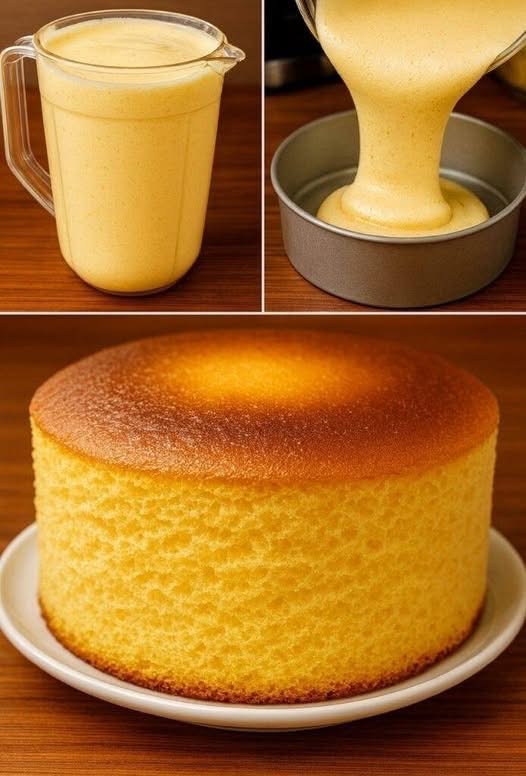
Inspired by the tall, golden cake shown in the image, this recipe uses a smooth, airy batter to create a delicate crumb and an evenly browned top. It is an excellent choice for an easy homemade dessert, afternoon tea, birthday cakes, or a simple family treat.
With everyday ingredients, precise baking instructions, and a few professional techniques, you can achieve a soft bakery-style texture without complicated equipment.
⸻
Recipe Overview
| Detail | Information |
| Prep Time | 20 minutes |
| Cook Time | 40–45 minutes |
| Cooling Time | 30 minutes |
| Total Time | About 1 hour 35 minutes |
| Yield | 8–10 servings |
| Difficulty | Easy to Medium |
| Oven Temperature | 170°C / 340°F |
| Cake Pan | 20 cm / 8-inch round pan |
⸻
Why You’ll Love This Recipe
This homemade sponge cake has a soft, airy texture with a delicate vanilla flavor and a gorgeous golden-brown surface.
The batter is smooth and creamy, making it easy to spread evenly into the cake pan.
It is also incredibly versatile. Enjoy it plain with coffee or tea, or transform it into a layered dessert with whipped cream, fresh fruit, pastry cream, or your favorite frosting.
For anyone searching for an easy cake recipe, soft vanilla cake, or homemade bakery-style dessert, this recipe is a wonderful starting point.
⸻
Ingredients
🍰 For the Cake Batter
| Ingredient | Amount |
| Large eggs | 4 |
| Granulated sugar | 150 g |
| All-purpose flour | 150 g |
| Whole milk | 60 ml |
| Vegetable oil | 50 ml |
| Vanilla extract | 2 teaspoons |
| Baking powder | 1 teaspoon |
| Salt | ¼ teaspoon |
🧈 For Preparing the Pan
| Ingredient | Amount |
| Unsalted butter or neutral oil | 1 tablespoon |
| All-purpose flour | 1 tablespoon |
⸻
Step-by-Step Instructions
Prepare the Oven and Pan
Preheat your oven to 170°C / 340°F.
Lightly grease an 8-inch (20 cm) round cake pan with butter or neutral oil.
Dust lightly with flour and shake out the excess.
For easier removal, you can also place a round piece of parchment paper on the bottom of the pan.
⸻
Prepare the Eggs and Sugar
Place the eggs and granulated sugar in a large mixing bowl.
Using an electric mixer, beat on medium-high speed for approximately 6–8 minutes, until the mixture becomes very pale, thick, and noticeably increased in volume.
This step is important because incorporating enough air helps create a lighter cake.
Add the vanilla extract and mix briefly.
⸻
Combine the Dry Ingredients
In a separate bowl, sift together the flour, baking powder, and salt.
Sifting helps remove lumps and distributes the baking powder evenly throughout the flour.
⸻
Add the Milk and Oil
Warm the milk slightly. It should be warm but not boiling.
Combine the warm milk with the vegetable oil.
Set aside while you begin incorporating the dry ingredients.
⸻
Fold the Flour Into the Batter
Add the sifted flour mixture gradually to the whipped egg mixture.
Use a spatula and gently fold rather than aggressively stirring.
Continue until the flour is almost completely incorporated.
Avoid overmixing because excessive mixing can remove the air you worked into the eggs.
⸻
Add the Milk Mixture
Take a small amount of the cake batter and mix it into the milk-and-oil mixture.
Then gently fold that mixture back into the main batter.
This technique helps distribute the liquid without suddenly deflating the whipped eggs.
The finished batter should be smooth, glossy, and relatively light.
⸻
Fill the Pan
Pour the batter into the prepared cake pan.
Gently tap the pan once or twice on the countertop to release any very large air bubbles.
Do not repeatedly bang the pan, as this can reduce the volume of the batter.
⸻
Bake
Place the cake in the center of the preheated oven.
Bake at 170°C / 340°F for approximately 40–45 minutes.
The top should become a rich golden brown.
Insert a wooden toothpick into the center. It should come out clean or with a few moist crumbs attached.
If the top is browning too quickly, loosely cover it with aluminum foil during the final portion of baking.
⸻
Cool the Cake
Remove the cake from the oven and allow it to rest in the pan for approximately 10 minutes.
Run a thin knife around the edges if necessary, then carefully remove the cake from the pan.
Place it on a wire rack and allow it to cool completely before slicing.
⸻
Practical Tips
Use room-temperature eggs. They generally whip more easily and help create better volume.
Do not skip the whipping stage. The eggs and sugar should become pale, thick, and fluffy.
Sift the flour. This creates a smoother batter and helps prevent flour pockets.
Fold gently. Overmixing can cause the cake to lose volume and become dense.
Avoid opening the oven too early. Keep the oven door closed during at least the first 30 minutes of baking.
Measure accurately. Baking is sensitive to ingredient ratios, so a kitchen scale is especially useful.
Let the cake cool completely. Cutting it while extremely hot can compress the delicate crumb.
⸻
Best Ingredient Alternatives
All-Purpose Flour
You can replace part of the all-purpose flour with cake flour for an even softer crumb.
Vegetable Oil
Neutral oils such as sunflower or canola oil work well.
For a richer flavor, you can replace the oil with melted unsalted butter, although the texture may become slightly different.
Whole Milk
Whole milk gives the cake a pleasant richness.
You can substitute it with 2% milk, although the finished cake may be slightly less rich.
Vanilla Extract
Pure vanilla extract provides the best flavor, but vanilla paste or vanilla powder can also be used.
⸻
Recipe Variations
🍋 Lemon Vanilla Sponge
Add 1 tablespoon of finely grated lemon zest to the batter for a bright citrus flavor.
🍊 Orange Sponge Cake
Replace part of the milk with fresh orange juice and add finely grated orange zest.
🍫 Chocolate Sponge
Replace approximately 20 g of flour with 20 g unsweetened cocoa powder.
🍓 Strawberry Cream Cake
Slice the cooled cake horizontally and fill it with lightly sweetened whipped cream and fresh strawberries.
🥥 Coconut Sponge
Add 30 g of finely shredded unsweetened coconut to the batter for a tropical variation.
⸻
What to Serve With This Cake
This soft vanilla cake is delicious on its own, but you can make it even more special with:
- Fresh strawberries and blueberries 🍓🫐
- Whipped cream
- Vanilla pastry cream
- Homemade fruit compote
- Powdered sugar
- Honey
- Caramel sauce
- Chocolate ganache
- Fresh seasonal fruit
- A scoop of vanilla ice cream
For an elegant dessert, serve a slice with fresh berries and a small spoonful of whipped cream.
⸻
Make-Ahead Instructions
The cake can be baked one day ahead.
Allow it to cool completely, then wrap it tightly in food-safe plastic wrap or place it in an airtight container.
If you plan to decorate it, prepare the cake in advance and add the cream or frosting shortly before serving.
⸻
Storage
Store the cooled cake in an airtight container at room temperature for approximately 2 days.
If the cake contains whipped cream, custard, cream cheese frosting, or fresh fruit, refrigerate it and consume it according to the storage requirements of those ingredients.
For the best texture, allow a refrigerated plain sponge cake to sit at room temperature for approximately 20–30 minutes before serving.
⸻
Reheating
This cake is normally delicious at room temperature and does not require reheating.
If you prefer it slightly warm, place an individual slice in the microwave for approximately 8–12 seconds.
Avoid overheating because the cake can become dry or rubbery.
⸻
Freezing
Allow the cake to cool completely.
Wrap individual slices tightly in plastic wrap and place them in a freezer-safe container or bag.
Freeze for up to 2–3 months for best quality.
Thaw overnight in the refrigerator or for several hours at room temperature while still wrapped.
⸻
Common Mistakes to Avoid
Overmixing the Batter
Mixing aggressively after adding the flour can remove the air and produce a dense cake.
Using Cold Eggs
Very cold eggs may not whip as efficiently. Room-temperature eggs are preferable.
Incorrect Oven Temperature
An oven that is too hot can brown the outside before the center is fully baked.
Opening the Oven Too Soon
A sudden temperature change can cause the cake to sink.
Overbaking
Leaving the cake in the oven too long can produce a dry crumb.
Removing It Too Quickly
Allowing the cake to rest for several minutes before removing it from the pan helps prevent breakage.
⸻
Estimated Nutrition
Approximate values per serving, assuming 10 servings and no frosting or filling.
| Nutrient | Approximate Amount |
| Calories | 190 kcal |
| Carbohydrates | 27 g |
| Protein | 5 g |
| Fat | 7 g |
| Saturated Fat | 2 g |
| Sugar | 15 g |
| Fiber | 0.5 g |
| Sodium | 100 mg |
Nutrition values are estimates and can vary according to ingredient brands, portion sizes, and substitutions.
⸻
Frequently Asked Questions
Why is my sponge cake dense?
The most common reasons are insufficiently whipped eggs, overmixing after adding the flour, or an inaccurate amount of flour.
Why did the cake sink in the middle?
Opening the oven too early, underbaking, or losing too much air during mixing can cause the center to collapse.
Can I make this cake without vanilla?
Yes. Vanilla can be omitted or replaced with lemon zest, orange zest, almond flavoring, or another preferred flavor.
Can I turn this into a birthday cake?
Absolutely. Once completely cooled, slice the cake horizontally and add whipped cream, fruit, buttercream, or another favorite filling.
How do I make the cake extra soft?
The key is to avoid overbaking and to carefully fold the flour into the whipped egg mixture. Using accurate measurements also makes a significant difference.
Can I bake it in another pan?
Yes, but the baking time will change depending on the size and depth of the pan. A larger, shallower pan will generally bake faster, while a smaller, deeper pan may require more time.
⸻
Conclusion
This soft golden vanilla sponge cake is a simple, elegant homemade dessert with a beautifully tender crumb and golden top.
The secret is straightforward: whip the eggs well, fold gently, measure accurately, and avoid overbaking.
Serve it plain for a comforting everyday treat or transform it with cream, fruit, chocolate, or caramel for a more indulgent dessert. 🍰✨