
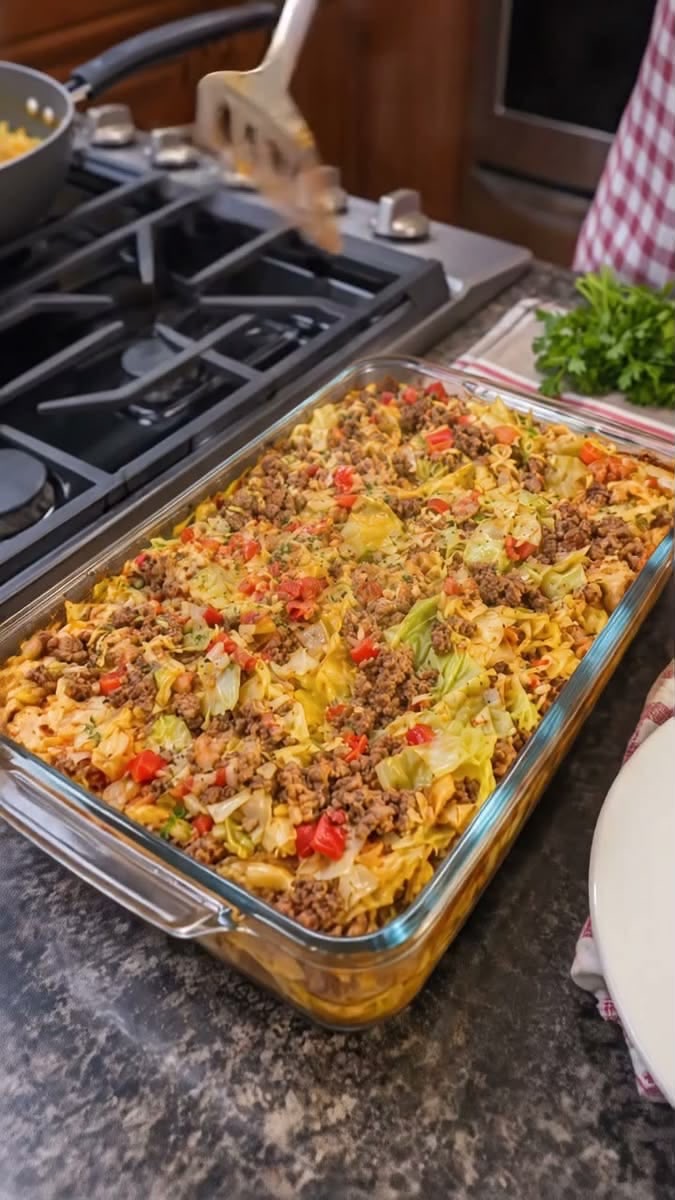
This Unstuffed Cabbage Roll Casserole is a comforting, family-friendly dinner that combines tender cabbage, savory ground beef, tomatoes, and melted cheese in one delicious baked dish. It has all the classic flavors of traditional stuffed cabbage rolls without the time-consuming process of stuffing individual cabbage leaves.
Made with simple ingredients and everyday seasonings, this easy cabbage casserole is perfect for busy weeknights, cozy family dinners, or meal prep. The cabbage becomes tender in the oven, while the beef and tomato sauce create a rich, savory filling topped with golden, bubbly cheese.
Recipe Overview
| Detail | Information |
| Preparation Time | 20 minutes |
| Cooking Time | 45 minutes |
| Total Time | 1 hour 5 minutes |
| Servings | 6 |
| Cuisine | American-inspired comfort food |
| Course | Main Course |
| Cooking Method | Stovetop and oven |
| Oven Temperature | 375°F (190°C) |
| Difficulty | Easy |
Why You’ll Love This Recipe
All the flavor of cabbage rolls: Enjoy the familiar combination of tender cabbage, seasoned ground beef, and tomato sauce without rolling individual cabbage leaves.
Simple everyday ingredients: This recipe uses affordable ingredients that are easy to find at most grocery stores.
Cheesy and comforting: A generous layer of melted mozzarella or cheddar adds a delicious finishing touch.
Perfect for family dinners: The casserole makes six satisfying servings and pairs beautifully with rice, crusty bread, or a fresh salad.
Great for meal prep: Prepare it ahead of time and reheat individual portions for convenient lunches or dinners.
Easy to customize: Adjust the seasonings, choose your favorite cheese, or add extra vegetables to make the dish your own.
Ingredients
For the Beef and Cabbage Mixture
| Ingredient | Quantity |
| Ground beef | 1 lb (450 g) |
| Green cabbage, chopped | 1 medium head |
| Yellow onion, diced | 1 medium |
| Red bell pepper, diced | 1 |
| Garlic, minced | 3 cloves |
| Olive oil | 2 tablespoons |
| Salt | To taste |
| Black pepper | To taste |
For the Tomato Sauce
| Ingredient | Quantity |
| Diced tomatoes or tomato sauce | 1 can (15 oz / 400 g) |
| Beef broth | 1/2 cup (120 ml) |
| Italian seasoning | 1 teaspoon |
| Paprika | 1 teaspoon |
| Garlic powder | 1/2 teaspoon |
For the Cheese Topping
| Ingredient | Quantity |
| Shredded mozzarella, cheddar, or a combination | 1–1 1/2 cups (100–170 g) |
| Fresh parsley, chopped | 1–2 tablespoons, optional |
Step-by-Step Instructions
Step 1: Preheat the Oven
Preheat your oven to 375°F (190°C). Lightly grease a 9 × 13-inch baking dish with olive oil or butter to prevent sticking.
Prepare the vegetables by chopping the cabbage into bite-sized pieces, dicing the onion and red bell pepper, and mincing the garlic.
Step 2: Brown the Ground Beef
Heat 1 tablespoon of olive oil in a large skillet over medium heat.
Add the ground beef and diced onion. Cook for approximately 6–8 minutes, breaking the meat into small pieces with a wooden spoon, until the beef is browned and the onion begins to soften.
Stir in the minced garlic, paprika, Italian seasoning, garlic powder, salt, and black pepper. Cook for another 30–60 seconds until fragrant.
If there is excessive fat in the skillet, carefully drain it before continuing.
Step 3: Sauté the Cabbage and Bell Pepper
Add the remaining tablespoon of olive oil to the same skillet.
Stir in the chopped cabbage and diced red bell pepper. Cook for approximately 5–7 minutes, stirring occasionally, until the cabbage begins to soften and reduce in volume.
The cabbage does not need to be completely tender at this stage because it will continue cooking in the oven.
Step 4: Prepare the Tomato Mixture
Return the browned ground beef mixture to the skillet with the cabbage and bell pepper.
Pour in the diced tomatoes with their juices and the beef broth. Stir everything together until the ingredients are evenly combined.
Allow the mixture to simmer gently for about 5 minutes. Taste and adjust the salt, black pepper, or seasonings as needed.
Step 5: Assemble the Casserole
Transfer the beef, cabbage, and tomato mixture into the prepared baking dish.
Spread the mixture evenly so the cabbage cooks consistently. Sprinkle the shredded mozzarella, cheddar, or your preferred cheese over the top.
For a lighter version, you can reduce the amount of cheese or leave it out entirely.
Step 6: Bake Until Tender
Cover the baking dish tightly with aluminum foil and bake for 25 minutes.
Remove the foil and continue baking for another 10 minutes, or until the cabbage is tender, the casserole is bubbling, and the cheese is melted and lightly golden.
If the cabbage still feels firm, cover the dish again and bake for an additional 10–15 minutes. Cooking time may vary depending on the size of the cabbage pieces and the depth of the casserole.
For food safety, ensure the ground beef reaches an internal temperature of 160°F (71°C).
Step 7: Garnish and Serve
Remove the casserole from the oven and let it rest for approximately 5 minutes before serving.
Sprinkle freshly chopped parsley over the top for color and freshness.
Serve warm and enjoy a hearty, cheesy cabbage casserole with all the comforting flavors of classic cabbage rolls.
Best Tips for the Perfect Casserole
Cut the cabbage evenly. Similar-sized pieces cook at a more consistent rate and make the casserole easier to serve.
Brown the beef properly. Allowing the beef to brown before adding the sauce develops a deeper, richer flavor.
Avoid excess liquid. If your diced tomatoes are particularly watery, drain a little of the liquid or reduce the broth slightly to prevent a soupy casserole.
Choose a flavorful cheese. Mozzarella provides a stretchy, mild topping, while cheddar adds a sharper flavor. A combination works especially well.
Check the cabbage before serving. If you prefer very tender cabbage, give the casserole extra baking time rather than relying entirely on the suggested timing.
Let it rest. A short resting period allows the juices to settle, making the casserole easier to portion.
Best Ingredient Options
Ground beef: Choose lean ground beef for a less greasy casserole. Ground turkey can also be used if you prefer a lighter flavor.
Green cabbage: Standard green cabbage works best, but savoy cabbage is another good option. Its leaves are more delicate and may soften faster.
Tomatoes: Diced tomatoes provide texture, while tomato sauce creates a smoother, more uniform filling. Crushed tomatoes are another suitable choice.
Beef broth: Beef broth adds depth and richness. Chicken broth or vegetable broth can be substituted if needed.
Cheese: Mozzarella melts beautifully, cheddar adds flavor, and Monterey Jack offers a creamy texture.
Seasonings: Add a pinch of chili flakes, dried oregano, or smoked paprika if you enjoy a little extra warmth and flavor.
Recipe Variations
Low-Carb Cabbage Casserole: The basic recipe is naturally low in starch compared with many traditional casseroles. Choose a tomato product without added sugar and serve without rice or bread.
Cabbage and Rice Casserole: Stir in 1–2 cups of cooked rice before baking for a more filling, traditional stuffed-cabbage-inspired meal. You may need to add a little extra broth if the mixture seems dry.
Extra Cheesy Casserole: Mix a small handful of shredded cheese into the beef and cabbage mixture before adding the remaining cheese on top.
Spicy Ground Beef Casserole: Add chili flakes, cayenne pepper, or diced jalapeños for a little heat.
Vegetable-Packed Casserole: Add diced carrots, mushrooms, or zucchini to increase the variety of vegetables.
Dairy-Free Version: Omit the cheese or use a suitable dairy-free shredded alternative.
What to Serve With Unstuffed Cabbage Roll Casserole
Steamed rice: White or brown rice complements the tomato sauce and makes the meal more substantial.
Mashed potatoes: Creamy mashed potatoes pair wonderfully with the savory beef and tender cabbage.
Crusty bread: Serve warm bread to soak up the flavorful tomato juices.
Fresh green salad: A simple salad with cucumber, lettuce, tomatoes, and a light vinaigrette balances the richness of the casserole.
Roasted vegetables: Roasted carrots, green beans, or broccoli make excellent side dishes.
Garlic bread: For a more indulgent dinner, serve slices of garlic bread alongside the cheesy casserole.
Make-Ahead Instructions
You can prepare this casserole ahead of time to make dinner easier.
Cook the beef, onion, cabbage, bell pepper, garlic, and tomato mixture as directed. Transfer everything to a baking dish, allow it to cool slightly, and cover it tightly.
Refrigerate for up to 24 hours before baking. For the best texture, add the cheese just before placing the casserole in the oven.
Because the casserole will be cold when it goes into the oven, allow for additional baking time. Make sure it becomes hot throughout before serving.
Storage Instructions
Refrigerator: Store leftover casserole in an airtight container and refrigerate within two hours of cooking. Use within 3–4 days.
Freezer: For longer storage, freeze cooled portions in airtight, freezer-safe containers for up to 2–3 months for best quality.
Thawing: Thaw frozen portions overnight in the refrigerator before reheating whenever possible.
For convenient meal prep, divide the casserole into individual portions before refrigerating or freezing.
Reheating Instructions
Oven: Place the casserole in an oven-safe dish, cover with foil, and heat at 350°F (175°C) until hot throughout. Add a splash of broth if the mixture appears dry.
Microwave: Place an individual serving in a microwave-safe container, cover loosely, and heat in short intervals, stirring or rotating as needed.
Stovetop: Reheat a portion in a covered skillet over medium-low heat with a tablespoon or two of broth or water.
Reheat leftovers to an internal temperature of 165°F (74°C).
Freezing Instructions
For the best results, allow the casserole to cool before freezing it in airtight, freezer-safe containers.
You can freeze the entire casserole or divide it into individual portions. If preparing the dish specifically for freezing, consider slightly undercooking the cabbage so it retains a better texture after thawing and reheating.
Label each container with the preparation date and use within 2–3 months for best quality.
Thaw overnight in the refrigerator, then reheat until the center reaches 165°F (74°C). The cabbage may become softer after freezing, but the flavor should remain delicious.
Common Mistakes to Avoid
Skipping the browning step: Adding raw ground beef directly to the casserole can reduce the depth of flavor. Brown the beef first for the best results.
Cutting the cabbage into very large pieces: Oversized pieces can remain firm even when the rest of the casserole is ready. Aim for bite-sized pieces.
Adding too much broth: Cabbage releases moisture as it cooks. Too much liquid can leave the finished casserole watery.
Using too much salt: Broth, canned tomatoes, and cheese may already contain salt. Season gradually and taste before baking.
Overbaking the cheese: Removing the foil for the final stage helps the cheese melt and brown without exposing it to direct heat for too long.
Serving immediately: Letting the casserole rest for a few minutes helps the sauce settle and makes serving easier.
Nutrition Estimate
The following values are approximate and will vary depending on the type of ground beef, cheese, and tomato product used.
| Nutrient | Estimated Amount Per Serving |
| Calories | 350–450 kcal |
| Protein | 25–30 g |
| Carbohydrates | 15–22 g |
| Fat | 20–28 g |
| Saturated Fat | 8–12 g |
| Fiber | 4–6 g |
| Sugar | 7–10 g |
| Sodium | 500–800 mg |
Estimates are based on six servings and include the cheese topping. Actual nutrition values may differ by ingredient brand and portion size.
Frequently Asked Questions
Can I make unstuffed cabbage roll casserole without cheese?
Yes. The cheese is optional. The casserole will still be flavorful because of the seasoned beef, cabbage, and tomato sauce.
Should I cook the cabbage before baking?
Yes, lightly sautéing the cabbage for 5–7 minutes helps it soften and reduces the amount of time needed in the oven. It will finish cooking during baking.
Can I use ground turkey instead of ground beef?
Absolutely. Ground turkey works well as a substitute. Since it is often leaner than beef, you may need a little extra olive oil to prevent it from drying out.
Why is my cabbage casserole watery?
Cabbage releases moisture during cooking, and some canned tomatoes contain a lot of liquid. Drain excess liquid if necessary, avoid adding too much broth, and bake uncovered for a little longer if the casserole is still watery.
Can I make this recipe without a red bell pepper?
Yes. You can omit the bell pepper or replace it with another vegetable, such as mushrooms or diced carrots.
What is the difference between stuffed and unstuffed cabbage rolls?
Traditional stuffed cabbage rolls contain a filling wrapped in individual cabbage leaves. An unstuffed cabbage casserole combines the same basic ingredients in one baking dish, making preparation much quicker and easier.
Can I prepare this casserole in a slow cooker?
Yes, although the texture will be different. Brown the beef and onion first, then combine them with the remaining ingredients in the slow cooker. Cook on low for approximately 4–6 hours or until the cabbage is tender. Add the cheese near the end of cooking.
Is this casserole suitable for meal prep?
Yes. It stores well in individual portions and can be refrigerated or frozen for convenient meals throughout the week.
How do I know when the casserole is ready?
The cabbage should be tender, the sauce should be bubbling, and the cheese should be melted. The ground beef should reach an internal temperature of 160°F (71°C).
Final Thoughts
This Unstuffed Cabbage Roll Casserole with Ground Beef and Cheese is an easy, satisfying way to enjoy the classic flavors of homemade cabbage rolls without the extra preparation. Tender cabbage, savory beef, rich tomato sauce, and melted cheese come together in a comforting dish that is perfect for family dinners and meal prep.
Whether you serve it with rice, mashed potatoes, or a fresh green salad, this simple baked casserole is a wonderful addition to your weekly dinner rotation. Prepare it ahead, customize the seasonings, and enjoy a delicious homemade meal with minimal fuss.