
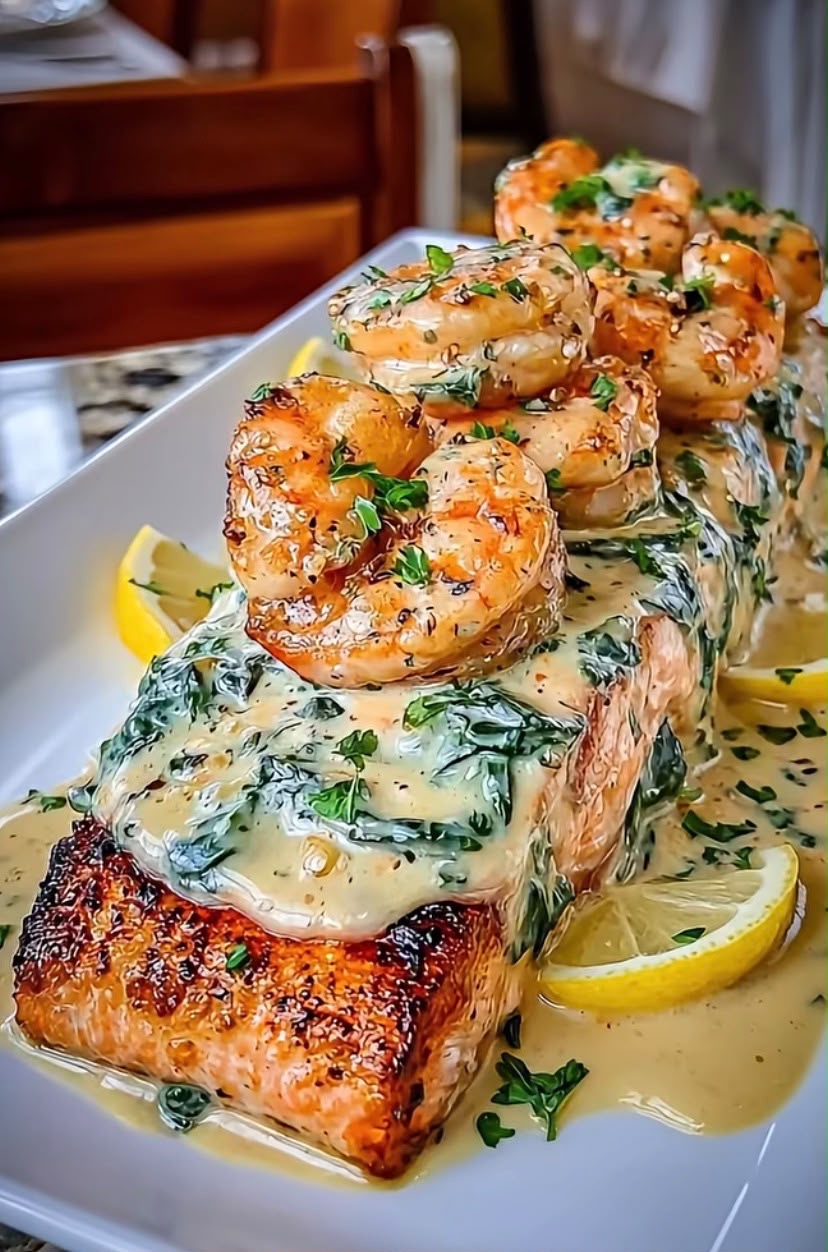
This Creamy Garlic Spinach Salmon and Shrimp recipe is a restaurant-quality seafood dinner you can easily prepare at home. Tender, golden-seared salmon fillets and juicy garlic shrimp are served in a rich, velvety cream sauce made with fresh spinach, Parmesan cheese, butter, and a touch of lemon juice.
Every bite combines the natural richness of salmon, the delicate sweetness of shrimp, and the savory flavor of garlic and Parmesan. The fresh spinach adds color and texture, while the lemon juice brightens the creamy sauce and balances the seafood beautifully.
Perfect for a special occasion, a romantic dinner, or an elegant weeknight meal, this easy one-pan seafood recipe delivers impressive flavor without complicated cooking techniques.
Recipe Overview
| Details | Information |
| Preparation Time | 15 minutes |
| Cooking Time | 20 minutes |
| Total Time | 35 minutes |
| Servings | 4 |
| Cuisine | American-inspired |
| Course | Main Course |
| Cooking Method | Stovetop |
| Difficulty | Easy to Moderate |
Why You’ll Love This Recipe
Restaurant-Quality Flavor: Golden salmon, tender shrimp, and creamy garlic Parmesan sauce create an elegant meal with simple ingredients.
Rich and Creamy Sauce: Heavy cream and Parmesan combine to make a smooth, savory sauce that coats the seafood beautifully.
Perfect Seafood Combination: Salmon provides a rich, buttery flavor, while shrimp adds a delicate sweetness and pleasant texture.
Quick Weeknight Dinner: With just 35 minutes from preparation to serving, this recipe is ideal when you want something special without spending hours in the kitchen.
One-Pan Convenience: Most of the cooking happens in the same skillet, allowing the sauce to absorb the delicious flavors left behind by the salmon and shrimp.
Easy to Customize: You can adjust the garlic, spinach, cheese, and lemon to suit your taste.
Ingredients
This recipe serves 4 people.
For the Salmon and Shrimp
| Ingredient | Quantity |
| Salmon fillets | 4 fillets (5–6 oz / 150–180 g each) |
| Large shrimp, peeled and deveined | 250 g (about 9 oz) |
| Olive oil | 2 tablespoons |
| Paprika, sweet or smoked | 1 teaspoon |
| Garlic powder | 1 teaspoon |
| Salt | To taste |
| Freshly ground black pepper | To taste |
For the Creamy Garlic Spinach Sauce
| Ingredient | Quantity |
| Unsalted butter | 2 tablespoons |
| Garlic cloves, finely minced | 4 |
| Fresh spinach | 150 g (about 5 oz) |
| Heavy cream | 200 ml (about 3/4 cup plus 1 tablespoon) |
| Parmesan cheese, freshly grated | 50 g (about 1/2 cup, loosely packed) |
| Fresh lemon juice | 1 tablespoon |
For Serving
| Ingredient | Quantity |
| Fresh parsley, chopped | 2 tablespoons |
| Fresh lemon wedges | As needed |
Step-by-Step Instructions
Step 1: Prepare and Season the Seafood
Pat the salmon fillets and shrimp dry with paper towels. Removing excess moisture helps the seafood develop a beautiful golden sear.
Season the salmon and shrimp with paprika, garlic powder, salt, and freshly ground black pepper.
Make sure the seasoning is distributed evenly over all sides of the seafood.
Step 2: Sear the Salmon
Heat 1 tablespoon of olive oil in a large skillet over medium-high heat.
Place the salmon fillets in the hot skillet, presentation-side down if the fillets have skin removed. Cook for approximately 4–5 minutes on the first side, until golden brown.
Carefully turn the fillets and cook for another 3–5 minutes, depending on their thickness.
The salmon should be nearly cooked through, moist, and easy to flake with a fork. For food safety, cook fish to an internal temperature of 145°F (63°C).
Transfer the salmon to a clean plate and cover loosely to keep it warm.
Step 3: Cook the Shrimp
Add the remaining tablespoon of olive oil to the same skillet if needed.
Arrange the seasoned shrimp in a single layer and cook for approximately 2–3 minutes total, turning once, until they turn pink and opaque.
Avoid overcooking, as shrimp can quickly become rubbery.
Transfer the cooked shrimp to a clean plate and set aside.
Step 4: Sauté the Garlic
Reduce the heat to medium and add the butter to the skillet.
Once melted, add the minced garlic and sauté for approximately 30–60 seconds, stirring constantly until fragrant.
Avoid browning the garlic too much, as burnt garlic can make the sauce taste bitter.
Step 5: Add the Spinach
Add the fresh spinach to the skillet.
Stir for approximately 2 minutes, allowing the leaves to wilt. If the spinach is especially bulky, add it in batches.
The spinach will release some moisture as it cooks, creating a flavorful base for the cream sauce.
Step 6: Make the Creamy Parmesan Sauce
Pour the heavy cream into the skillet and stir gently to combine it with the garlic butter and spinach.
Add the freshly grated Parmesan cheese and lemon juice.
Allow the sauce to simmer gently over low to medium-low heat for 2–3 minutes, stirring frequently until the cheese melts and the sauce thickens slightly.
Avoid bringing the cream to a vigorous boil, which can affect the sauce’s texture.
If the sauce becomes too thick, add 1–2 tablespoons of water or seafood stock until it reaches your preferred consistency.
Step 7: Return the Seafood to the Skillet
Return the salmon fillets to the skillet and spoon the creamy spinach sauce over them.
Arrange the cooked shrimp around and on top of the salmon.
Let everything warm together gently for 1–2 minutes, taking care not to overcook the seafood.
If the salmon needs additional cooking to reach 145°F (63°C), continue cooking gently and check its temperature again.
Step 8: Garnish and Serve
Remove the skillet from the heat.
Sprinkle the dish with freshly chopped parsley and serve with fresh lemon wedges.
Spoon extra garlic Parmesan spinach sauce over each salmon fillet and serve immediately while the sauce is warm and creamy.
Best Tips for Perfect Creamy Salmon and Shrimp
Pat the Seafood Dry: Dry salmon and shrimp develop better browning and are less likely to steam in the skillet.
Use Freshly Grated Parmesan: Freshly grated cheese generally melts more smoothly than pre-shredded cheese, which may contain anti-caking agents.
Avoid Overcooking the Salmon: Salmon can become dry when cooked for too long. Use a thermometer and account for the thickness of each fillet.
Cook the Shrimp Briefly: Shrimp cook quickly. Remove them from the skillet as soon as they turn pink and opaque.
Keep the Sauce at a Gentle Simmer: Heavy cream and Parmesan create a smoother sauce when heated gradually rather than boiled aggressively.
Adjust the Lemon Gradually: Add the recommended tablespoon, then taste. A little extra lemon can brighten the sauce, but too much may overpower the seafood.
Serve Immediately: Cream-based sauces are at their best when freshly prepared. If the sauce thickens while standing, loosen it with a small splash of warm water or stock.
Best Ingredient Options
Salmon: Fresh or fully thawed frozen salmon fillets both work well. Choose evenly sized portions so they cook at a similar rate.
Shrimp: Large peeled and deveined shrimp are convenient and easy to eat. Fresh or frozen shrimp can be used, provided frozen shrimp are thawed and patted dry.
Heavy Cream: Heavy cream produces a rich, stable sauce. Half-and-half can be used for a lighter texture, although the sauce may be thinner.
Parmesan Cheese: Parmesan adds a salty, nutty flavor. Pecorino Romano can be substituted, but use less salt because it is typically saltier.
Spinach: Fresh spinach wilts quickly and has a delicate texture. Frozen spinach also works if thawed and squeezed dry before adding.
Olive Oil and Butter: Olive oil is ideal for searing seafood, while butter creates the rich foundation of the sauce.
Recipe Variations
Lemon Garlic Salmon and Shrimp: Add a little extra lemon zest to the finished sauce for a fresh citrus flavor.
Spicy Cajun Seafood: Replace the paprika with Cajun seasoning and add a pinch of red pepper flakes for a spicier dinner.
Sun-Dried Tomato Cream Sauce: Stir in 2 tablespoons of chopped sun-dried tomatoes with the spinach for a richer, slightly tangy flavor.
Mushroom and Spinach Seafood: Sauté sliced mushrooms after cooking the shrimp, then continue with the garlic and cream sauce.
Low-Carb Salmon and Shrimp: Serve the seafood with cauliflower rice, zucchini noodles, or roasted vegetables instead of pasta or traditional rice.
Herb Garlic Cream Sauce: Add fresh dill or a little thyme along with the parsley for an additional layer of flavor.
What to Serve With Creamy Garlic Spinach Salmon and Shrimp
Garlic Mashed Potatoes: Creamy mashed potatoes complement the Parmesan sauce and create a comforting dinner.
Steamed Rice: Fluffy white or brown rice absorbs the rich garlic cream sauce beautifully.
Pasta: Serve the salmon and shrimp over linguine, fettuccine, or spaghetti for a satisfying seafood pasta dinner.
Roasted Asparagus: Tender asparagus provides a fresh, slightly earthy contrast to the creamy sauce.
Steamed Broccoli: Broccoli adds color, texture, and a nutritious vegetable side.
Crusty Bread: Warm bread is perfect for soaking up every last spoonful of the garlic Parmesan sauce.
Fresh Green Salad: A crisp salad with cucumber, lettuce, and lemon vinaigrette balances the richness of the seafood.
Make-Ahead Instructions
For the best flavor and texture, prepare the seafood and sauce shortly before serving.
You can save time by peeling and deveining the shrimp, washing the spinach, mincing the garlic, chopping the parsley, and measuring the remaining ingredients in advance.
Store the prepared ingredients separately in the refrigerator, keeping raw seafood covered and refrigerated at 40°F (4°C) or below.
The sauce can be prepared shortly ahead of serving, but salmon and shrimp are best cooked fresh. If making the sauce in advance, reheat it gently and add a small splash of cream or water if needed.
How to Store Leftovers
Allow the seafood to cool promptly and transfer it to an airtight container.
Refrigerate within 2 hours of cooking and store at 40°F (4°C) or below. Consume leftovers within 3–4 days, although the seafood is generally best enjoyed sooner for quality.
Store the salmon, shrimp, and sauce together to help keep the fish moist.
How to Reheat Creamy Salmon and Shrimp
Stovetop Method: Place the seafood and sauce in a skillet over low heat. Add 1–2 tablespoons of water, milk, or cream and cover loosely. Warm gently, turning the seafood carefully, until heated throughout.
Microwave Method: Place an individual portion in a microwave-safe dish and cover loosely. Heat at reduced power in short intervals, stirring the sauce gently between intervals.
Reheat leftovers to an internal temperature of 165°F (74°C). Avoid prolonged heating, which can dry out the salmon and make the shrimp rubbery.
Can You Freeze Creamy Salmon and Shrimp?
Freezing is possible, but this dish is best enjoyed fresh. Cream sauces may separate after thawing, and cooked shrimp can become tougher.
If you choose to freeze leftovers, transfer them to a freezer-safe container once cooled promptly and freeze for up to 2 months for best quality.
Thaw overnight in the refrigerator and reheat gently until the seafood reaches 165°F (74°C). Stir the sauce slowly as it warms; a small splash of cream can help improve its consistency.
For the best results, prepare the seafood fresh and avoid repeated freezing and thawing.
Common Mistakes to Avoid
Overcrowding the Skillet: Cooking too much seafood at once lowers the pan temperature and prevents proper browning. Work in batches if necessary.
Overcooking the Shrimp: Shrimp become tough and rubbery when left on the heat for too long. Remove them as soon as they are pink and opaque.
Boiling the Cream Sauce: High heat can cause the sauce to separate or become grainy. Maintain a gentle simmer while incorporating the Parmesan.
Using Wet Spinach: Excess water can dilute the sauce. If using frozen spinach, squeeze it thoroughly before cooking.
Adding Too Much Salt: Parmesan and seafood seasoning both contribute salt. Taste the sauce before adding any extra.
Leaving the Seafood in the Pan Too Long: Return the salmon and shrimp to the sauce only long enough to finish cooking or warm through.
Skipping the Final Taste Test: A little black pepper, lemon juice, or parsley can make a noticeable difference to the finished dish.
Nutrition Estimate
The following nutritional values are approximate and depend on the size of the salmon portions, the type of cream, and the amount of sauce consumed.
| Nutrient | Estimated Amount per Serving |
| Calories | 500–650 kcal |
| Protein | 40–50 g |
| Carbohydrates | 5–9 g |
| Fat | 32–45 g |
| Saturated Fat | 14–22 g |
| Fiber | 1–2 g |
| Sugar | 2–4 g |
| Sodium | 450–800 mg |
Estimates assume four servings and do not include pasta, rice, bread, or other side dishes.
Frequently Asked Questions
Can I use frozen salmon for this recipe?
Yes. Thaw frozen salmon completely in the refrigerator before cooking, then pat it dry with paper towels to remove excess moisture.
Can I use frozen shrimp?
Yes. Thaw the shrimp thoroughly, drain them, and pat them dry before seasoning. This helps them brown rather than release excess water into the skillet.
Can I make the sauce without heavy cream?
Yes. Half-and-half can be used, although the sauce will be thinner. You can simmer it gently for a little longer or add a small amount of extra Parmesan to help thicken it.
Why did my cream sauce separate?
The sauce may separate if it becomes too hot or boils vigorously. Lower the heat and stir gently. Adding the cream gradually and using freshly grated Parmesan can help create a smoother consistency.
Can I use another fish instead of salmon?
Yes. Trout or another firm fish fillet can work well. Cooking times will depend on the thickness and type of fish, so check the internal temperature and avoid overcooking.
How do I know when the shrimp are cooked?
Cooked shrimp generally turn pink and opaque, with the flesh becoming firm. For a precise safety check, shrimp should reach 145°F (63°C).
Can I make this recipe dairy-free?
Yes, with adjustments. Use olive oil instead of butter, an unsweetened dairy-free cooking cream, and a suitable dairy-free Parmesan-style alternative. The sauce’s flavor and texture will differ from the original.
Is this recipe suitable for meal prep?
Yes, but seafood is best enjoyed freshly cooked. Store portions promptly in the refrigerator and reheat gently, making sure leftovers reach 165°F (74°C).
Can I serve this recipe with pasta?
Absolutely. Linguine, fettuccine, or penne pairs wonderfully with the creamy spinach sauce. Cook the pasta separately and spoon the seafood and sauce over it just before serving.
Final Thoughts
This Creamy Garlic Spinach Salmon and Shrimp recipe combines golden-seared salmon, juicy shrimp, tender spinach, and a rich Parmesan cream sauce into one impressive meal.
It’s a wonderful choice when you want a restaurant-style seafood dinner without complicated techniques or a long cooking time. The garlic adds savory depth, the lemon brightens the sauce, and the fresh parsley gives the dish a beautiful finishing touch.
Serve it with rice, pasta, roasted vegetables, or crusty bread to make a complete and satisfying dinner.
Save this recipe for your next seafood night, and share it with someone who loves creamy garlic recipes! 🍣🍤🧄