
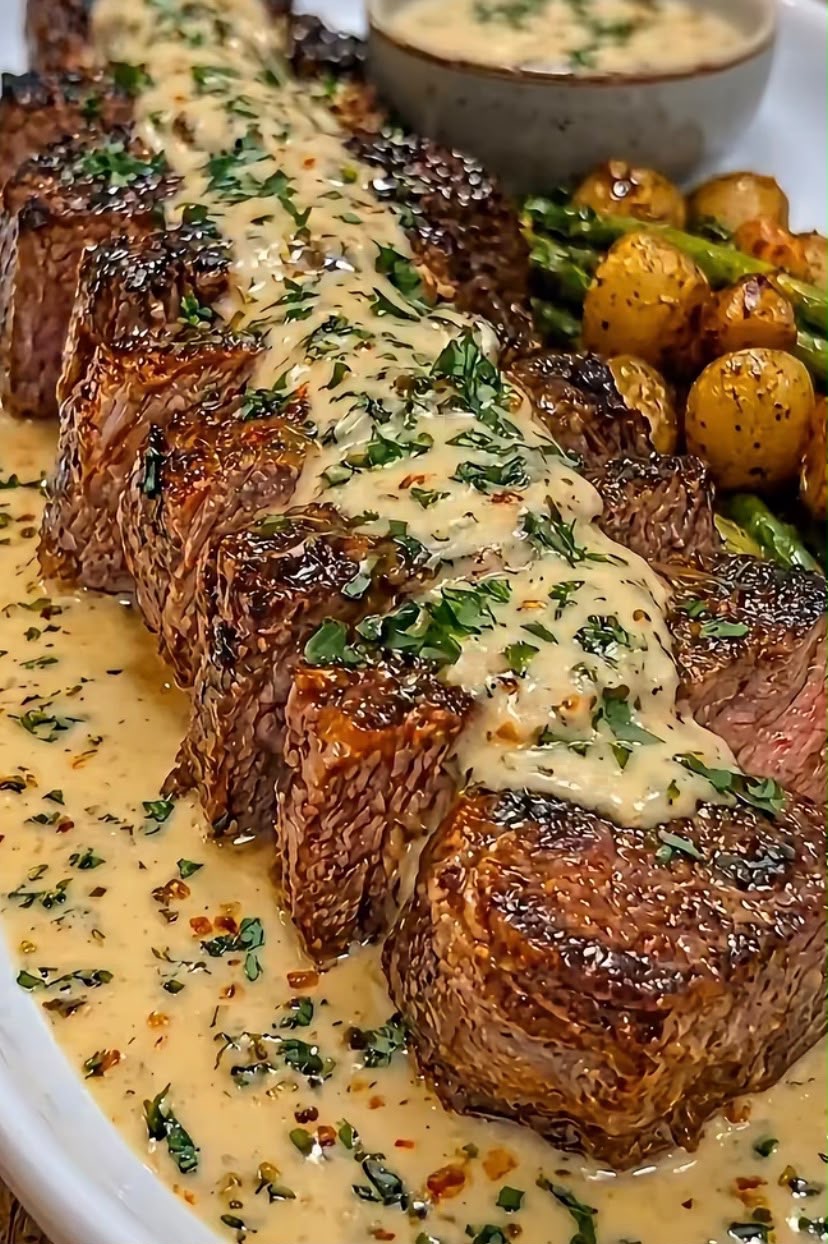
This Sliced Beef Steak with Creamy Garlic Herb Sauce is a delicious, restaurant-style dinner you can easily prepare at home. Tender, juicy beef is seared until beautifully browned, sliced into thick pieces, and served with a rich Parmesan garlic cream sauce. Golden roasted baby potatoes and tender asparagus complete this satisfying meal.
The creamy sauce combines fresh garlic, beef broth, heavy cream, Parmesan cheese, and a touch of red pepper flakes for a savory flavor with a gentle kick. Every bite brings together juicy beef, velvety sauce, and perfectly cooked vegetables.
Whether you’re planning a special dinner, preparing a weekend family meal, or simply craving a hearty steakhouse-style dish, this easy beef recipe is an excellent choice.
Recipe Overview
| Details | Information |
| Preparation Time | 15 minutes |
| Cooking Time | 20–30 minutes |
| Total Time | 35–45 minutes |
| Servings | 3–4 |
| Cuisine | American-inspired |
| Course | Main Course |
| Cooking Method | Pan-Searing and Roasting |
| Difficulty | Easy to Moderate |
Cooking time may vary depending on the thickness of the beef and the size of the potatoes.
Why You’ll Love This Recipe
Steakhouse-Quality Flavor: Searing the beef creates a delicious browned crust while helping preserve its natural flavor and tenderness.
Rich Garlic Parmesan Sauce: Heavy cream, fresh garlic, beef broth, and Parmesan create a smooth, savory sauce that complements the steak beautifully.
A Complete One-Meal Dinner: Beef, roasted potatoes, and asparagus provide protein, carbohydrates, and vegetables in one satisfying plate.
Easy to Customize: You can use filet, sirloin, or ribeye depending on your preferred texture and budget.
Perfect for Special Occasions: The sliced beef and creamy sauce create an elegant presentation suitable for date nights, family gatherings, or celebratory dinners.
Simple Ingredients: Most ingredients are easy to find at a regular grocery store, making this recipe practical as well as impressive.
Ingredients
This recipe serves 3–4 people.
For the Beef and Vegetables
| Ingredient | Quantity |
| Beef tenderloin, sirloin, or ribeye steak | 600–800 g (1.3–1.75 lb) |
| Baby potatoes | 300 g (about 10.5 oz) |
| Fresh green asparagus | 1 bunch |
| Olive oil | 2 tablespoons |
| Butter | 2 tablespoons |
| Salt | To taste |
| Freshly ground black pepper | To taste |
For the Creamy Garlic Sauce
| Ingredient | Quantity |
| Butter | 2 tablespoons |
| Garlic cloves, finely minced | 4 |
| Beef broth | 1/2 cup (120 ml) |
| Heavy cream | 1 cup (240 ml) |
| Parmesan cheese, freshly grated | 50 g (about 1/2 cup, loosely packed) |
| Red pepper flakes | 1/2 teaspoon |
| Salt | To taste |
| Freshly ground black pepper | To taste |
For Garnishing
| Ingredient | Quantity |
| Fresh parsley, chopped | 2 tablespoons |
Step-by-Step Instructions
Step 1: Prepare the Potatoes and Asparagus
Preheat your oven to 400°F (200°C).
Wash the baby potatoes and cut any larger ones in half so they cook evenly. Trim the woody ends from the asparagus.
Place the potatoes on a baking sheet and toss with approximately 1 tablespoon of olive oil, salt, and black pepper.
Roast for about 20–25 minutes, turning halfway through, until golden and fork-tender.
Add the asparagus during the final 10–12 minutes of cooking, tossing it with the remaining olive oil and a little seasoning.
If you prefer to cook the vegetables in a skillet, sauté the potatoes until tender and golden, then cook the asparagus separately until bright green and lightly browned.
Keep the vegetables warm while preparing the beef and sauce.
Step 2: Season the Beef
Pat the beef dry with paper towels.
Season all sides generously with salt and freshly ground black pepper. Allow the meat to sit at room temperature for approximately 15–20 minutes while you finish preparing the vegetables, provided it remains within safe handling limits.
Drying the surface helps the beef develop a flavorful brown crust during searing.
Step 3: Sear the Beef
Heat a large, heavy skillet over medium-high to high heat.
Add 1 tablespoon of olive oil and 2 tablespoons of butter. Once the butter has melted and the pan is hot, carefully place the beef in the skillet.
Sear for approximately 3–4 minutes per side for a medium-rare result with a typical steak thickness, adjusting the time according to the thickness and cut.
For thicker steaks, sear the edges briefly as well.
Use a meat thermometer rather than time alone to check doneness. For whole beef steaks, the USDA recommends a minimum internal temperature of 145°F (63°C), followed by a 3-minute rest.
Transfer the beef to a clean cutting board and let it rest for 5–10 minutes before slicing.
Step 4: Prepare the Garlic
Reduce the skillet heat to medium-low.
If the pan contains excessive rendered fat, carefully remove some, leaving enough to flavor the sauce.
Add the remaining 2 tablespoons of butter and allow it to melt.
Stir in the minced garlic and cook for approximately 30–60 seconds, stirring constantly until fragrant.
Avoid burning the garlic, as it can make the finished sauce bitter.
Step 5: Deglaze with Beef Broth
Pour the beef broth into the skillet.
Use a wooden spoon to scrape up the browned bits from the bottom of the pan. These flavorful bits add depth to the sauce.
Let the broth simmer for approximately 1–2 minutes to reduce slightly.
Step 6: Make the Creamy Parmesan Sauce
Pour the heavy cream into the skillet and stir gently.
Add the grated Parmesan, red pepper flakes, and a little black pepper.
Allow the sauce to simmer gently for 3–5 minutes, stirring frequently until the cheese melts and the sauce becomes smooth and slightly thickened.
Taste before adding extra salt because Parmesan and beef broth may already contain plenty.
If the sauce becomes too thick, add a splash of beef broth. If it is too thin, simmer gently for another minute or two.
Step 7: Slice the Beef
Once the beef has rested, transfer it to a cutting board and slice it into thick strips.
Cut against the grain of the meat to help make each piece more tender.
Keep the slices relatively thick so they retain their juices and look attractive when served.
Step 8: Assemble the Dish
Spread a little of the creamy garlic sauce across the bottom of a warm serving platter.
Arrange the sliced beef on top, then place the roasted potatoes and asparagus alongside it.
Pour the remaining sauce generously over the beef.
Finish with freshly chopped parsley and serve immediately while the steak and sauce are warm.
Best Tips for Perfect Garlic Cream Steak
Choose the Right Cut: Beef tenderloin is exceptionally tender, sirloin offers a good balance of flavor and value, and ribeye provides a richer taste thanks to its marbling.
Pat the Beef Dry: Excess moisture prevents proper browning and can cause the meat to steam rather than sear.
Use a Hot Skillet: A properly heated pan creates the browned crust that gives steak its characteristic steakhouse flavor.
Avoid Moving the Meat Too Soon: Let each side sear undisturbed before turning it. This helps develop a more attractive crust.
Rest Before Slicing: Resting the steak for 5–10 minutes helps retain its juices. Slice against the grain for a more tender bite.
Keep the Sauce at a Gentle Simmer: High heat can cause cream sauces to separate. Gentle cooking helps produce a smooth, velvety consistency.
Coordinate the Cooking Times: Start the potatoes first, then cook the asparagus and steak so everything is ready around the same time.
Best Ingredient Options
Beef Steak: Choose tenderloin for tenderness, sirloin for a versatile everyday option, or ribeye for a rich, beefy flavor.
Baby Potatoes: Yukon Gold or red potatoes are excellent alternatives. Cut them into evenly sized pieces for consistent roasting.
Asparagus: Choose firm, bright-green stalks with compact tips. Green beans or broccoli can be substituted if asparagus is unavailable.
Heavy Cream: Heavy cream gives the sauce a rich consistency. Half-and-half can be used for a lighter sauce, although it may need gentler cooking and may remain thinner.
Parmesan Cheese: Freshly grated Parmesan melts smoothly and adds a nutty, savory flavor. Pecorino Romano is another option, but it is often saltier.
Beef Broth: Regular or low-sodium beef broth both work well. Low-sodium broth provides greater control over the final seasoning.
Recipe Variations
Mushroom Garlic Cream Steak: Add 200 g of sliced mushrooms to the skillet after cooking the beef. Sauté until golden, then prepare the sauce as directed.
Peppercorn Cream Sauce: Replace the red pepper flakes with 1 teaspoon of coarsely crushed black peppercorns for a classic steakhouse-inspired variation.
Rosemary Garlic Steak: Add a fresh rosemary sprig to the skillet while searing the beef, then remove it before preparing the sauce.
Spicy Garlic Steak: Increase the red pepper flakes to 3/4 teaspoon if you enjoy a stronger kick.
Lemon Herb Asparagus: Finish the roasted asparagus with a small squeeze of fresh lemon juice and chopped parsley.
Low-Carb Steak Dinner: Replace the potatoes with roasted cauliflower, sautéed zucchini, or extra asparagus for a lower-carbohydrate meal.
What to Serve With Creamy Garlic Steak
Roasted Baby Potatoes: Their crispy edges and tender centers pair perfectly with the creamy Parmesan sauce.
Roasted Asparagus: Its fresh, slightly earthy flavor balances the richness of the steak and sauce.
Garlic Bread: Warm bread is ideal for soaking up the extra sauce.
Fresh Green Salad: Mixed greens, cucumber, and a light vinaigrette add freshness to the plate.
Steamed Broccoli: Broccoli provides a simple vegetable side that complements the garlic and Parmesan.
Creamy Mashed Potatoes: If you prefer a softer side dish, mashed potatoes are excellent with the steak sauce.
Make-Ahead Instructions
You can wash and cut the potatoes, trim the asparagus, mince the garlic, grate the Parmesan, and measure the sauce ingredients several hours in advance.
Store the prepared ingredients separately in the refrigerator.
For the best texture, cook the steak just before serving. The sauce can be prepared shortly ahead of time and reheated gently with a splash of broth or cream.
Roasted potatoes and asparagus can also be prepared in advance, although they will be crispest when freshly cooked.
How to Store Leftovers
Allow the beef and vegetables to cool promptly and transfer them to airtight containers.
Refrigerate within 2 hours of cooking and store at 40°F (4°C) or below.
Cooked beef and vegetables are generally best consumed within 3–4 days.
Store the creamy sauce separately if possible to make reheating easier and help preserve its texture.
How to Reheat Garlic Cream Steak
Stovetop Method: Place the sliced beef and sauce in a skillet over low heat. Add a small splash of beef broth or cream and warm gently until heated throughout. Avoid prolonged cooking, which can make the beef tough.
Oven Method: Place the beef and sauce in an oven-safe dish, cover with foil, and heat at 300°F (150°C) until thoroughly warmed. Reheat the potatoes and asparagus separately to help preserve their texture.
Microwave Method: Place a portion in a microwave-safe dish, add a spoonful of sauce, and cover loosely. Heat in short intervals at medium power, checking frequently.
Reheat leftovers to 165°F (74°C).
Can You Freeze Creamy Garlic Steak?
You can freeze the cooked beef, but the cream sauce may separate or change texture after thawing. Roasted potatoes may also become softer.
For better results, freeze the cooked beef and sauce separately in airtight freezer-safe containers.
Freeze for up to 2–3 months for best quality.
Thaw overnight in the refrigerator and reheat gently. If the sauce separates, whisk it slowly over low heat with a small splash of cream or broth.
For the best overall texture, prepare the sauce and vegetables fresh whenever possible.
Common Mistakes to Avoid
Using a Cold Pan: A skillet that is not sufficiently hot may prevent the beef from developing a good crust.
Overcooking the Steak: Beef can become dry and tough if cooked longer than necessary. Check its internal temperature and allow it to rest before slicing.
Cutting With the Grain: Slicing along the muscle fibers can make the steak seem tougher. Cut across the grain for more tender pieces.
Burning the Garlic: Garlic cooks quickly. Keep the heat moderate and stir continuously to prevent bitterness.
Boiling the Cream Sauce: Vigorous boiling can cause the sauce to separate. Maintain a gentle simmer and stir frequently.
Adding Too Much Salt: Parmesan and beef broth can be salty, so taste the sauce before adjusting the seasoning.
Crowding the Vegetables: Overcrowding the baking sheet traps steam and prevents proper browning. Use a large tray or two smaller trays if necessary.
Nutrition Estimate
The following values are approximate and depend on the beef cut, portion size, amount of sauce consumed, and preparation method.
| Nutrient | Estimated Amount per Serving |
| Calories | 650–850 kcal |
| Protein | 40–55 g |
| Carbohydrates | 25–35 g |
| Fat | 40–55 g |
| Saturated Fat | 18–25 g |
| Fiber | 4–6 g |
| Sugar | 3–6 g |
| Sodium | 500–900 mg |
Estimates assume four servings and include the beef, vegetables, and a portion of the cream sauce.
Frequently Asked Questions
What is the best cut of beef for this recipe?
Beef tenderloin is very tender, sirloin is a versatile and often more affordable option, and ribeye provides a rich flavor because of its marbling. Choose a cut that suits your budget and preferred texture.
How do I keep the steak tender?
Avoid overcooking, let the beef rest before slicing, and cut against the grain. Choosing a naturally tender cut also helps.
Can I make the garlic cream sauce without Parmesan?
Yes. You can omit the Parmesan for a simpler garlic cream sauce. It will be less thick and have a milder flavor, so simmer gently until it reaches your preferred consistency.
Can I use milk instead of heavy cream?
Milk can be used, but the sauce will be thinner and more likely to separate if overheated. Heavy cream produces the richest and most stable result.
Can I prepare the steak without red pepper flakes?
Absolutely. Simply omit them for a mild garlic Parmesan sauce. You can add a little extra black pepper or fresh thyme instead.
How do I know when the steak is cooked?
A meat thermometer is the most reliable way to check doneness. For food safety, whole beef steaks should reach at least 145°F (63°C), followed by a 3-minute rest. Cooking beyond this temperature will produce a more thoroughly cooked steak.
Can I use frozen asparagus?
Fresh asparagus is preferable for roasting, but thawed frozen asparagus can work. Drain and pat it dry before cooking, and expect a softer texture.
Can I make this recipe dairy-free?
Yes, with substitutions. Use olive oil instead of butter, an unsweetened dairy-free cooking cream, and a dairy-free Parmesan-style alternative. The sauce will taste different from the original.
Is this recipe suitable for meal prep?
Yes. Divide the beef, potatoes, and asparagus into individual containers and store the sauce separately when possible. Refrigerate promptly and consume within 3–4 days.
Final Thoughts
This Sliced Beef Steak with Creamy Garlic Herb Sauce is a satisfying homemade dinner that combines juicy seared beef, golden potatoes, tender asparagus, and a rich Parmesan cream sauce.
It’s an excellent choice for anyone who enjoys steakhouse-style meals but wants the convenience of cooking at home. With simple ingredients and a little attention to cooking temperatures, you can create a beautiful, flavorful dinner for family or guests.
Serve it warm, drizzle the garlic sauce generously over the sliced beef, and finish with fresh parsley for an elegant presentation.
Save this recipe for your next steak dinner and share it with someone who loves creamy garlic sauce! 🥩🧄🥔