
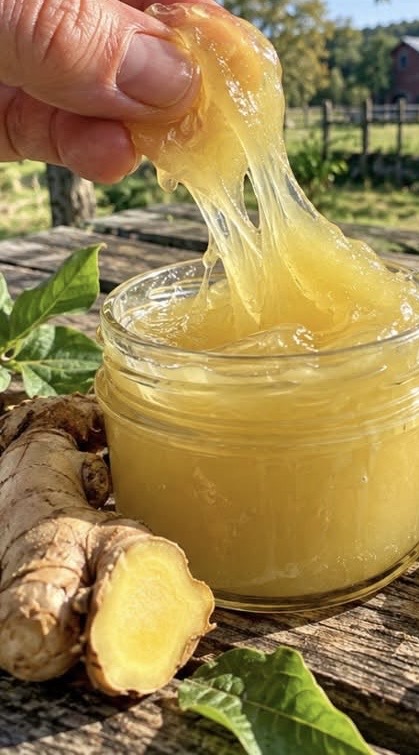
This homemade Ginger and Turmeric Soothing Gel combines aloe vera, fresh ginger juice, turmeric powder, and vegetable oil to create a golden-colored topical mixture. It is inspired by traditional ingredients often used in homemade skin-care preparations.
The gel is easy to prepare and has a smooth texture that can be gently massaged onto the skin. Ginger and turmeric are popular natural ingredients, while aloe vera provides a cooling gel-like base.
However, it is important to understand what this preparation can and cannot do. There is no reliable clinical evidence that this homemade gel can dissolve joint fluid, repair damaged cartilage, reverse arthritis, or restore mobility in 30 minutes. It should be considered a cosmetic or massage preparation, not a medical treatment.
Recipe Overview
| Detail | Information |
| Prep Time | 10 minutes |
| Application Time | 5–10 minutes |
| Total Time | 10 minutes |
| Yield | Approximately ½ cup |
| Course | Homemade Skin Care |
| Main Ingredients | Aloe vera, ginger, turmeric, vegetable oil |
| Texture | Smooth, golden gel |
| Storage | Refrigerated, short-term only |
| Difficulty | Easy |
Why You May Like This Homemade Gel
Simple ingredients: The recipe uses familiar ingredients that are easy to find, including aloe vera, ginger, and turmeric.
Smooth texture: Aloe vera provides a lightweight gel base that spreads easily across the skin.
Easy to prepare: You only need a small bowl, a grater, and a few minutes to combine the ingredients.
Suitable for gentle massage: The mixture can be used as a moisturizing massage preparation if your skin tolerates all the ingredients.
Customizable: You can prepare it without essential oils or adjust the vegetable oil according to your preference.
Ingredients
Main Ingredients
| Ingredient | Quantity | Purpose |
| Pure aloe vera gel | ½ cup | Provides the gel base |
| Fresh ginger juice | 1 tablespoon | Adds a characteristic warming ingredient |
| Turmeric powder | ½ teaspoon | Gives the mixture its golden color |
| Vegetable oil | 1 tablespoon | Adds softness and helps the mixture spread |
Optional Ingredients
| Ingredient | Quantity | Notes |
| Lemon eucalyptus essential oil | 3–5 drops | Optional fragrance; may irritate sensitive skin |
| Wintergreen essential oil | Not recommended | Contains methyl salicylate and can cause serious toxicity if misused |
Important: I recommend leaving out the essential oils, especially wintergreen oil. It can be absorbed through the skin and may be dangerous for children, pregnant people, and individuals taking blood-thinning medication. Lemon eucalyptus essential oil can also cause irritation or allergic reactions.
Step-by-Step Instructions
Step 1: Extract the Fresh Ginger Juice
Wash and peel a small piece of fresh ginger. Grate it finely using a clean grater.
Place the grated ginger in a fine-mesh strainer or clean cheesecloth and press gently to extract approximately 1 tablespoon of juice.
Discard the remaining pulp.
Step 2: Prepare the Aloe Vera Base
Place ½ cup of pure aloe vera gel into a clean mixing bowl.
Add 1 tablespoon of vegetable oil, such as olive oil or coconut oil, and whisk gently until the mixture looks as smooth and evenly combined as possible.
If using coconut oil, melt it gently first and allow it to cool before mixing.
Step 3: Add the Ginger and Turmeric
Add the freshly extracted ginger juice and ½ teaspoon of turmeric powder.
Stir thoroughly until the ingredients are distributed throughout the gel and the mixture develops a golden-yellow color.
Step 4: Mix Until Smooth
Continue mixing until the gel has an even consistency.
Transfer it into a clean, dry, airtight container. Because this homemade mixture contains fresh juice and no tested preservative system, it can become contaminated or spoil quickly.
Step 5: Perform a Skin Patch Test
Before applying the mixture to a larger area, test a small amount on a limited patch of intact skin.
Wait 24 hours and check for redness, itching, burning, swelling, or irritation. Do not use it if any reaction develops.
Step 6: Apply Gently
If the patch test is successful, apply a small amount to clean, intact skin.
Spread it gently without vigorous rubbing. If you choose to massage the area, use light movements for a few minutes.
Avoid applying the mixture to open wounds, irritated skin, or broken skin. Wash your hands after application and keep the mixture away from your eyes and mouth.
Best Tips for Preparing This Gel
Use pure aloe vera gel. Choose a product intended for topical use, preferably fragrance-free and without unnecessary additives.
Use fresh, clean ginger. Wash the root thoroughly before grating and extracting the juice.
Mix thoroughly. Turmeric can settle at the bottom of the container, so gently stir the preparation before each use.
Start with a small amount. Ginger and turmeric can irritate some people’s skin. A patch test is important before wider application.
Avoid strong massage. If a joint is swollen, hot, or painful, vigorous massage may worsen discomfort.
Keep the preparation clean. Always use a clean spoon or spatula instead of dipping your fingers directly into the container.
Best Ingredient Options
Aloe vera gel: Use a commercially prepared topical aloe vera gel. Fresh aloe leaves can contain latex compounds that may irritate the skin.
Fresh ginger: Freshly extracted juice gives the preparation its characteristic ginger aroma. However, ginger can cause contact irritation in some people.
Turmeric powder: Ordinary food-grade turmeric gives the gel its golden appearance. It can temporarily stain skin, clothing, and towels.
Olive oil: A simple vegetable oil that helps soften the skin.
Coconut oil: Another option, although it may feel heavier and may not suit acne-prone skin.
Recipe Variations
Simple Aloe Vera Gel: Leave out the ginger and turmeric for a simpler moisturizing preparation.
Ginger-Free Version: Omit the ginger juice if your skin is sensitive to warming ingredients.
Turmeric-Free Version: Leave out turmeric to avoid yellow staining and reduce the number of ingredients.
Lightweight Version: Use a smaller amount of vegetable oil for a less oily texture.
Fragrance-Free Version: Avoid all essential oils, especially if you have sensitive skin.
How to Store the Homemade Gel
Because this recipe contains fresh ginger juice and no validated preservative, it should not be treated like a commercially manufactured cosmetic.
- Prepare a small quantity at a time.
- Store it in a clean, airtight container in the refrigerator.
- Use a clean utensil every time.
- Discard it if the smell, color, or texture changes.
- Do not rely on a 7–10-day shelf life; the safety of that storage period has not been established.
For a longer-lasting product, use a properly formulated commercial gel with an appropriate preservative system.
Common Mistakes to Avoid
Applying it without a patch test: Natural ingredients can still cause allergic reactions or irritation.
Using too much ginger juice: A high concentration may cause burning, redness, or discomfort.
Adding essential oils carelessly: Essential oils are concentrated substances and are not automatically safe because they are plant-derived.
Massaging a swollen joint aggressively: A hot, painful, or swollen joint needs medical assessment rather than vigorous rubbing.
Storing the gel for too long: Fresh ingredients can introduce microorganisms, particularly in homemade preparations without preservatives.
Expecting medical results: This gel has not been proven to remove joint fluid, repair cartilage, or cure arthritis.
Important Medical Information: What This Gel Cannot Treat
A swollen or painful knee can have several causes, including arthritis, an injury, bursitis, infection, or an accumulation of fluid inside the joint.
It is important to distinguish between temporary skin comfort and treatment of the underlying medical problem.
| Medical Claim | What You Should Know |
| Dissolves fluid in the knee | No evidence supports this claim |
| Repairs cartilage | A topical homemade gel cannot repair cartilage |
| Cures arthritis | It does not cure arthritis |
| Restores mobility in 30 minutes | This claim is unsupported |
| Relieves joint swelling | It has not been proven to reduce joint effusion |
| Moisturizes the skin | Aloe vera and vegetable oil may help soften the skin |
When Should You See a Doctor?
Seek medical attention if you experience persistent joint pain or swelling.
Get urgent medical assessment if:
- Your knee becomes suddenly swollen without an obvious explanation.
- The joint is red, hot, or severely painful.
- You have a fever or feel generally unwell.
- You cannot put weight on your leg or move the joint normally.
- Swelling develops after a significant injury.
A hot, swollen joint accompanied by fever can indicate a joint infection, which requires urgent treatment.
A healthcare professional can determine whether the problem is caused by fluid accumulation, inflammation, an injury, or another condition and recommend appropriate treatment.
Frequently Asked Questions
Can ginger and turmeric gel remove fluid from the knee?
No. There is no reliable evidence that applying ginger and turmeric gel to the skin can dissolve or remove fluid accumulated inside a joint.
Can this gel cure arthritis?
No. It is not an arthritis treatment and cannot reverse joint damage or restore cartilage.
Can I apply it every day?
There is no established safe daily-use schedule for this homemade mixture. Because it contains fresh ginger juice and turmeric, repeated application may cause irritation. Stop immediately if your skin reacts.
Can I use it for knee pain?
It may be used as a gentle cosmetic massage preparation on intact skin if tolerated, but it should not replace medical evaluation or proven pain treatments.
Does turmeric reduce inflammation when applied to the skin?
Turmeric contains curcumin, which has been studied for potential anti-inflammatory effects. However, evidence for this particular homemade topical mixture treating joint inflammation is insufficient.
Can I use fresh aloe vera directly from the plant?
It is preferable to use a commercially prepared topical aloe vera gel. Fresh aloe leaves may contain irritating latex compounds, and homemade preparations are difficult to preserve safely.
Why does the gel turn yellow?
Turmeric contains natural pigments that give the preparation its golden-yellow color. These pigments can temporarily stain skin and fabrics.
Can I add eucalyptus essential oil?
It is better to leave it out, particularly if you have sensitive skin. Essential oils can cause irritation and allergic reactions, and they should never be applied undiluted.
Final Thoughts
This homemade Ginger and Turmeric Soothing Gel is a simple preparation made with aloe vera, ginger juice, turmeric, and vegetable oil. It can be used as a small-batch cosmetic massage gel if your skin tolerates the ingredients.
However, it is essential to separate traditional beauty and massage preparations from medical treatments. No homemade gel has been shown to dissolve knee fluid, repair damaged cartilage, or restore full mobility in 30 minutes.
If you have persistent knee pain, swelling, or reduced mobility, consult a qualified healthcare professional to identify the cause and receive appropriate treatment.
⚠️ This recipe may not be suitable for everyone, so it is advisable to consult a doctor.