
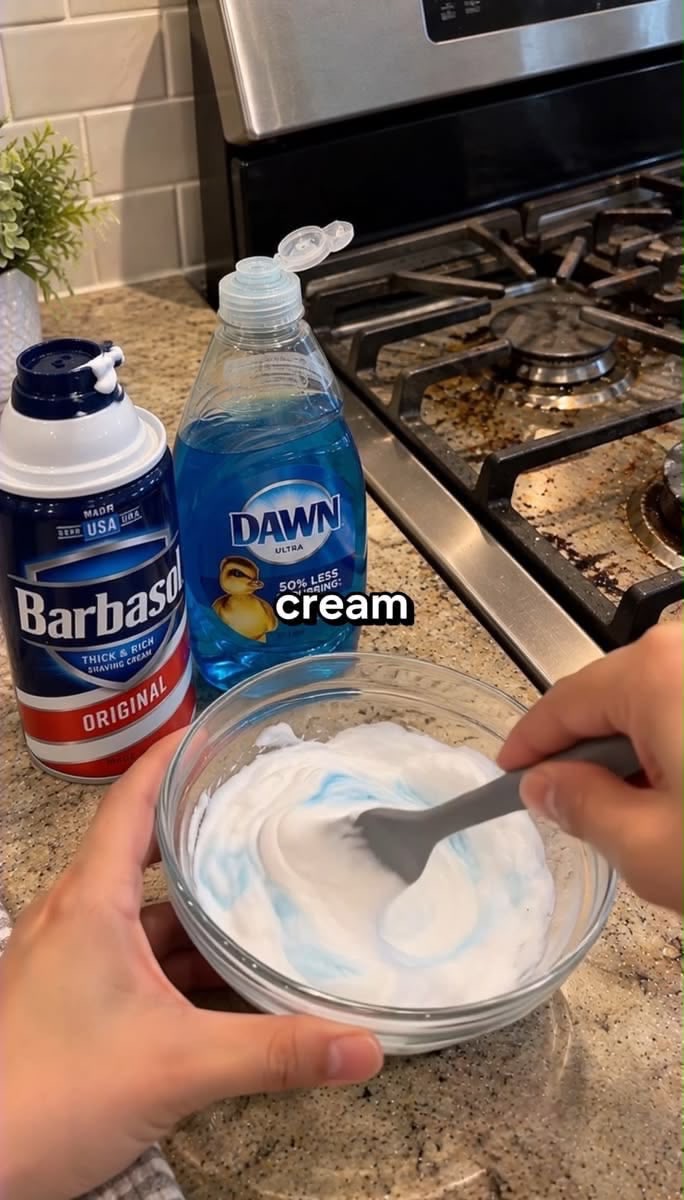
This homemade foaming cleaner combines shaving foam and dish soap to create a simple mixture for spot-cleaning certain fabrics and compatible household surfaces. It takes only a few minutes to prepare and may help loosen some everyday dirt and greasy residue.
Although this DIY method is popular for cleaning sofas and upholstery, it is not suitable for every material or stain. Always check the manufacturer’s care instructions and test the mixture on a small, hidden area before using it on a visible surface.
Recipe Overview
| Detail | Information |
| Preparation Time | 5 minutes |
| Application Time | 5–10 minutes |
| Total Time | Approximately 10–15 minutes, plus drying |
| Difficulty | Easy |
| Yield | Several small spot-cleaning applications |
| Best For | Compatible fabrics and washable household surfaces |
| Cleaning Method | Gentle application, wiping, and air-drying |
Why You’ll Love This Homemade Cleaner
Simple Ingredients: This recipe uses just two common household products, making it easy to prepare without complicated equipment.
Budget-Friendly: You may already have both ingredients at home, helping you avoid buying a separate cleaner for every small cleaning task.
Quick Preparation: The mixture takes only a few minutes to combine and is convenient for occasional spot cleaning.
Foaming Texture: The foam makes it easy to apply a small amount of product to a localized stain without immediately pouring liquid onto the surface.
Versatile Cleaning Option: Depending on the material and the product formulation, it may help remove some light dirt and greasy marks from compatible surfaces.
Ingredients
| Ingredient | Quantity | Purpose |
| Shaving foam | 1–2 cups in the original recipe | Provides the foaming base |
| Dish soap | 1–2 tablespoons | Helps loosen grease and oily residue |
Important: Start with a small batch rather than preparing the full quantity. Shaving foam may contain fragrances, dyes, or other ingredients that leave residue or discolor certain materials. Choose a plain foam when possible, and avoid using this mixture on delicate surfaces unless the manufacturer confirms compatibility.
Equipment Needed
- A clean mixing bowl
- A spoon or spatula
- A soft microfiber cloth
- A soft-bristled brush, if appropriate
- A second clean cloth for wiping away residue
Step-by-Step Instructions
Step 1: Add the Shaving Foam
Place a small amount of shaving foam in a clean bowl. For a small stain, a few tablespoons may be sufficient.
There is no need to prepare 1–2 cups unless you are treating multiple areas and have confirmed that the mixture is suitable for the material.
Step 2: Add the Dish Soap
Add a few drops of dish soap to the foam. Dish soap helps loosen greasy residue, but using too much may leave a sticky film that attracts dirt.
Step 3: Mix Gently
Use a spoon or spatula to combine the ingredients until the texture is reasonably uniform. Avoid vigorous stirring, which can cause the mixture to collapse or produce excessive bubbles.
Step 4: Test a Hidden Area
Apply a small amount to an inconspicuous spot and allow it to dry completely. Check for discoloration, water marks, changes in texture, or residue before cleaning the visible area.
Step 5: Apply to the Stained Surface
Use a microfiber cloth to dab a small amount of the mixture onto the stain. For suitable, durable surfaces, a soft brush may help loosen dirt.
Avoid soaking upholstery, and do not scrub delicate fibers aggressively. Work from the outside of the stain toward the center to reduce the chance of spreading it.
Step 6: Let It Sit Briefly
Allow the foam to remain on the surface for approximately 1–2 minutes initially, provided the manufacturer’s cleaning instructions permit it.
Do not allow the mixture to dry completely on the material. Longer contact does not necessarily produce better cleaning results.
Step 7: Wipe Away the Residue
Use a clean microfiber cloth that is slightly dampened with water, if the material is water-safe. Blot or wipe gently to remove the foam and loosened dirt.
Rinse the cloth frequently and avoid leaving soap behind.
Step 8: Allow the Surface to Dry
Blot away excess moisture with a dry cloth and allow the surface to air-dry completely.
For upholstered furniture, make sure the fabric and underlying cushion are not left excessively damp. Once dry, check whether the stain has improved.
Best Tips for Using This Foaming Cleaner
Use a Small Amount: A thin layer is easier to remove and less likely to leave residue.
Test Before Cleaning: Different fabrics, finishes, and dyes react differently to cleaning products.
Blot Rather Than Scrub: Gentle blotting helps protect the material and prevent the stain from spreading.
Remove Soap Thoroughly: Remaining detergent can attract dirt and leave the surface feeling sticky.
Identify the Stain: Grease, ink, coffee, and dye stains may require different cleaning methods. This recipe will not remove every type of stain.
Follow the Care Label: Manufacturer instructions should always take priority over homemade cleaning advice.
Best Cleaning Options for Different Surfaces
| Surface | Recommended Approach |
| Water-cleanable upholstery | A compatible upholstery cleaner and minimal moisture |
| Microfiber furniture | Follow the fabric care code and test a suitable cleaner |
| Velvet | Use a product approved for the specific fabric |
| Leather | Use a cleaner formulated for the type of leather |
| Glass and mirrors | Use a dedicated glass cleaner |
| Kitchen countertops | Use a surface-compatible household cleaner |
| Delicate or unknown materials | Check the manufacturer’s instructions before cleaning |
Shaving foam is not a universal cleaner. For glass, electronics, food-contact surfaces, or specialty finishes, choose a product specifically designed for that use.
Common Mistakes to Avoid
Using Too Much Dish Soap: Excess soap can leave a film and make the surface attract more dust and dirt.
Skipping the Patch Test: Some shaving foams contain ingredients that can affect dyes or finishes.
Applying the Mixture to Every Surface: A product that works on one material may damage another.
Scrubbing Too Hard: Aggressive friction can damage upholstery fibers or alter the fabric’s appearance.
Leaving the Foam on Too Long: Allowing the product to dry may make residue more difficult to remove.
Mixing It With Other Cleaners: Never combine this preparation with bleach, ammonia-based products, or other household cleaners unless the manufacturers explicitly confirm that the combination is safe.
Storage and Shelf Life
For the best results, prepare only the quantity needed for one cleaning session. This homemade mixture has no validated shelf life, so it is preferable to discard leftovers instead of storing them for extended periods.
Clean the bowl and utensils after use, and keep all cleaning products out of reach of children and pets.
Frequently Asked Questions
Can I use shaving foam and dish soap to clean a sofa?
Possibly, if the upholstery is compatible with the ingredients and its care instructions allow the cleaning method. Test a hidden area first and use very little product.
Does this mixture remove stubborn stains?
It may help loosen some surface dirt and greasy marks, but its effectiveness depends on the stain, fabric, and shaving-foam formulation. Deep or old stains may require a specialized cleaner.
Can I use it on carpets and rugs?
Only if the carpet or rug manufacturer’s instructions permit the ingredients. Test a hidden area, apply sparingly, and remove residue thoroughly.
Can I use this cleaner on leather furniture?
No, not as a general recommendation. Shaving foam and dish soap may damage some leather finishes. Use a cleaner specifically formulated for your leather type.
How long should I leave the foam on the stain?
Begin with approximately 1–2 minutes on a compatible, tested surface. Follow the manufacturer’s instructions and remove the product before it dries.
Can I prepare a large batch and store it?
It is better to make a small amount as needed. The mixture is not formulated or tested for long-term storage.
Does this homemade cleaner disinfect surfaces?
No. It is intended for cleaning, not proven disinfection. If disinfection is necessary, use an appropriate product labeled for the specific surface.
Final Thoughts
This homemade foaming cleaner is a simple DIY option for spot-cleaning certain compatible fabrics and household surfaces. With just shaving foam and a little dish soap, you can prepare a small amount whenever you need it.
For the best results, use the mixture sparingly, test it first, remove all residue, and allow the surface to dry completely. Remember that the safest cleaning method depends on the material, and a dedicated upholstery or surface cleaner is often the better choice for delicate fabrics, valuable furniture, and persistent stains.