
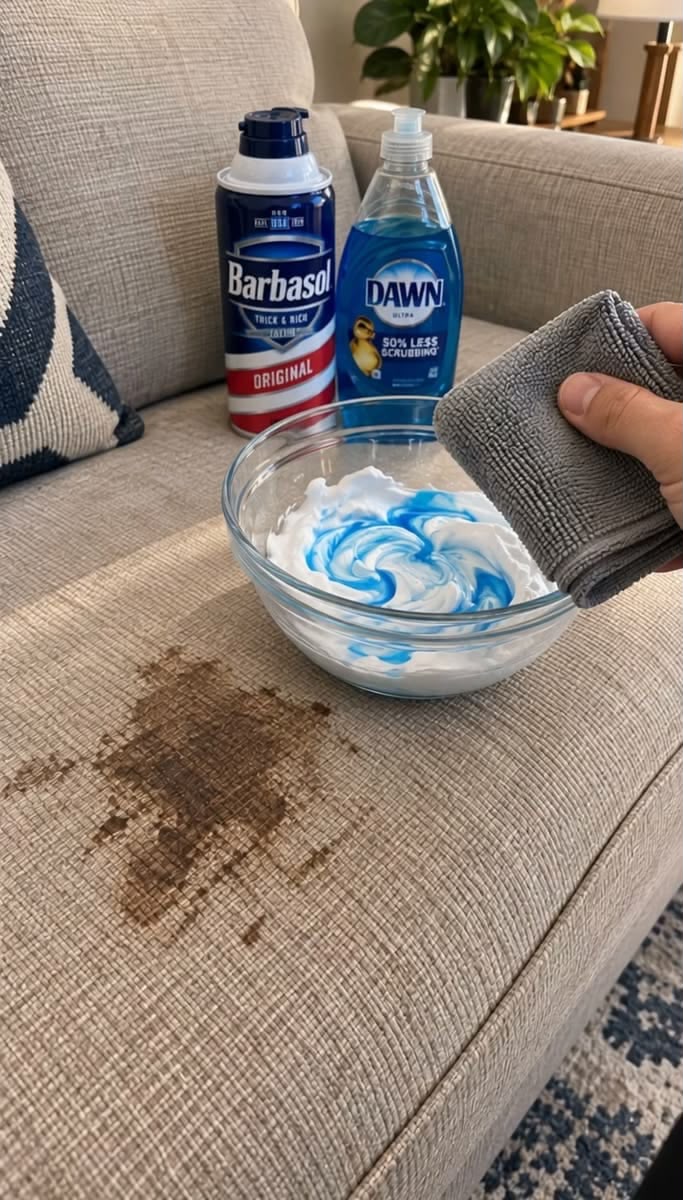
Easy DIY Cleaning Recipe · Fabric Sofa Care · Upholstery Cleaning
Keep your fabric sofa, armchairs, and upholstered furniture looking fresh with this simple homemade stain-cleaning mixture. Made with shaving foam and a small amount of dish soap, this DIY method may help lift some everyday surface stains when used carefully on compatible fabrics.
Before using this mixture, check your furniture’s care label and test it on a hidden area. Shaving foam may contain fragrances, dyes, or other ingredients that can leave residue or discolor delicate upholstery. This method is not suitable for every fabric or every type of stain.
Recipe Overview
| Detail | Information |
| Preparation Time | 5 minutes |
| Application Time | 5–10 minutes |
| Total Time | Approximately 10–15 minutes, plus drying |
| Difficulty | Easy |
| Yield | Enough for several small spots |
| Best For | Spot cleaning compatible fabric upholstery |
| Cleaning Method | Gentle application and blotting |
Why You’ll Love This Cleaning Recipe
Simple Ingredients: This recipe uses two common household products that many people already have at home.
Budget-Friendly: You may be able to clean small spots without purchasing a specialized upholstery cleaner.
Easy to Prepare: The mixture takes only a few minutes to combine.
Useful for Small Stains: With careful application, it may help remove some fresh, water-compatible surface marks.
No Complicated Equipment: A microfiber cloth and a soft brush are generally enough for small cleaning jobs.
Ingredients
| Ingredient | Quantity | Purpose |
| Shaving foam | 1–2 cups, but use only a small amount for a small stain | Provides a foamy base for spot cleaning |
| Dish soap | 1–2 tablespoons | Helps loosen greasy residue |
| Lukewarm water | A small amount, optional | Used to dampen the cleaning cloth or remove residue |
Important: Choose plain shaving foam without strong dyes or added colorants when possible. Avoid shaving gels that do not produce foam, and do not assume that a product designed for skin is automatically safe for upholstery.
For most stains, start with a small amount of cleaner rather than covering the fabric with a thick layer of foam.
Equipment Needed
- A small, clean mixing bowl
- A spoon
- Two clean microfiber cloths
- A soft-bristled brush, if needed
- A vacuum cleaner for loose dirt
Step-by-Step Instructions
Step 1: Check the Fabric Care Label
Look for the manufacturer’s upholstery-cleaning instructions before applying any liquid.
Some fabrics tolerate water-based cleaning, while others require solvent-based products or professional care. If the label says to use a professional cleaning method only, do not apply this homemade mixture.
Step 2: Prepare the Cleaning Mixture
Place a small amount of shaving foam in a clean bowl. Add a few drops of dish soap and gently mix until combined.
The original recipe suggests 1–2 cups of shaving foam and 1–2 tablespoons of dish soap, but this can be excessive for a small stain. Begin with a much smaller quantity to reduce the risk of leaving soap residue.
Step 3: Test on a Hidden Area
Apply a tiny amount of the mixture to an inconspicuous section of the upholstery.
Wait until the area dries completely. Check for discoloration, water marks, texture changes, or a sticky residue before cleaning the visible stain.
Step 4: Remove Loose Dirt
Vacuum the stained area gently to remove dust, crumbs, and other loose debris.
If the stain is wet, blot it first with a clean, dry cloth. Avoid rubbing, as this may push the stain deeper into the fabric.
Step 5: Apply a Small Amount of Cleaner
Using a microfiber cloth, gently dab a little of the mixture onto the stain. Avoid soaking the upholstery or spreading the foam over a large area.
Work from the outside of the stain toward the center to help prevent the mark from spreading.
Step 6: Let It Sit Briefly
Allow the mixture to remain on the fabric for approximately 1–2 minutes initially, provided the fabric care instructions permit it.
Although the original method suggests 5–10 minutes, a shorter contact time is a more cautious starting point for an unfamiliar fabric. Never let the cleaner dry on the upholstery.
Step 7: Blot and Remove Residue
Use a clean cloth lightly dampened with water to blot away the foam and loosened dirt.
Rinse the cloth frequently and repeat gently until no obvious soap residue remains. Avoid saturating the cushion or allowing water to collect inside it.
Step 8: Allow the Fabric to Dry
Blot the area with a dry microfiber cloth and allow it to air-dry in a well-ventilated room.
If using a hair dryer, choose cool air and keep it at a safe distance. Avoid high heat, which may damage some fabrics or finishes.
Once the area is completely dry, check whether the stain has improved. Repeat only if the fabric remains unaffected and the care instructions allow it.
Best Tips for Cleaning Sofas and Upholstery
Act Quickly: Fresh spills are often easier to address than stains that have dried or penetrated the fabric.
Blot Instead of Scrubbing: Gentle blotting helps reduce the risk of spreading the stain or damaging fabric fibers.
Use Less Product: Too much foam or dish soap can leave a sticky film that attracts more dirt.
Clean Gently: Use a soft cloth or brush rather than abrasive pads.
Treat Stains Individually: Grease, ink, coffee, and pet stains may require different cleaning methods. One homemade mixture will not remove every type of stain.
Dry Thoroughly: Excess moisture can contribute to unpleasant odors or mold growth inside cushions.
Best Cleaning Options for Different Fabrics
| Upholstery Type | Recommended Approach |
| Water-cleanable fabric | Use a compatible upholstery cleaner and minimal moisture |
| Delicate fabric | Follow the manufacturer’s care instructions |
| Velvet | Use a product specifically approved for the fabric |
| Leather or faux leather | Use a suitable leather or synthetic-leather cleaner |
| Silk or specialty upholstery | Seek professional cleaning advice |
| Unknown fabric | Identify the material before applying any solution |
Common Mistakes to Avoid
Applying Too Much Foam: Excess product can be difficult to remove and may leave a visible residue.
Skipping the Patch Test: Some ingredients can discolor fabric or affect its finish.
Rubbing Aggressively: Excessive friction can damage fibers and spread stains.
Using Too Much Water: Saturated cushions may take a long time to dry and can develop odors.
Mixing Multiple Cleaning Products: Combining household cleaners can cause unwanted chemical reactions. Use only a compatible product and follow its label.
Assuming All Stains Respond the Same Way: Ink, dye, oil, and protein-based stains may need specialized treatment.
Storage and Shelf Life
It is best to prepare only the amount needed for one cleaning session. Because this mixture contains water-compatible household products and is not formulated or tested as a stored cleaning product, there is no validated shelf life for the homemade blend.
Discard leftover mixture after use, clean the bowl and utensils, and keep all cleaning products away from children and pets.
Frequently Asked Questions
Can shaving foam remove stains from a fabric sofa?
It may help with certain light, surface-level marks on compatible fabrics, but results vary depending on the material and stain. It is not a guaranteed stain remover.
How long should I leave the mixture on the fabric?
Start with 1–2 minutes after testing the fabric. Follow the upholstery manufacturer’s instructions and do not allow the mixture to dry on the surface.
Can I use this cleaner on a microfiber couch?
Not automatically. Microfiber upholstery can have different cleaning requirements. Check the care label and test a suitable cleaner on a hidden area first.
Will this mixture remove old stains?
Older stains may be more difficult to remove because they can penetrate the fibers or become chemically bonded to the material. A specialized upholstery cleaner may be more appropriate.
Can I use this recipe on leather sofas?
No. Do not use this homemade shaving-foam mixture on leather unless the furniture manufacturer specifically confirms that the ingredients are suitable. Use a cleaner formulated for the leather type.
Can I use it on carpets and rugs?
Only if the carpet or rug manufacturer’s instructions permit the ingredients. Test a hidden area first, use very little product, and remove residue thoroughly.
Does this homemade cleaner disinfect upholstery?
No. This recipe is intended for spot cleaning, not disinfection. Use a product specifically labeled for upholstery disinfection if that is necessary and appropriate for the fabric.
Final Thoughts
This homemade shaving-foam and dish-soap mixture offers a simple approach to spot cleaning certain fabric sofas and upholstered furniture. The most important steps are to check the care label, test the ingredients in a hidden area, apply a small amount, and remove all residue carefully.
For delicate fabrics, valuable furniture, persistent stains, or upholstery with special cleaning requirements, a manufacturer-approved upholstery cleaner or professional cleaning service is the safer choice.