
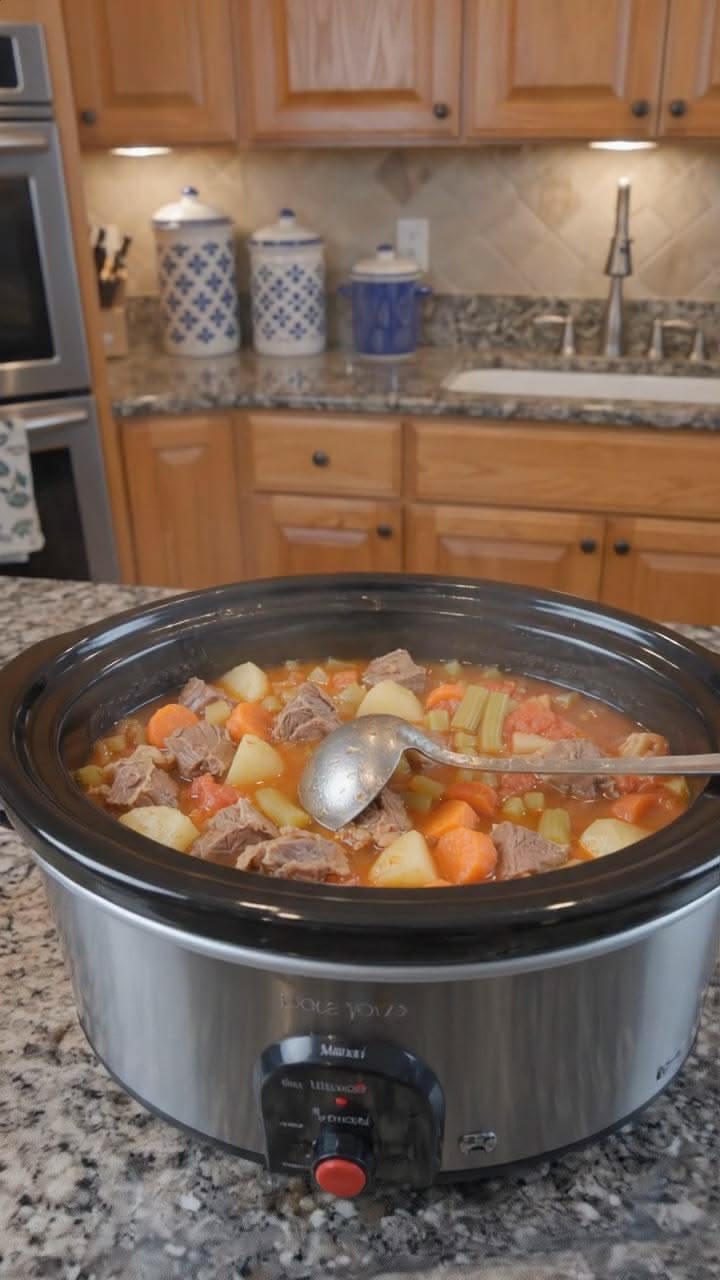
This Slow Cooker Beef Stew is the ultimate comfort food for chilly evenings, busy weekdays, and cozy family dinners. Made with tender chunks of beef, potatoes, carrots, celery, tomatoes, and aromatic herbs, this hearty stew slowly simmers in a rich, savory broth until every ingredient is flavorful and delicious.
The slow cooker does most of the work, allowing the beef to become wonderfully tender while the vegetables absorb the delicious flavors of the broth. Whether you serve it with crusty bread, toasted sourdough, or a simple green salad, this homemade beef stew is a satisfying meal the whole family can enjoy.
Recipe Overview
| Recipe Detail | Information |
| Recipe Name | Slow Cooker Beef Stew with Vegetables |
| Preparation Time | 20 minutes |
| Searing Time | 5–8 minutes |
| Slow Cooking Time | 7–8 hours on LOW or 4–5 hours on HIGH |
| Total Time | Approximately 7 hours 30 minutes to 8 hours 30 minutes on LOW |
| Servings | 6 |
| Cuisine | American / Comfort Food |
| Cooking Method | Slow Cooker |
| Difficulty | Easy |
| Main Ingredients | Beef, potatoes, carrots, celery, tomatoes, and beef broth |
Why You’ll Love This Recipe
Incredibly tender beef: Slow cooking allows tougher cuts of beef to become soft, juicy, and easy to cut with a fork.
A rich, savory broth: Beef broth, tomatoes, Worcestershire sauce, garlic, and herbs combine to create a deeply flavorful stew.
A complete one-pot meal: Beef, potatoes, and vegetables provide a satisfying combination without needing to prepare several separate dishes.
Easy preparation: After a little chopping and optional browning, the slow cooker handles most of the cooking.
Perfect for meal prep: This stew stores well and tastes even better after the flavors have had time to develop.
Family-friendly comfort food: The familiar ingredients and hearty texture make this recipe a wonderful choice for lunch or dinner.
Ingredients
The following ingredients make approximately 6 generous servings.
For the Beef and Vegetables
| Ingredient | Quantity |
| Beef chuck or stewing beef, cut into 1-inch cubes | 2.2 lb (1 kg) |
| Potatoes, peeled and cut into large chunks | 14 oz (400 g) |
| Medium carrots, sliced | 3 |
| Celery stalks, cut into pieces | 3 |
| Yellow onion, chopped | 1 |
| Garlic cloves, minced | 2 |
| Olive oil | 2 tablespoons |
For the Broth and Seasoning
| Ingredient | Quantity |
| Canned diced tomatoes | 1 can (14 oz / 400 g) |
| Beef broth | 2 cups (500 ml) |
| Worcestershire sauce | 2 tablespoons |
| Dried thyme | 1 teaspoon |
| Dried oregano | 1 teaspoon |
| Bay leaf | 1 |
| Salt | To taste |
| Freshly ground black pepper | To taste |
Optional Thickener
| Ingredient | Quantity |
| Cornstarch | 2 tablespoons |
| Cold water | 2 tablespoons |
Ingredient note: Choose a beef broth and Worcestershire sauce that suit your dietary requirements. For the best flavor, use a well-marbled stewing cut such as beef chuck.
Step-by-Step Instructions
Step 1: Prepare the Beef
Pat the beef cubes dry with paper towels. Season them with salt and freshly ground black pepper.
Heat the olive oil in a large skillet over medium-high to high heat. Add the beef in batches, making sure not to overcrowd the pan.
Sear the beef for approximately 3–5 minutes per batch, turning the pieces until they are browned on several sides. The beef does not need to be cooked through at this stage.
Transfer the browned beef to the slow cooker.
Tip: Browning the meat is optional, but it adds a deeper, richer flavor to the finished stew.
Step 2: Add the Vegetables
Place the potatoes, carrots, celery, chopped onion, and minced garlic in the slow cooker with the beef.
Spread the ingredients evenly so they cook consistently.
For especially tender vegetables that still hold their shape, cut the potatoes and carrots into relatively large pieces.
Step 3: Prepare the Broth
Pour the canned diced tomatoes and beef broth over the beef and vegetables.
Add the Worcestershire sauce, dried thyme, dried oregano, and bay leaf. Season with additional salt and black pepper as desired.
Stir gently to distribute the seasonings throughout the mixture.
The liquid does not need to cover every ingredient completely. The slow cooker creates a moist cooking environment as the ingredients release their natural juices.
Step 4: Slow Cook the Stew
Cover the slow cooker with its lid.
Cook on LOW for 7–8 hours or HIGH for 4–5 hours, until the beef is fork-tender and the vegetables are cooked through.
Avoid lifting the lid repeatedly during cooking because heat escapes and can extend the cooking time.
Cooking times vary depending on the slow cooker model, the size of the beef cubes, and the cut of meat. If the beef is still firm, continue cooking until it becomes tender.
Step 5: Thicken the Broth (Optional)
If you prefer a thicker, gravy-like broth, mix the cornstarch and cold water in a small bowl until smooth.
Remove the bay leaf from the stew.
Stir the cornstarch slurry into the stew approximately 20–30 minutes before the end of cooking. Cover and continue cooking until the broth thickens.
If the stew is already finished cooking, you can transfer it to a saucepan and simmer it gently with the slurry until the desired consistency is reached.
Important: Always mix cornstarch with cold water before adding it to hot liquid to help prevent lumps.
Step 6: Taste and Serve
Taste the stew and adjust the salt and pepper if necessary.
Remove the bay leaf before serving. Ladle the hot beef stew into deep bowls, making sure each serving includes plenty of tender beef, vegetables, and flavorful broth.
Serve immediately with crusty bread, toasted sourdough, or your favorite side dish.
Best Tips for Perfect Slow Cooker Beef Stew
Choose the right cut of beef. Beef chuck, blade, and other suitable stewing cuts contain connective tissue that softens during long, slow cooking, helping create a tender texture.
Brown the beef first. Although this step takes a few extra minutes, the browned surfaces add depth and a richer roasted flavor.
Cut the vegetables evenly. Similar-sized pieces cook more consistently. Keep the potatoes and carrots relatively large so they do not become mushy.
Layer the ingredients thoughtfully. Place the beef and firmer vegetables toward the bottom of the slow cooker, where they are closer to the heating element.
Keep the lid closed. Opening the lid frequently releases heat and may delay cooking.
Thicken only if necessary. The broth should be rich and spoonable, not excessively thick. Start with the optional cornstarch slurry and add more only if needed.
Check the seasoning at the end. Broth and Worcestershire sauce vary in saltiness, so taste before adding extra salt.
Best Ingredient Options
Beef: Beef chuck is an excellent choice for tender, flavorful stew. Beef blade or other cuts labeled for braising can also work well.
Potatoes: Yukon Gold potatoes hold their shape while becoming creamy inside. Russet potatoes create a softer texture and may break down more during long cooking.
Carrots: Fresh carrots provide sweetness and color. Cut thicker carrots into smaller pieces so they cook evenly.
Celery: Celery contributes a subtle savory flavor that complements the beef and herbs.
Tomatoes: Canned diced tomatoes add acidity and balance the richness of the meat. Crushed tomatoes can be used for a smoother broth.
Beef broth: Regular or reduced-sodium beef broth works well. Reduced-sodium broth gives you more control over the final seasoning.
Herbs: Thyme and oregano create a classic savory flavor. You can replace the dried herbs with an appropriate amount of fresh herbs, adjusting to taste.
Cornstarch: Cornstarch is a convenient thickener. Alternatively, mash a few cooked potato pieces into the broth for a naturally thicker consistency.
Recipe Variations
Beef Stew with Mushrooms: Add 8 oz (225 g) of sliced mushrooms for extra earthy flavor. Add them at the beginning if you prefer them very soft.
Garlic Herb Beef Stew: Add an extra garlic clove and a little fresh rosemary for a more aromatic broth.
Beef Stew with Peas: Stir in 1 cup of frozen peas during the final 20–30 minutes of cooking to preserve their color and texture.
Hearty Root Vegetable Stew: Replace some of the potatoes with parsnips or turnips for a different flavor and more variety.
Smoky Beef Stew: Add a small amount of smoked paprika to introduce a warm, smoky note without overpowering the other ingredients.
Gluten-Free Beef Stew: Use certified gluten-free beef broth and Worcestershire sauce, and verify that all packaged ingredients meet your dietary needs. Cornstarch can be used to thicken the stew.
Tomato-Free Beef Stew: Replace the diced tomatoes with additional beef broth and add a little tomato-free seasoning or extra herbs to taste. The finished flavor will be different but still savory.
What to Serve With Slow Cooker Beef Stew
Crusty bread: Fresh baguette, country bread, or sourdough is perfect for soaking up the rich broth.
Mashed potatoes: Creamy mashed potatoes make the meal even heartier, especially if you prefer a thicker gravy-style stew.
Steamed green beans: Their fresh flavor and slight crunch balance the soft vegetables and tender beef.
Simple green salad: A salad with lettuce, cucumber, tomatoes, and a light vinaigrette adds freshness.
Roasted vegetables: Roasted Brussels sprouts, broccoli, or green beans make excellent side dishes.
Rice: Plain steamed rice is another easy option for serving with the flavorful broth.
Make-Ahead Instructions
You can prepare the vegetables and measure the seasonings the day before cooking. Store the prepared ingredients in separate covered containers in the refrigerator.
For the best food safety, keep raw beef separate from ready-to-eat ingredients and do not leave perishable foods at room temperature.
You can also cook the stew completely in advance. Refrigerate it promptly in shallow containers and reheat it thoroughly before serving.
The flavor often becomes even richer the next day as the broth, beef, and herbs have more time to blend.
Storage Instructions
Allow the stew to stop steaming heavily, then transfer it to shallow, airtight containers and refrigerate promptly.
Store leftovers in the refrigerator for 3–4 days at 40°F (4°C) or below.
Avoid leaving cooked stew at room temperature for more than 2 hours, or more than 1 hour when the temperature is above 90°F (32°C).
For the best quality, store the stew in individual portions so you can reheat only what you need.
How to Reheat Beef Stew
On the stovetop: Place the desired portion in a saucepan and heat over medium-low heat, stirring occasionally, until it is steaming hot throughout. Add a splash of beef broth or water if the sauce has thickened too much.
In the microwave: Transfer a serving to a microwave-safe bowl, cover loosely, and heat in intervals, stirring between each interval to distribute the heat evenly.
Food safety: Reheat leftovers to an internal temperature of 165°F (74°C).
Avoid repeatedly cooling and reheating the entire batch. Reheat only the portion you plan to eat.
Can You Freeze Slow Cooker Beef Stew?
Yes! This beef stew freezes well, making it a convenient option for meal preparation.
Allow the stew to cool promptly, then divide it into freezer-safe airtight containers or bags. Leave a little room for expansion, label each container with the date, and freeze.
For the best quality, use within 2–3 months. The stew may remain safe longer if continuously frozen at 0°F (-18°C), but texture and flavor can gradually decline.
Thaw frozen stew in the refrigerator overnight before reheating. You can also reheat it directly from frozen in a saucepan, using low heat and stirring regularly until it is fully hot.
Potatoes can become slightly softer after freezing and thawing. If you plan to freeze the stew frequently, choose waxy potatoes and avoid overcooking them.
Common Mistakes to Avoid
Skipping the drying step: Wet beef tends to steam rather than brown. Patting the meat dry helps develop a more flavorful crust.
Overcrowding the skillet: Too much beef in the pan lowers the temperature and prevents proper browning. Sear in batches if necessary.
Using very lean beef: Extremely lean cuts can become dry or tough during extended cooking. A suitable braising cut usually gives better results.
Adding too much liquid: Slow cookers retain moisture, and the vegetables release their own juices. Too much broth can make the stew watery.
Cutting vegetables too small: Small pieces may break down during several hours of cooking. Use larger chunks, especially for potatoes and carrots.
Adding cornstarch without mixing it first: Directly adding dry cornstarch to the stew can cause lumps. Always make a smooth slurry with cold water.
Stopping the cooking too early: Beef can remain tough until its connective tissue has softened. Continue cooking if the meat is not yet fork-tender.
Forgetting the bay leaf: A bay leaf adds flavor, but it should be removed before serving.
Nutrition Estimate
The following values are approximate estimates per serving, based on 6 servings and the listed ingredients, including the olive oil but excluding the optional cornstarch thickener. Actual nutrition varies with the cut of beef, broth, and portion size.
| Nutrient | Approximate Amount per Serving |
| Calories | 430–500 kcal |
| Protein | 35–40 g |
| Carbohydrates | 25–32 g |
| Total Fat | 18–24 g |
| Saturated Fat | 6–9 g |
| Fiber | 4–6 g |
| Sugars | 5–8 g |
| Sodium | 500–850 mg |
These estimates are provided for general informational purposes and are not a substitute for a nutrition analysis using your exact ingredients and brands.
Frequently Asked Questions
Can I put raw beef directly into the slow cooker?
Yes. You can add raw beef directly to the slow cooker with the other ingredients. Searing the beef first is optional, but it adds extra flavor and improves the richness of the finished stew.
Why is my slow cooker beef stew watery?
Slow cookers trap moisture, and the vegetables release liquid as they cook. To thicken the broth, stir in a cornstarch slurry during the final 20–30 minutes or simmer the finished stew gently in a saucepan.
How do I know when the beef is tender?
The beef should be easy to pierce with a fork and should break apart with little resistance. If it remains firm, continue cooking and check it again later.
Can I cook this beef stew overnight?
It is generally better to cook the stew during the day so you can monitor the timing and refrigerate leftovers promptly. If your slow cooker has a suitable automatic setting, follow the manufacturer’s instructions and make sure the food is cooked safely.
Can I use frozen beef?
For food safety, thaw the beef in the refrigerator before adding it to the slow cooker. Do not place large quantities of frozen meat directly into a slow cooker because it may take too long to reach a safe temperature.
Can I make this recipe without searing the beef?
Absolutely. Skip the skillet and place the seasoned beef directly into the slow cooker. The stew will still cook successfully, although its flavor may be less rich.
Can I add other vegetables?
Yes. Mushrooms, peas, parsnips, and turnips all work well. Add quick-cooking vegetables, such as peas, near the end of the cooking time to prevent them from becoming too soft.
Is this beef stew gluten-free?
It can be made gluten-free, but you must check the labels on the beef broth and Worcestershire sauce, as formulations vary. Cornstarch is naturally gluten-free when it has not been cross-contaminated.
Can I cook this recipe on HIGH instead of LOW?
Yes. Cook on HIGH for approximately 4–5 hours or LOW for 7–8 hours. The exact time depends on the slow cooker and the size of the beef pieces, so check for tenderness before serving.
What is the best beef cut for slow cooker stew?
Beef chuck is one of the best options because its connective tissue gradually softens during slow cooking, creating tender meat and a flavorful broth.
Final Thoughts
This Slow Cooker Beef Stew with Vegetables is a dependable, comforting recipe that combines tender beef, hearty potatoes, sweet carrots, and a rich herb-infused broth. With simple ingredients and minimal hands-on preparation, it is an excellent choice for busy days, family dinners, and make-ahead meals.
Serve it hot with crusty bread or your favorite side dish, and enjoy a warm, satisfying homemade meal with every spoonful.
Save this recipe for your next cozy dinner, and share it with someone who loves easy slow cooker meals!